Author: Payal Ahuja

  • 2025 Southeast Asia Market Insights & Salary Trends Report

    2025 Southeast Asia Market Insights & Salary Trends Report

    Our 2025 Salary Guide provides the latest salary benchmarks and hiring trends for key functions, including Accounting & Finance, Human Resources, Legal & Compliance, Sales & Marketing, Supply Chain, and more, across various industries.

    This comprehensive guide serves as a strategic tool for both employers building their workforce and individuals navigating their career paths. It offers valuable insights into the evolving employment landscape in Singapore, Thailand, Malaysia, and Vietnam.

    What’s Included:

    • Essential information: Understand the relevant skills requirements and labor market dynamics crucial for hiring and retaining top talent in your field.
    • In-depth salary data: Gain a comprehensive view of salaries across regions, industries, skillsets, experience levels, and more.
    • Valuable industry insights: Enhance your knowledge of market trends and key highlights.

    Download The Guide

    Submit your information below to receive your free copy of the CGP 2025 Southeast Asia Market Insights & Salary Trends Report.

  • Cornerstone Global Partners Earns Great Place to Work Certification™ in Singapore

    Cornerstone Global Partners Earns Great Place to Work Certification™ in Singapore

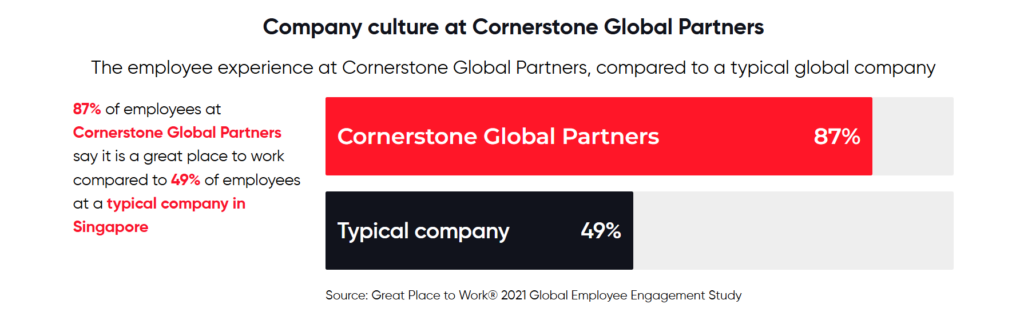
    Cornerstone Global Partners (CGP Group) is proud to be Certified™ by Great Place To Work® for 2024-2025 in Singapore. The prestigious award is based entirely on what current employees say about their experience working at Cornerstone Global Partners Singapore.

    Great Place To Work® is the global authority on workplace culture, employee experience, and the leadership behaviours proven to deliver market-leading revenue, employee retention and increased innovation.

    “The Great Place to Work Certification is a prestigious recognition based solely on real-time employee feedback about their workplace culture. Getting certified highlights our unwavering commitment to delivering exceptional employee experience and reflects the trust our team has in CGP. We celebrate this achievement with gratitude for our dedicated employees, whose efforts made this recognition possible. Together, we will continue to strive for even greater success and milestones!” – Sean Ng, Co-founder and MD, CGP Group APAC.

    “Great Place To Work Certification is a highly coveted achievement that requires consistent and intentional dedication to the overall employee experience,” says Sarah Lewis-Kulin, the Vice President of Global Recognition at Great Place To Work. She emphasizes that Certification is the sole official recognition earned by the real-time feedback of employees regarding their company culture. “By successfully earning this recognition, it is evident that our Singapore stands out as one of the top companies to work for, providing a great workplace environment for its employees.”

    According to Great Place To Work research, job seekers are 4.5 times more likely to find a great boss at a Certified great workplace. Additionally, employees at Certified workplaces are 93% more likely to look forward to coming to work, and are twice as likely to be paid fairly, earn a fair share of the company’s profits and have a fair chance at promotion.

    We’re Hiring

    Looking to grow your career at a company that puts its people first? Visit our careers page or LinkedIn!

    Keep up with the CGP Culture

    We’re all about having fun. If you want a taste of the CGP culture, meet us up on our Instagram account @cgp_apac

    About Cornerstone Global Partners

    Cornerstone Global Partners is an award-winning executive search, contingent recruitment, flexible staffing & HR outsourcing firm delivering talent services across SEA. We provide premium human resources and talent services from large multinational corporations to small and medium-sized businesses across mature and emerging markets in Asia. Our team of experts delivers customised talent solutions covering functions including sales, marketing, human resources, accounting & finance, legal & compliance, supply chain, manufacturing, information technology, operations, etc. Our holistic suite of talent services ensures you have the right talent, in the right roles, aligned with your business goals and culture.

    About Great Place to Work Certification™

    Great Place To Work® Certification™ is the most definitive “employer-of-choice” recognition that companies aspire to achieve. It is the only recognition based entirely on what employees report about their workplace experience – specifically, how consistently they experience a high-trust workplace. Great Place to Work Certification is recognized worldwide by employees and employers alike and is the global benchmark for identifying and recognizing outstanding employee experience. Every year, more than 10,000 companies across 60 countries apply to get Great Place To Work-Certified.

    About Great Place To Work®

    As the global authority on workplace culture, Great Place To Work® brings 30 years of groundbreaking research and data to help every place become a great place to work for all. Their proprietary platform and For All™ Model helps companies evaluate the experience of every employee, with exemplary workplaces becoming Great Place To Work Certified™ or receiving recognition on a coveted Best Workplaces™ List.

  • CGP Singapore Commerce Team Hosts Client Appreciation Evening

    CGP Singapore Commerce Team Hosts Client Appreciation Evening

    Annual Client Appreciation Evening

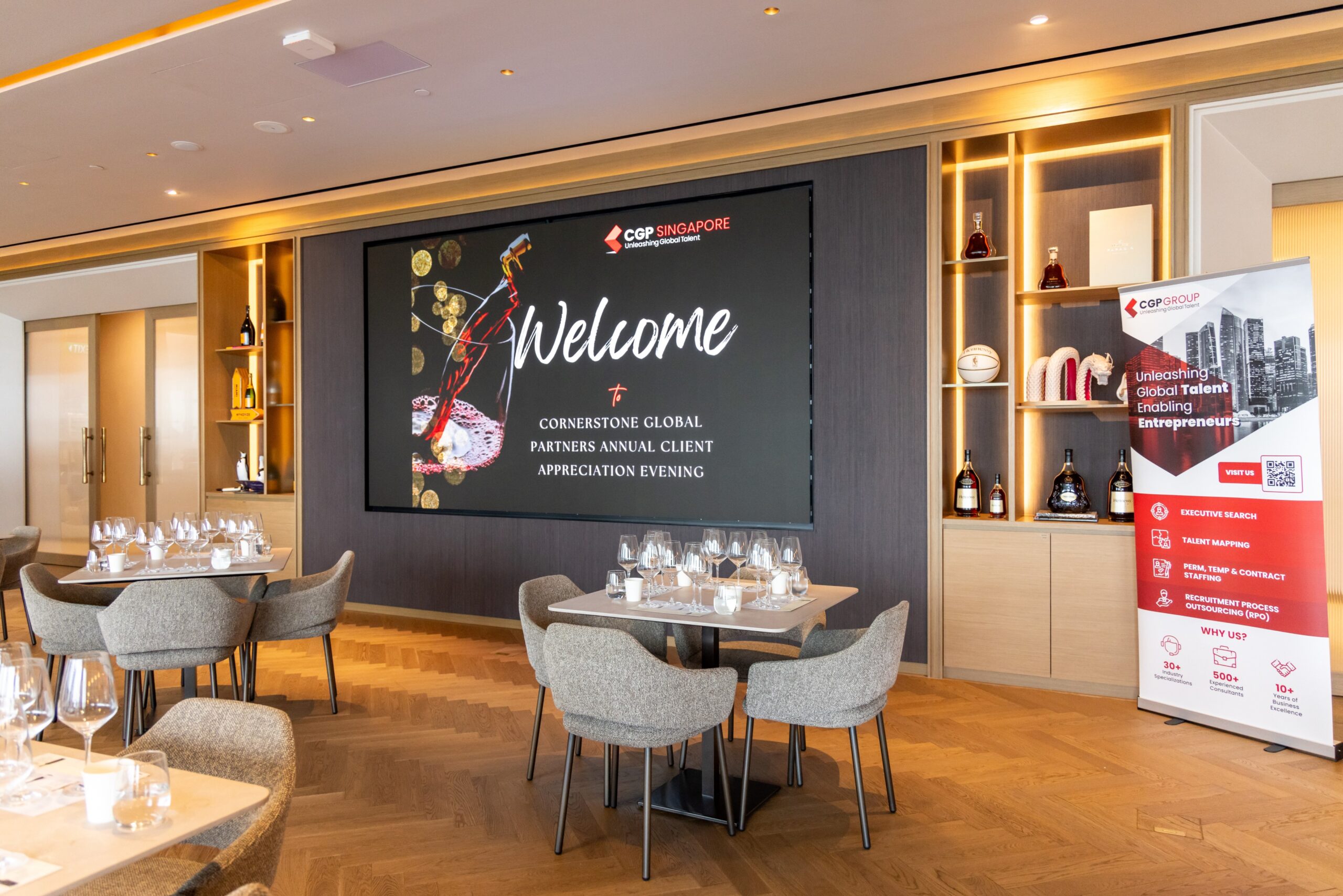
    CGP Singapore’s Commerce recruitment team recently hosted a distinguished client appreciation event, showcasing the company’s commitment to fostering strong partnerships and celebrating mutual successes. The evening, held in collaboration with the renowned Wines and Spirits brand Moët Hennessy, brought together our valued clients from diverse industries, including beauty, travel retail, retail, e-commerce, and FMCG.

    The event provided a platform for networking, camaraderie, and a deep appreciation for the trust and support our clients have extended to CGP Singapore. A highlight of the evening was a guided wine-tasting session led by MJ van Vuuren DipWSET, Wine Estate Director at Moët Hennessy, providing attendees with a deeper understanding of the wines’ origins and profiles.

    cgp partners client annual appreciation dinner 331
    Guests experiencing the nuances of 4 exceptional wines

    As the evening concluded, we reaffirmed our dedication to providing exceptional service and building enduring relationships with our clients. The company looks forward to continuing our journey of growth and collaboration in the years to come.

    CGP Singapore’s Commerce Practice comprises three key functions: Accounting & Finance, Human Resources and Sales, Marketing & Digital. Visit the provided links to learn more about our expertise and get in touch with the team for hiring needs.


  • The Do’s and Don’ts for a Successful Job Interview: Your Interview Etiquette Guide

    The Do’s and Don’ts for a Successful Job Interview: Your Interview Etiquette Guide

    Landing the dream job isn’t just about having the perfect resume.

    The interview is your chance to shine, showcase your skills, and convince the hiring manager you’re the ideal candidate. But with nerves running high, even the most qualified individual can stumble. Here’s where knowing interview etiquette becomes a game-changer.

    In this blog, we’ll break down the essential do’s and don’ts to navigate your interview with confidence and leave a lasting positive impression. From pre-interview prep to post-interview follow-up, we’ll equip you with the knowledge to ace every step of the process.

    So, whether you’re a seasoned professional or a recent graduate, this guide will be your secret weapon for interview success!

    The Do’s

    1. Do your homework

    A lack of knowledge about the organisation is a red flag for an employer. Therefore, you must conduct research— your homework, before appearing for the interview. If your first step toward interview preparation is strong, you will never lose charge of your professional growth and development.

    But what is it that you must learn about the company during your research? Here are the key areas.

    •  History
    • The current line of products or services
    • Market share
    • Number of employees
    • Competitors
    1. Prepare questions

    The current interview scenario says it’s not only the interviewer who interviews the candidates. In fact, job seekers interview the interviewer, too. Simply put, it is a two-way process. Factually, candidates asking questions from the hiring managers at the end of the interview is interview etiquette.  Having queries for the employers shows you are truly interested and have put your energy into securing the position.

    Examples of good questions are:

    • Can you tell me about the career paths you offer?
    • What is the biggest challenge that your organisation faces?
    • What would be the day-to-day responsibilities?
    • Will there be any training within the role?
    • Where does the company see itself five years from now?

    Must Read: Important Questions To Ask Your Potential Employer In An Interview

    1. Dress the part

    You must dress appropriately to show you take the interview seriously and show your interview etiquette. Besides, you must also work on personal grooming and cleanliness. You can also check the employer’s dress code, and if you don’t consider doing it, prefer wearing a professional-looking outfit.

    1. Act calm & confident

    This is an interview preparation tip that candidates find challenging, but given what is at stake, you must act calm & confident. Usually, employers don’t prefer hiring candidates with low confidence levels. So, you must practice keeping yourself composed and confident.  

    1. Greet the staff

    Make sure to greet the receptionist or the assistant staff you meet as soon as you enter the employer’s premises. You must be courteous and respectful toward them. And you never know when the employer will consider your behaviour a yardstick to measure your candidacy’s potential. 

    1. Maintain eye contact

    Candidates maintaining eye contact with the hiring managers often have a leg up on the competition. That being the case, you must maintain comfortable eye contact with the interviewer and not look elsewhere while the interviewer speaks. 

    1. Listen carefully

    Listening carefully to the interviewer is one of the most crucial job interview tips that can help you carve your dream career. Let the interviewer finish before you begin responding, and you can always request them to repeat the question if you couldn’t understand it the first time. After all, you have to be a good listener to become a good speaker.

    1. Mention what sets you apart

    Play your part well by mentioning how you can be an asset to the organisation. As a matter of fact, hiring managers cannot judge what you can bring to the organisation. So on that account, you must step forward and narrate it to them so they can make a quick decision.

    Explore Career Advice & Interview Tips

    The Don’ts

    1. Don’t be late

    Your first impression lasts longer than you can imagine. Moreover, punctuality is crucial in today’s world, and employers seek people who value time. Therefore, showing up even a few minutes late will portray you in a bad light and give the employer a reason not to consider you for the position.

    1. Don’t lie

    When you are in the moment, refrain from telling a lie or bending the truth. Even if you lie about your professional life, the employer will still employ their due diligence to counter-check before making an offer. 

    1. Don’t talk badly about your previous employer

    Avoid bashing your previous employer, assuming it is acceptable to talk badly about them to get the job. The reason is hiring managers want to see positivity, and exhibiting a pessimistic approach will make you lose the offer.

    1. Don’t interrupt or dominate the conversation  

    There is a fine line between being confident and dominating the conversation. Understand the difference, and remember you are in a discussion, not a debate. Be respectful, and don’t let your interpersonal skills overpower the other person.

    1. Don’t be overly modest 

    Being humble is a good sign and shows you have mastered interview etiquette. But an interview is an opportunity for you to talk about yourself. So don’t waste it by being overly modest. Instead, be confident and maintain a sense of professionalism.

    Final Words

    Now that you are familiar with the top-rate job interview tips, it’s time to show them off to the world. 

    Prepare, prepare & prepare to face the competitive world while keeping our interview preparation guide in mind. And no one can stop you from earning the job you want.

    Visit our job page if you are looking to level up your professional growth or get in touch with our team at Cornerstone Global Partners Singapore to help you in your career transition.

  • The Art of Following-up: How to Stay Top of Mind After Interview 

    The Art of Following-up: How to Stay Top of Mind After Interview 

    We’ve all been there: You email the recruiter or hiring manager for post-interview communication, and it goes unanswered. Well! Being overly eager while drafting the email can reduce your chances of getting the job. Imagine how annoying it is for hiring managers to find their inboxes flooded with queries from the candidates they interviewed.

    Considering the number of emails and texts the hiring managers receive daily, creating this blog seemed like the right thing to do. As you will read through, you will learn how to seal the deal with an unforgettable follow-up mail.

    Why Must You Send a Follow-up Email After Interview?

    Following up after a job interview is always a good idea. It will reinforce your interest and motivation and can help you stand out among other candidates. Also, recruiters and hiring managers liked being thanked and found thank you notes helpful while making hiring decisions. Here are the top three reasons why sending a follow-up email can be beneficial for you.

    1. Shows your genuine interest in the job role

    Drafting a well-thought email to seek the recruiter’s response after the interview reflects your genuine interest in the position. Besides, a compelling email makes it evident to the employers that you invested your time and energy, which justifies your skills and professionalism.

    Must Read: How sure are you that it’s time to quit your job?

    1. Restates your caliber

    A human mind tends to forget things. Therefore, sending a follow-up email to the recruiter gives you another opportunity to restate your message and the values you can add to the company. This improves your chances of obtaining the respective employment opportunity.

    1. Enables the addition of new idea

    You can mention something you learned during the interview to outshine other potential candidates. While keeping the email concise is essential, writing excellent content and adding a new idea will strengthen your candidacy.

    Must Read: What are the Most Important Non-salary Benefits for Top Talent?

    The Thank-You Note

    At the end of the interview, ask the hiring manager when you can expect to hear back. The reason for asking the question is to determine a suitable date to follow up.

    You can send a thank-you email one day after the interview. Keep it short & simple, and thank the recruiter for their time. For staying top of mind, you can mention one highlight of the interview and state what you learned. Lastly, show your keenness toward hearing back. Writing a thank-you email aims to express gratitude and show your excitement about earning the position.

    How to Write a Thank-You Mail?

    The email should be short and sent within 24 hours of the interview. 

    1. Address the interviewer

    While drafting the email, make sure you address the person who interviewed you. Further, spell the person’s name correctly to avoid making a negative impression. If you had more than one interviewer, you can send a brief email to everyone.

    1. Express gratitude

    Your email must begin with thanking the interviewer for their time and consideration. The content must be drafted to express gratitude because time is scarce, and appreciating the hiring manager for sparing time will impress them.

    1. Share what you learned

    Experts say that candidates must share at least one highlight from the interview and the learnings you derived. Alternatively, you can also share a cue to help them remember what you spoke about.

    1. Convey your continued interest in the job opportunity

    You must convey your continued interest in the job opportunity and tell how eager you are to work for the organisation. This will level up your game by showing the employer that you are keen to contribute to the company’s goals.

    1. Offer to answer questions

    Keep the communication open, and don’t end the email as if you wish the post-interview communication to end. The given approach will give the employer another chance to know what was missed during the interview. As a result, it can improve your chances of getting hired.

    Things to Avoid in a Thank-You Mail

    1. Adding unnecessary details

    Keep your email short and crisp to avoid the risk of appearing desperate. Writing a mail to thank the hiring manager is an opportunity to rekindle the connection, thank the respective person, and not add what you missed mentioning.

    1. Requesting

    Empathise with the recruiter and acknowledge their load of work. So, don’t make any requests that will add to their work, as it might affect your employment chances, too.

    1. Grammatical and typing errors

    Draft an email like a pro but proofread it as if you are an amateur. Consider seeking someone’s help if you aren’t confident enough.

    Post Interview Follow-up Email: Sample 1

    Subject: Thank you

    Hi [Recruiter’s or Hiring Manager’s Name]

    Thank you so much for your time yesterday and for sharing the amazing work that [add company name] is doing.

    From our conversation, I understand that your organisation follows the customer-first approach and you are looking for people who can maintain the standards for years to come. I also understand that you want to hire someone who can bring fresh ideas to the organisation and enhance the quality of services. I am confident that I will play the part very well.

    If you have any questions for me, please feel free to reach out anytime.

    Sincerely,

    Post Interview Follow-up Email: Sample 2

    Subject: Thank you for the [Job Title] Interview

    Dear [Recruiter’s or Hiring manager’s name],

    Thank you for taking the time to meet me on [Date]. I enjoyed learning more about the [Position] role and getting a better sense of what the team is working on.

    I’m confident that my skills and experience would make me a valuable asset to the team. I’m excited about the possibility of joining [Company name] and contributing to its success.

    Please feel free to contact me if I can provide you with further information.

    Thank you again for your time and consideration. Looking forward to hearing from you soon.

    Sincerely,

    Summing Up

    Be brief and hold to what you mentioned during the interview. Research shows emails that are moderately positive will enjoy a 10% to 15% higher response rate. Focus on keeping the tone polite and ensuring it serves your cause. 

    Even if you are yet to test the potential of follow-up emails, try incorporating the tips mentioned here. And never forget that the key to success is not giving up and investing the best of your potential to convince the employer to hire you. 

    Are you seeking employment but not getting enough leads? Cornerstone Global Partners (CGP) Singapore is here to assist you in getting the right job. Our recruitment consultants understand the corporate world and are highly experienced in providing the best recruitment solutions. We are one of Asia’s largest recruitment solutions and HR Technology platforms, with 19 offices worldwide and 500+ team members delivering exceptional Executive Search, Contracting, Recruitment Process Outsourcing (RPO), and Human Resources Outsourcing services worldwide. 

  • How to Work with Recruiters when Searching for a Job

    How to Work with Recruiters when Searching for a Job

    Searching for a new job can be a very, very stressful activity – whether you are looking on your own or using a Recruitment Agency to support you. Here are a few tips to manage this process a bit better:

    1. Most Recruitment Agencies provide their services to you for free.

    They are paid “recruitment fees” by their client companies when they help with successful hiring. Be wary of any agency or website that charges you a fee for career advice!

    2. Prioritize Recruitment Agencies that prioritize you!

    If you reach out to an agency via email or on their website, keep track of how long it takes before they reply to you and what type of response you receive. Are they willing to meet with you face-to-face? Have a video call? Or are they asking for a phone or email chat? Do they reply quickly and answer your questions in a timely and reasonable way? Avoid companies that send spam replies or take too long to get back to you.

    3. Consider your timing for when you want to leave.

    Agencies are generally supporting active searches – meaning that they will want to immediately introduce you and arrange interviews. Ideally, they would like to help you receive an offer within 2-4 weeks and to change jobs 2-4 weeks after that. That said, job searches do not always go so smoothly and it can take several months to find a job that fits you. Make sure to communicate with your Agent on your preferred timing and how much notice period you need once you receive an offer. Your Agent will do their best to get you an attractive job at a time that suits you.

    4. Keep track of where you have applied and ask for updates.

    Some agencies – especially the larger ones – will struggle to update you after every application or interview. If you are using multiple agencies, this problem can be compounded. Make sure to reach out to your Agents regularly for updates and feedback. If one agency is consistently struggling to update you, consider shifting your focus to another agency that is more responsive.

    5. Be transparent with your Agents.

    Let your Agents know if you have any questions or concerns about a job/company. Let them know if you have other processes ongoing. Your Agents will do their best to support you with the job that they introduced. Sharing information with them can help them negotiate for better interview schedules or better offers (titles, salaries, start dates, etc.). At the same time – do not mislead them with inflated numbers or false processes. If an Agent finds out that you have been untruthful, you can put your entire interview process at risk.

    6. Good Agents can be long-term relationships!

    Treat your Agents with respect and care – even if you choose a job through another source. You may decide to look again in the future and that Agent may be able to help you then. Keep those doors open when you can!

    This article is originally published by Cornerstone Recruitment Japan and edited by CGP Singapore. <Original article>

    Get The Right Assistance From CGP Singapore

    So now that you have discovered the value of recruitment agencies in navigating your job search, finding the right fit is key! CGP Singapore’s Talent Search assists suitable candidates in getting placed with the right organisations!

    Connect with us and allow our expert consultants to help you take one step closer to your next job.

    ALSO READ:

  • Handling Tricky Interview Questions: How to Respond to Curveballs and Unexpected Inquiries

    Handling Tricky Interview Questions: How to Respond to Curveballs and Unexpected Inquiries

    Job interviews can be unnerving, but preparing for interview curveballs can change the game. While a good resume and an excellent cover letter can take you to the interview stage, it’s the interview that will decide whether or not you get hired. A candidate coming well-prepared for the interview will find the process more like a conversation.

    Every interview is different, but a few tips can empower you to handle tricky interview questions. We have brought a complete guide for you that will lead you to secure the best employment opportunity.

    Tips to Master the Art of Handling Complex Interview Questions

    1. Do the groundwork

    You cannot reach the finish line if you don’t start well. You’ll likely find your dream job opportunity online along with the job description. Use the description as your guide to ace the job interview.

    Here is a pro tip: Look for specific adjectives defining the employer’s expectations. For instance, if it mentions “team player” or “problem-solver,”  weave the words into your answers.

    Your research is the foundation that will enable you to answer tricky interview questions and impress the employer. Additionally, doing the groundwork will help you answer questions such as:

    • Why do you want to work here?
    • What can you bring to the company?
    • Tell me about your dream job.
    • Why do you think you will be successful in this job?
    1. Prepare answers to typical questions

    The digital era provides you with a multitude of resources to prepare intelligently for interviews. There are a number of screening questions recruiters ask, and job seekers can strengthen their candidacy.

    Though it is challenging to prepare for every question, you can build up your confidence by practicing the questions. A good way of remembering your answers is to frame them in a story form and develop talking points.

    To respond to interview curveballs, support your answer by citing examples and promoting your skills. Consider using the STAR interviewing technique (Situation, Task, Action & Result) if given an unexpected behavioural question.

    Related Post: Reduce Risk & Identify S.T.A.R Candidates Using Behavioural Based Interview (BBI) Techniques

    1. Be authentic & concise 

    Maintain the quality and continuous delivery of your responses. Nonetheless, there may be times when you will feel stuck answering a question. However, you have to stay authentic and concise while responding.

    You can provide solid examples of solutions and achievements but don’t stretch them beyond limits. Being focused and upbeat, you will reduce the chances of giving long and rambling responses that seem monotonous to the employer.

    For instance, the employer asks you to mention your most significant achievement. Generally, the question is counted among the most tricky interview questions and aims to assess your values & attitude, in addition to achievements. Here you must talk about something outside education that is genuine. Talking concisely about things you are proud of will help you stand out.

    1. Avoid getting flustered

    Even if you are unsure about the best way to answer a question, don’t show it to the hiring manager. It is perfectly fine to take a deep breath and pause for a moment to think before you begin answering. You can also admit the complexity of the question by saying, “Well! That’s a tough question”. And then give your fuller response confidently.

    The master trick is to avoid frowning or giving a negative non-verbal message.

    1. Work on your tone 

    Hone the skill of maintaining a tone that is neither extremely modest nor arrogant. Candidates often see the interview as an intimidating process and begin developing anxiety. As an outcome, their nervousness and anxiousness start showing in their tone and way of speaking. Unfortunately, things get even worse when job seekers come across interview curveballs. Simply put, they lose their confident tone and fail to prevent being thrown off the game.

    For example, the interviewer asks, “Why are you leaving your current job?” Admittedly, the question will make you nervous as you assume the interviewer might think negatively of your answer. However, you need to be honest and positive. Don’t bash your employers, and explain how you wish to grow and take on new opportunities. Alternatively, if you were laid off, it’s acceptable to mention it during the interview.

    Things You Should Avoid

    1. Telling Lies

    You can lie initially to bag the position. But, you won’t be able to secure your employment for long because the employers will find the truth over time. Therefore, avoid deceiving the organisation by telling things that aren’t true.

    1. Giving negative replies

    A few questions might make you feel you must say something negative about yourself. But there are always better ways to answer them on a positive note and without sabotaging yourself.

    Final Thoughts

    Remember, the employers are not there to get you but are looking for candidates they are confident about hiring. So, don’t panic if you hear a trick interview question, and take a few seconds to think. This will keep you in a comfortable position and will upkeep your confidence level.

    Now that you know how to handle tricky interview questions, it’s time to get one step ahead and locate your dream job. Consider seeking our services, and we will make your job search seamless by finding the best positions at notable companies.

    Upload CV and Apply Jobs

  • Important Questions to Ask Your Potential Employer in an Interview

    Important Questions to Ask Your Potential Employer in an Interview

    Nearly every interview concludes in a similar way, and most of the candidates end up making the same mistake when answering it.

    And that’s when the hiring manager asks, “Do you have any questions for me?”

    While you prepare the questions you expect recruiters will ask, there is a high probability of missing preparing questions you can ask them. Most candidates fail to resist the temptation to say no, which makes them lose the job offer. However, they do not realise this may be one of the most important interview questions they answer. In fact, interviewers may ask this question to check whether you are serious about the job. It shows a lack of curiosity if you don’t have any questions. Therefore, never say “no” to the question. Have some well-researched questions for the interviewer to reflect your interest in the company and enable them to know more about you.

    Learn how and what questions you can ask at the end of the interview and leave a positive impression on the recruiters’ or hiring manager’s minds.

    Importance of Asking Questions From the Hiring Manager

    You do not want to sound immature when the interviewer asks you whether you have any questions for them. Prepare in advance, or you will be taken completely off guard. We have compiled a list that hints at the importance of having a set of questions for the interviewer.

    • Shows your engagement in the conversation

    An interview is an opportunity for the interviewer to assess whether the candidate is the right fit for the job role. Not only this, but it also lets the candidate know about the company and job responsibilities. Asking questions during or at the end of the interview builds the flow of conversation in the correct manner.

    • Exhibits your curiosity

    When you ask questions, it shows your curiosity and excitement about the position. As a positive outcome, it makes the recruiter realise how interested you are in taking up the job, which works in your favour in the end.

    • Represents your preparedness

    When you come prepared with the questions, it shows the efforts you have put in to win the job role. Besides, it also indicates your seriousness toward the position.

    • Showcases your knowledge

    A candidate that mentions a recent activity or event that the company has been part of will always gain an edge over others. Therefore, staying updated on current news related to the organisation and mentioning it during the interview represents your knowledge. In short, you stand a chance to impress the recruiter instantly.

    What Should You Ask?

    1. Can you tell me more about the day-to-day job responsibilities?

    Seeking an answer to this question will give you a better insight into the job responsibilities and help you decide whether the job role is right for you. The better part of asking the question is understanding what employers will expect from you if you get hired.

    1. Is there any training within the role or company?

    Show your commitment level toward acquiring the job role by asking whether the company offers or requires you to undergo specialised training. You don’t want a job that doesn’t offer learning opportunities, and asking this question will help you assess the possibility of working long-term with the organisation. 

    1. What would I be expected to accomplish in the first six months or one year?

    Asking this question will make the hiring manager feel that you are genuinely interested and will stay with the organisation for long. Also, it shows the potential employer that you are eager to contribute to the organisation’s goals and objectives. 

    1. Can you tell me about the company culture?

    This is a good question to ask at the end of the interview because it shows the recruiters that you are concerned about the financials and the company culture. From the response, you’ll learn whether the organisation focuses on employee happiness and its policies for the holistic benefit of the organisation. 

    1. Where does the company see itself five years from now?

    The recruiter’s response will tell you about the organisation’s progression plans. Additionally, you can obtain an idea about job security and learn about the upcoming projects that are expected to bring many opportunities. 

    Related Post: Preparation Is Key: How To Research A Company Before Your Interview

    1. Can you tell me about the team I would be working in?

    The answer to the above question will help you understand the hierarchy and reporting structure. Furthermore, you can get to know more about the team and the working methods to prepare well for the upcoming role. 

    1. What are the biggest challenges facing the company/industry?

    By asking this question, send an unspoken message to the hiring manager that you are interested in knowing the roadblocks/challenges the company is facing. In simple words, show your interest in working with the organisation and be prepared to hand out your efforts to eradicate challenges. 

    1. What do you enjoy the most about working here?

    The answer will help you understand what the interviewer loves the most about the company culture. Though the question is personal, you could learn a lot about the company’s internal environment and working model. You may even get to know how the interviewer started their journey and progressed. 

    1. What is the next stage in the process?

    Asking this question will portray you as a candidate who is interested in moving to the next stage of the hiring process. Additionally, you may also get to learn about other potential candidates for the position. 

    Final Words

    Are you all set for higher treks? By now, you probably are! Register the questions mentioned above in your mind before you appear for your next interview. Everyone prepares to get ahead of others, and you must outshine them. 
    Cornerstone Global Partner (CGP) Singapore can help you secure a job that matches your skill set and requirements. Get in touch with our team of experts, and you will receive assistance to flourish in your professional life.

  • The Role of Employee Advocacy in Employer Branding: How to Harness the Power of Your Team

    The Role of Employee Advocacy in Employer Branding: How to Harness the Power of Your Team

    Imagine you started a new venture that becomes popular within a few months of launch. Everyone begins showing interest in your products, and you even start receiving orders. Over time, you receive a number of orders that you cannot handle alone. Therefore, you seek resources to help fulfill orders and further your business. 

    At this point, your market is getting bigger, and you must ensure customer delight. So what, according to you, is the factor you cannot afford to ignore now? Is it your customers or the employees? 

    Undoubtedly, having a large customer base allows you to learn from experiences, even if you lose a customer or two due to unfortunate reasons. However, what would it be like to have unhappy employees? It will tarnish your brand reputation if things go unchecked. Moreover, your revenue-generating capacity would suffer. 

    Your employees are more important than your customers, and you cannot thrive without them. 

    A recent IDC survey says 85% of business owners agreed that a positive employee experience and increased employee engagement build better customer experiences and generate more revenue. 

    Keeping the statistics in mind, let us move ahead to learn the role of employee advocacy in employee branding. 

    Employee Advocacy: Why Does it Matter to Build Employer Brand? 

    1. Increases brand awareness

    Social media content shared by an organisation’s employees attracts more engagement than the content shared by the company. Admittedly, employee advocacy brings high-quality results for organisations by powering their market presence and bettering brand reputation among people. 

    1. Influences customer relationships

    Every employee of your organisation enjoys influence over some or all customer relationships. An unhappy employee can spread negativity and impact the team’s ability to serve customers well. Even worse, an unhappy workforce can throw you out of the market before you realise it. 

    1. Generates high-quality leads

    Market trends reveal leads that result from employee advocacy convert more frequently than other leads. In fact, today’s customers prefer seeing the faces behind an organisation before making a buying decision. This is because modern buyers believe in what they hear from people and what they see in advertisements. 

    1. Builds powerful talent pools

    The talent recruitment concept has changed in the last decade and is no more restricted to finding candidates through advertisements. Visibly, employer branding has taken over the recruitment sector. Moreover, job seekers prefer joining organisations having happy employees. When employees share their stories and experiences, potential employees tend to get attracted toward positive content and decide their course of action. 

    1. Reduces cost per hire

    Employers believe employee advocacy is the most cost-efficient way to make new hires. This is because an organisation that believes in and follows the concept witnesses reduced hiring costs. The reason is they can reach a broader base of potential candidates and make the right candidate choice among the ones who believe in the organisation’s culture, mission & vision. 

    How To Make Employees Your Brand Advocates?

    In cognizance of the impact of building an employer brand, organisations have been managing their brands for a long time. Establishing a reputation is an overwhelming task, but employee advocacy can accelerate its success. Read on to learn what steps you can take to harness the power of your team and turn each member into a brand advocate. 

    1. Set clear goals

    Before you publicise your employee advocacy program, make sure to have set the objectives you want to achieve. The step will give you clarity to the employees on what needs to be achieved. 

    Be specific while setting goals and remove any ambiguity surrounding them. Simply put, there must be clarity of goals among your team. 

    1. Have a clear and consistent brand message 

    Your brand’s message must be consistent, and you can achieve it by creating a guide for employees to follow. The guide must entail instructions your employees must observe while they post, promote, and interact on social media. 

    1. Improve internal communication

    If you want to reach the pinnacle of success, check for internal communications and the loopholes. In plain words, communication within the organisation must be clear, manage information overload and motivate & drive employee engagement.

    MUST READ: The Connection Between Employee Recognition and Retention

    1. Be flexible

    Identify your employees’ unique personalities and allow reasonable flexibility. To begin with, your guide must talk about flexibility so that your employees can create content reflecting their personalities. This will also boost the human touch and better connect the audience and the brand.  

    1. Establish metrics

    Choose the metrics wisely against which you will measure the success of employee advocacy. You can also measure the performance of employees who contribute to the program. 

    Summing Up

    Every good thing that you hope to accomplish in your company will be possible with employee advocacy. On the other hand, if your employees aren’t happy with the company culture or job roles, it will crimp your ability to survive in the market. So, focus on your people first to map your success journey. 

    You must hire the right to have a great workforce that deserves to be made your organisation’s integral part. We are here for you to help you find top talent. 

  • Body Language and Interviewing: Non-Verbal Cues That Can Make or Break Your Interview

    Body Language and Interviewing: Non-Verbal Cues That Can Make or Break Your Interview

    There is a mode of communication beyond words— body language. In preparing for the first day at college, an important meeting” with “Whether it’s your first day of college, an important meeting, or an interview, non-verbal communication plays a crucial role. Generally, you concentrate on what to say and rehearse important points to sound more credible. This is, of course, what everyone does.

    Acknowledging that gestures, facial expressions, and eye contact are also subliminally evaluated is necessary. And this is with particular reference to job interviews.

    In this blog, you will learn about the vital non-verbal cues that can help you determine your chances of clearing an interview.

    Before moving further, you must know that:

    1. Spoken words account for 7% of how others perceive us.
    2. Voice tone accounts for 38% of how others perceive us.
    3. Body language constitutes a significant proportion and stands at 55%.

    Therefore, you will likely miss being hired if you are not sending the right messages through your body language.

    Non-verbal Cues: The Secret Formula for Job Seekers to Seal the Deal

    1. Preparedness & Timely arrival

    The first impression is the last impression!

    Your interview begins as soon as you reach the premises, and you can earn some brownie points by being on time. Don’t just sit down at a place you find, but greet and treat everyone with respect. Exude confidence and poise throughout the time with a pleasantly smiling face.

    When you enter the office and connect with the concerned person, your confidence will surely outshine if you arrive on time. Maintain strong eye contact and introduce yourself. If you are asked to wait, don’t look disappointed or start using your phone. Instead, sit at the allocated place in a comfortable position.

    Stand up and introduce yourself with a firm handshake and a confident smile upon meeting the interviewer.

    1. Responsiveness

    In order to be effective, be responsive. In order to be responsive, listen!

    How do you feel when someone ignores you while you are speaking to them? Well! Pretty bad! Isn’t it? The same goes for other people when you do the same to them. And interviews are no exception.

    Consider non-verbal communication to indicate your attentiveness to what they are speaking. For instance, you can nod, smile, or lean forward.

    Your actions will make the interviewer feel they are being heard and you are paying attention to their words.

    1. Eye contact

    Never, never, never let words come out of your mouth when your eyes are looking down!

    You might be shy, but maintaining firm eye contact will give you an edge over others. On the other hand, a lack of eye contact will lead your interviewer to think you are disinterested or dishonest.

    Learn the art of maintaining strong yet comfortable eye contact, as you don’t want to stare at the interviewer. Also, avoid shifting your eyes to and from the interviewer to save yourself from being portrayed as insincere.

    If there is more than one interviewer, you can maintain eye contact with everyone as you shift your gaze. However, make sure to keep eye contact with a single person for at least a couple of seconds before shifting your eyes.

    1. Posture

    Great posture never goes out of style!

    Posture is the most solid mode of non-verbal communication and tells stories that aren’t spoken. Ensure you train yourself and improve at maintaining the correct posture to impress the interviewer.

    Slouching sends a message to the interviewer that you lack energy and confidence. So, sit up straight and keep your shoulders back rather than up. Nevertheless, an overly stiff body is often associated with nervousness. Therefore, loosen up a little and sit in a comfortable yet active posture.

    MUST READ: Skills to Master Before Your Next Job Search

    1. Hand gestures

    Hands have their own language!

    Hand gestures can help you add emphasis and give clues about your confidence and credibility. For example, right-hand movements signal that you are giving out information, while left-hand gestures indicate your readiness to receive information.

    When you are not talking, put your hands in a neutral position and avoid attracting unnecessary attention to them.

    If you are taking notes, don’t keep holding the pen in your hands once you are done. Unknowingly, you might start playing with your pen, thus, creating a wrong impression on the recruiter.

    1. Dressing sense

    Dressing well is a form of good manners!

    Take complete control in your hands by dressing right. If you aren’t comfortable in your clothes, it can be distracting for you and the interviewer. However, you don’t have to go over the board and create a fuss about your clothing.

    Keep it simple & formal, and go for reliable options if you plan to buy some new clothes for the job interview. This tip will strengthen your candidature by becoming the best element of your body language.

    The key is focusing more on comfort than showing off your wardrobe.

    1. Interview conclusion & exit

    Congrats, you’re almost there!

    An interview, as mentioned earlier, begins as soon as you enter the office. Adding to the fact, it only ends once you have exited the premises. Therefore, plan your exit as strongly as your entrance, regardless of how the interview went.

    Pick up the activities from your entrance— a genuine smile, eye contact, and a firm handshake. Additionally, extend your gratitude to the interviewer for their time. Placing the chair back to its original position will also create a significant impact.

    Bottom Line

    Do you have an interview coming up but are nervous about exhibiting the correct body language? Here is one tip for you:

    Consider yourself a brand that has to send nonverbal signals to the audience. Create your personal brand of confidence and trustworthiness.

     If you are someone who can’t seem to get a job, you have come to the right place. Our smartly-crafted body language cues and non-pareil expertise to help candidates secure suitable jobs is at your service. Contact us. We will be glad to help you.