Category: Human Resources

  • International HR Day 2024: CGP Leaders Share Their “Why” for Working in HR

    International HR Day 2024: CGP Leaders Share Their “Why” for Working in HR

    Every year on May 20th, the Human Resources industry across the world comes together to celebrate “International Human Resources day”. The day celebrates the incredible people who shape our workplaces: our HR professionals! This year’s theme, “HR Shaping the New Future,” perfectly reflects the impact HR has on everyone’s careers. Every HR professional’s contributions to this industry are invaluable. From all of us at CGP, we extend our heartfelt thank you for their dedication, growth, and strategic thinking as we navigate the future of work together.

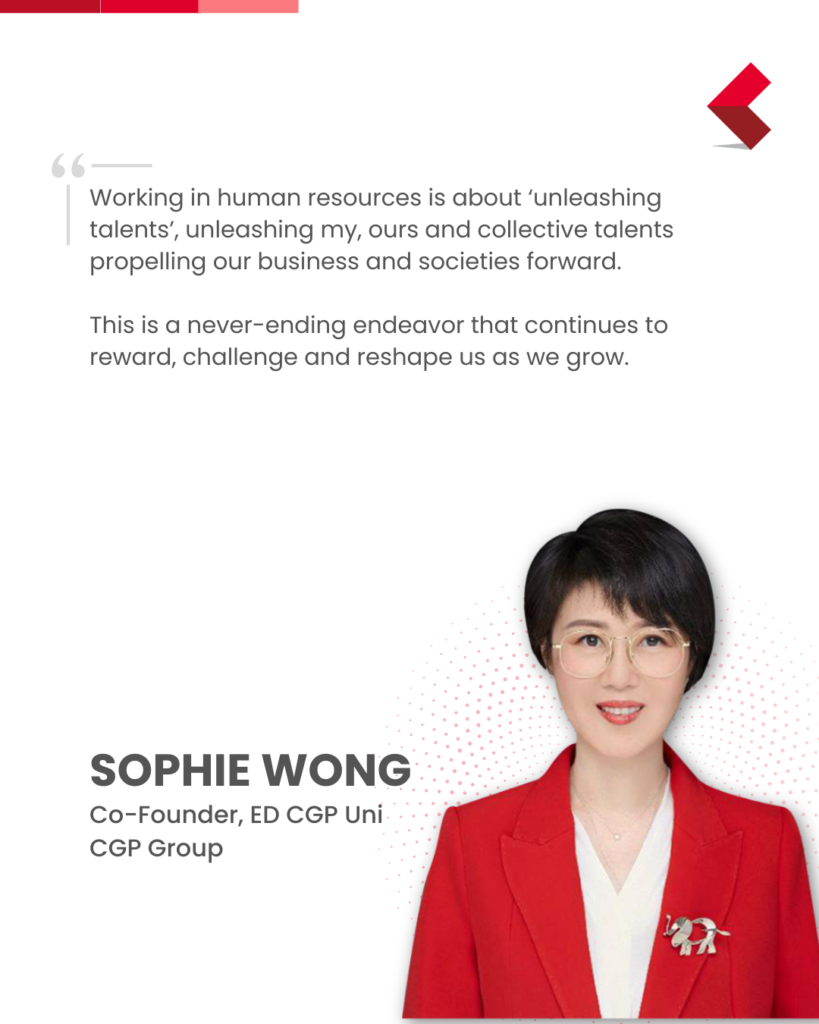
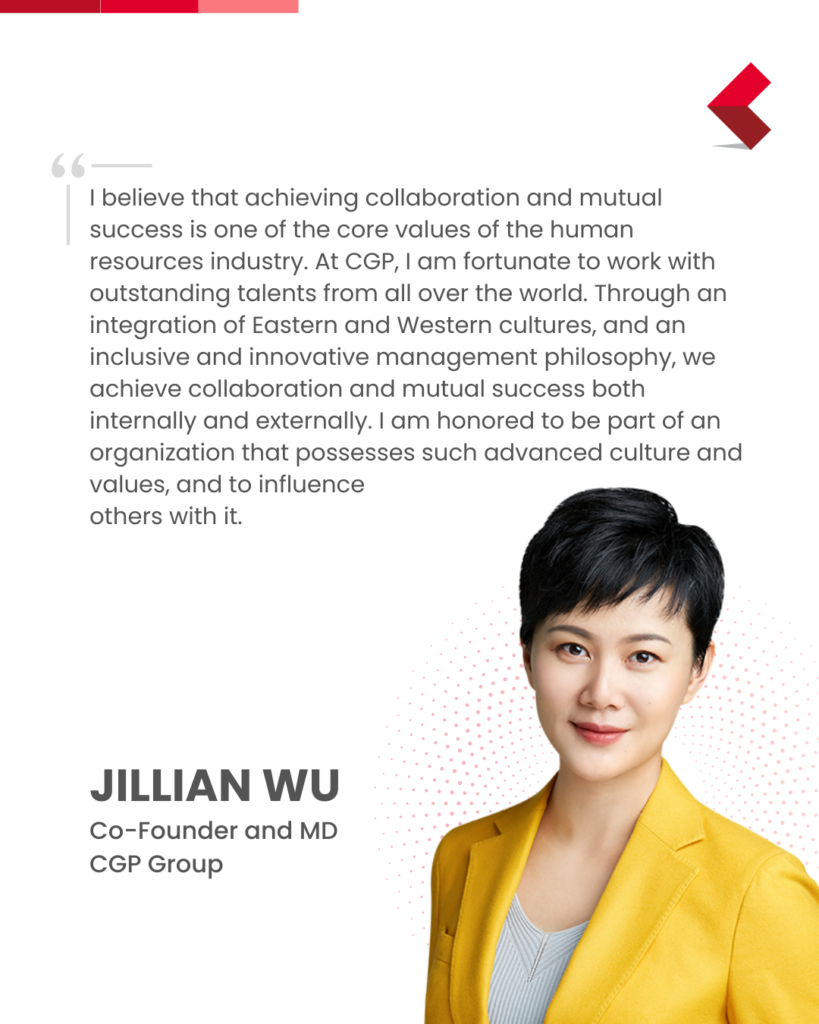
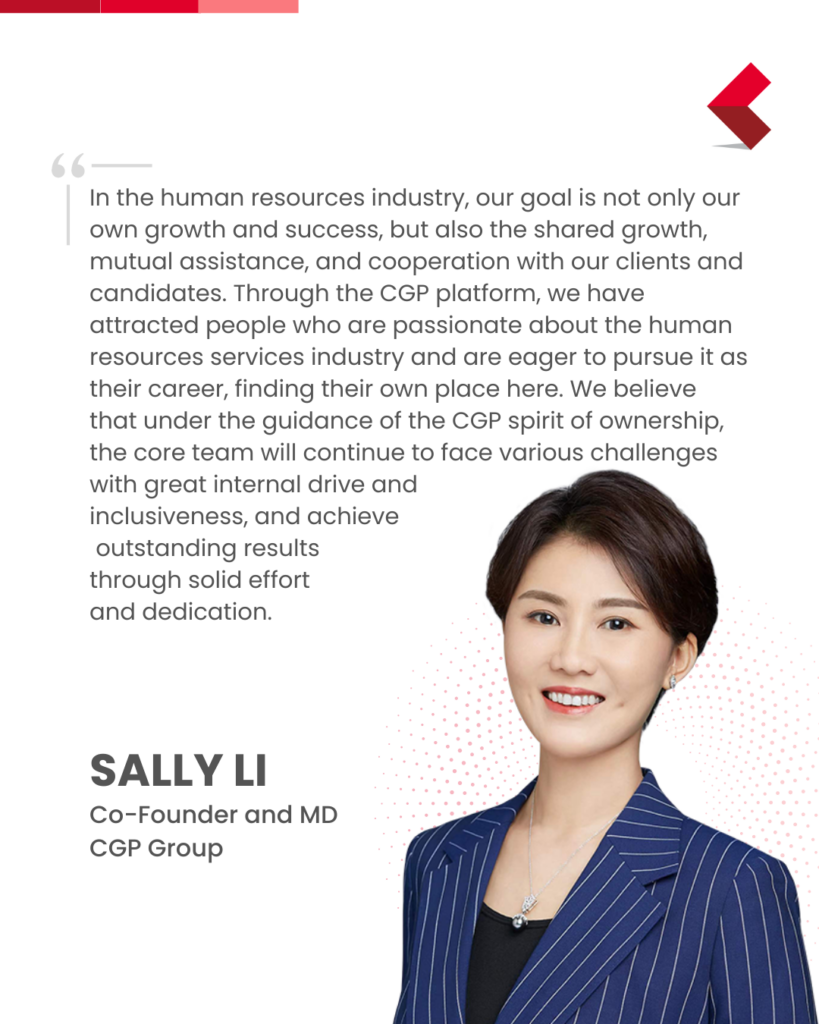
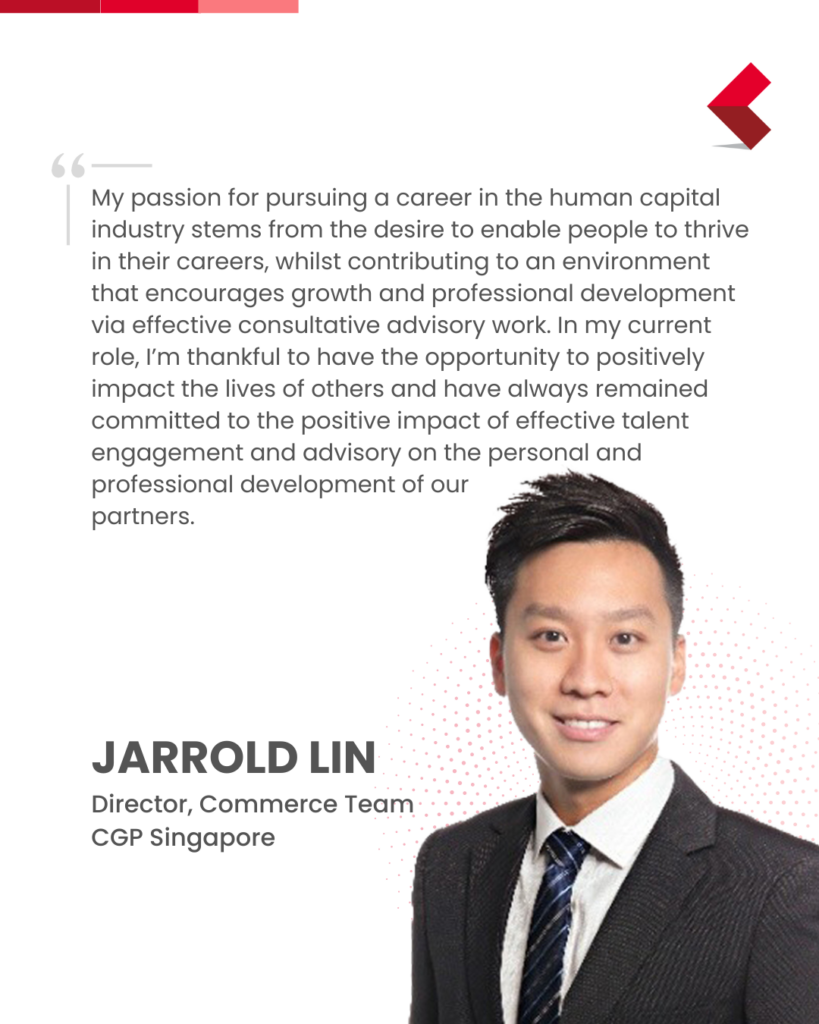
    This year, we asked our leaders to share their “why” for working in HR and how their role impacts others. Their stories are inspiring! 💡

    en cover 1
    en v2 chris watkins
    en sean ng
    en alfred chu
    en sophie wong
    en jillian wu
    en sally
    en jarrold lin
    en edward liau
  • Building a Diverse and Inclusive Employer Brand: Best Practices for Attracting Top Talent

    Building a Diverse and Inclusive Employer Brand: Best Practices for Attracting Top Talent

    “Your brand is what other people say about you when you’re not in the room.”– Jeff Bezos.

    Managing your employer brand is undoubtedly one of the most crucial business functions in today’s highly competitive market. The truth is you cannot underestimate the value of building an employer brand. But what is the reason behind it? Well! Present-day job seekers are go-getters and would gladly accept job offers from a company with an excellent reputation, even without a salary increase. So, to summarise, employer branding does it all.

    Promoting company culture and employee experiences through videos across your social media platforms isn’t equivalent to employer branding. It is way beyond and includes adopting the best practices to attract top talent. And the only way to do that is by incorporating diversity and inclusion in employer branding.

    Benefits of Building a Diverse & Inclusive Employer Brand

    A diverse and inclusive employer brand is one that is welcoming and supportive of people from all backgrounds. It is a brand that is committed to creating a workplace where everyone feels valued and respected.

    There are many benefits to building a diverse and inclusive employer brand.

    1. First, it can help you attract top talent. Studies have shown that diverse and inclusive workplaces are more attractive to job seekers. 
    2. Second, it can help you improve employee engagement and productivity. When employees feel valued and respected, they are more likely to be engaged in their work and productive. 
    3. Third, it can help you build a stronger brand reputation.

    A diverse and inclusive employer brand is seen as more progressive and forward-thinking, which can attract customers and partners.

    Building a diverse and inclusive employer brand can feel overwhelming, and you may not know where to begin. Start with our list of best practices to reach suitable candidates and capitalise on the potential of diversity recruiting. 

    RELATED POST: 5 Ways to Cultivate Inclusion in Your Organization

    Best Practices to Build a Diverse Brand

    1. Assess your position

    Your brand is how people perceive it— including your employees. So, fundamentally, it must matter to you whether or not your employees view the organisation as diverse and inclusive. 

    Build a two-way communication channel, seek your people’s opinions, and determine how they see the company. This will ensure your success in weeding out biases and improving the employee experience with a diverse and inclusive culture. 

    1. Rethink employer branding

    Employers view employer branding as a short-term activity that will reap benefits for years. However, a never-ending process must find its place in every business function. 

    The creation of a diverse and inclusive employer brand is about prioritising diversity, equity, and inclusion principles across the organisation. You can start with clearly communicating with the candidates, hiring & salary decisions, and growth opportunities.

    1. Start with your values and set clear goals

    What do you value as an organization? Once you know your values, you can start to create an employer brand that reflects those values.

    What do you want to achieve with your diversity and inclusion efforts? Do you want to increase the representation of women and minorities in your workforce? Do you want to create a more inclusive workplace culture? Once you know your goals, you can start to develop strategies to achieve them.

    1. Be authentic

    Developing a DE&I employer brand and maintaining the stance are different aspects. Unfortunately, multiple organisations worldwide failed to deliver DE&I commitment. Consequently, their market reputation begins to wear out and sends a negative impression on the audience’s minds. 

    As a responsible organisation, you must develop a plan to back up your words and take necessary actions to improve the employee value proposition.

    1. Showcase your commitment to diversity

    The world needs to see your efforts to make your organisation diverse and inclusive. Therefore, you must plan to make it visible in an unambiguous manner.

    Put your unique programs, benefits, and policies to display. Additionally, you can ask your employees to leave reviews on different job boards to promote diversity recruiting. 

    1. Involve your employees

    The most fruitful practice to build a diverse employer brand is involving your employees & stakeholders and listening to their experiences and opinions. The next step is to encourage them to become your brand ambassadors by sharing their stories and recommendations with the world.

    Ultimately, you can garner their trust by instilling in them a sense of belongingness.

    1. Promote collaboration between HR and marketing

    The corporate landscape always has an internal debate regarding the ownership of an employer brand. Generally, HR and marketing clash to claim ownership. However, organisations like yours must do away with unnecessary differences.

    To promote the DE&I employer brand, HR must work on policies to support the principles of Diversity, Equity, and Inclusion. Parallely, the marketing team must communicate effectively with the audience.

    1. Use inclusive language  

    Be mindful of your language in all communications for healthy company culture and diverse employer branding. Keep the following key points in mind:

    • Use inclusive language that resonates with all readers.
    • Include gender-neutral language.
    • Avoid terms that are racially and culturally insensitive. 
    • Create an inclusive language guide for employees to use in their communications.
    1. Continuously update DE&I meaning for your organisation

    DE&I meant utterly different 20 years ago and would hold a different meaning 20 years from now. So on that account, the need is to continuously learn, prepare to make policies, and update your DE&I standards with the changing times. It is important to track your progress towards your diversity and inclusion goals. This will help you see what is working and what is not.

    Closing Comments

    Top candidates have choices in their career journey, and won’t work with an organisation with a bad reputation. The more you reflect DE&I in your employer brand, the stronger your organisation will become in attracting top talent. Diversity and inclusion are the breathing and living elements of your organisation and can shape employee value proposition appropriately. However, creating a diverse and inclusive employer brand is more than checking a box. Building a diverse and inclusive employer brand is an ongoing process. It takes time, effort, and commitment. But it is worth it. By creating a workplace where everyone feels valued and respected, you can attract and retain top talent, improve employee engagement and productivity, and build a stronger brand reputation.

    Weave DE&I into your company’s mission and create an employer brand that resonates with top talent and exhibits your commitment to diversity and inclusion.

    Contact Cornerstone Global Partners (CGP) Singapore for your recruitment needs. After all, choosing the right recruitment partner can help you source the most competent candidates.

  • What Is The Difference Between Recruiter And Hiring Manager?

    What Is The Difference Between Recruiter And Hiring Manager?

    ​While navigating the job hunting and the interviewing process, one of the most challenging things – and, at the same time, the key to success – is to understand whom you are talking to. There are a lot of titles: Hiring Manager, Recruiter, Consultant, Talent Acquisition Specialist… But who are, in fact, all these people?

    Let’s break them down, and let’s give a good explanation for all of them!

    First, let’s start talking about the term “Recruiter”.

    Understanding Who Are Recruiters

    I would say that “recruiter” is an umbrella term that covers mainly two figures: the In-house Recruiter (or Talent Acquisition Specialist) and the Recruitment Consultant (recruiting agency).

    An In-house Recruiter is an employee of a specific company who takes care of the hiring process of that company. They use input from the manager, work directly with the organization, and work with all the company’s departments covering various positions. Through them, the company hires people directly.

    On the other hand, a Recruitment Consultant is someone like us at CGP who works for an external agency looking for the best market talent to introduce to our clients. As Recruitment Consultants, we have a portfolio of clients we work with, and, as such, we can introduce you to different kinds of opportunities in your industry. We manage the

    • sourcing and hiring for an external company,

    • developing our internal candidate database and

    • matching these candidates with all the available positions at the companies we are working with.

    At CGP Singapore, we cover multiple functions, such as Accounting & Finance, Financial Services, Human Resources, Legal, Sales, Marketing & Digital, and Technology as well as industries like Engineering, Energy, Government, GLC & Healthcare and Supply Chain & Procurement. Still, there are recruiting agencies that focus only on a specific industry.

    Learn More About Our Expertise

    As Consultants, we also help our clients and candidates understand the job market, advising them on how to proceed with the recruiting/interviewing process to be successful.

    In-house Recruiters and Recruitment Consultant may have similar duties:

    • Updating clients/hiring managers about the recruiting process,

    • Sourcing clients through different channels,

    • Conducting screening calls, and

    • Scheduling interviews

    How does the Hiring Manager fit into this?

    A Hiring Manager is responsible for hiring an employee to fill an opening position at an organization. Often, Hiring Managers will be the new hire’s future supervisor. Hiring Managers coordinate with the HR team, which supervises the interview and the hiring process.

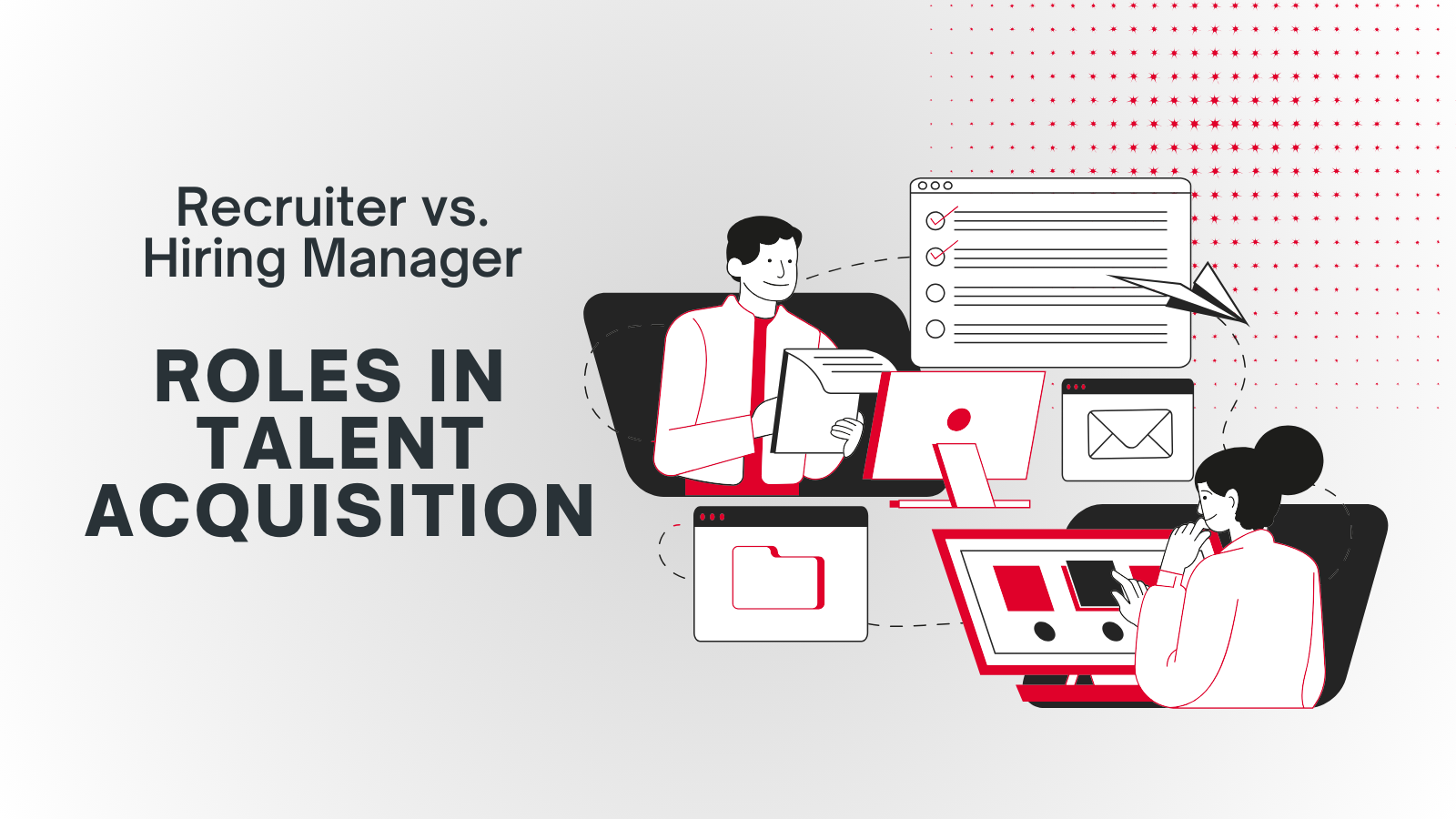
    People often need clarification on Hiring Managers and Recruiters. While both are involved in the hiring process, their tasks are complementary rather than overlapping.

    Recruiters are responsible for building a strong pool of qualified candidates for a given position.

    Hiring Managers are then responsible for identifying and hiring the most qualified applicant from that pool.

    To summarize, a recruiter’s job is to give a pool of suitable candidates to the Hiring Manager, who will interview them and then decide whom to hire. He is the final decision maker. Recruiters and hiring managers have distinct roles within the hiring process. and effective collaboration between these two roles is crucial for successful talent acquisition.

    So, next time when you are going for an interview, it is essential to know whom you are talking to, knowing that you can plan how you want to proceed; especially it will be necessary for you to ask the most relevant questions to your interviewer. So, whenever you go for an interview, feel free to ask who your interviewer will be!

    ​At Cornerstone Global Partners Singapore, all our consultants are specialized in their field of industry or function. We will always strive to build a trustful relationship, along with an ownership mentality. Your next promising hire or job could be just a click away.

    Get in Touch

    ALSO READ:

    ​This article is originally published by Claudia Fazzari from Cornerstone Recruitment Japan and is further repurposed by CGP Singapore.

  • Beyond Recruitment: The Additional Value A Recruitment Agency Can Bring To Your Business

    Beyond Recruitment: The Additional Value A Recruitment Agency Can Bring To Your Business

    The question is crystal clear: What benefits can a recruitment agency bring to your business?

    In the quest to assemble the perfect team, employers often turn to recruitment agencies to aid in their talent search. While it is often perceived that for recruitment agencies it is just about ‘filling a position’, however, the values of recruitment agencies extend far beyond merely identifying suitable candidates.

    From market expertise and time-saving efficiencies to a vast talent pool, thorough screening processes, and strategic insights, there are several additional benefits that a reputable recruitment agency can bring to your business. They play a pivotal role in shaping your organization’s success by ensuring you not only hire the right talent but also optimize your entire recruitment process.

    Discover how partnering with a recruitment agency can be a game-changer for your hiring efforts, helping you secure the best talent while saving you time, resources, and potential hiring pitfalls.

    RELATED READ: Debunk Common Myths Associated with Recruitment Agencies

    It’s More Than Just Hiring

    #1 Access a Wider Talent Pool

    Talent shortage leaves employers with fewer options and makes hiring difficult. Nonetheless, that should not mean reaching out to the same candidates over and over again. Though it is a complex task to find and approach new candidates, a professional team of specialist recruiters manages to do it.

    Recruitment agencies nurture an extensive network of candidates that facilitates faster talent acquisition. They know how to locate new candidates and add them to the pool. This widens your talent pool and increases the chances of finding the perfect fit for your organization.

    #2 Provide Industry Insights

    Partnering with a competent recruitment agency means employers can use the agency’s extensive knowledge, such as the job market trends, salary benchmarks, and the availability of talent in your industry. The benefit of being tuned into their knowledge is employers can gain an understanding of local, national, and international job markets to formulate recruitment tactics.

    Moreover, they understand the issues and expectations related to each open position. Therefore, they can provide you with the best advice, insight, and candidates, thus helping you make informed hiring decisions.

    #3 Spot Relevant Candidates

    The hiring process can be time-consuming and resource-intensive. It is impossible to manually sift through CVs, social media, and profiles of thousands of candidates. That’s why modern-day recruitment agencies use automated CV screening tools. Although AI-based screening tools cannot replace a recruitment team, they still assist in making the process easier and faster.

    Experienced recruiters can filter profiles with the help of tools and screen the candidates interested in the role. Not only this, but a recruitment firm also assesses whether the candidates’ profiles match the client’s requirements.

    #4 Limit Risk-taking

    Using a recruitment agency limits the recruitment errors and risks involved. In simple terms, you stand a better chance of recruiting the right people at the right time and reducing the likelihood of hiring someone who is not a good fit for your company.

    This is because candidates are evaluated based on their skills, which guarantees the match between selected candidates and businesses. As a result, candidates relate better to the organisation’s beliefs and goals.

    RELATED READ: The Hidden Costs of Bad Hires

    #5 Develop Content that Stands Out

    Only a reliable recruitment agency can tread a tightrope and maintain a balance between employer branding and skill requirements. To reach new talent, you must craft a compelling message to engage the candidates and inspire them to respond.

    The recruiters know how to engage new jobseekers without being nagging at the same time. They make sure your message stands out and gets noticed by active and passive job seekers.

    #6 Facilitate a Controlled Process

    A recruitment agency is the best talent acquisition way and helps you focus on your business functions. The expertise and methodology of recruiters take care of the distribution of the job offer across social media and channels, getting feedback from the candidates, and organising interviews.

    The comprehensiveness of the process allows organisations to place better candidates in their work environment. Also, if you have specific hiring needs, such as executive-level positions or niche roles, recruitment agencies with expertise in those areas can provide tailored solutions.

    #7 Help You Build a Strong Team & Relationship

    A recruitment agency can help you build a strong team by finding candidates who are a good fit for your company culture and who have the skills and experience you need. They can also help you onboard new employees and provide them with the support they need to be successful.

    Further, a strong relationship with a recruitment agency can lead to long-term benefits. They get to know your company culture, values, and unique needs, making future hiring processes even more efficient.

    Values a Good Recruiter Should Have

    A good recruiter doesn’t need to speak for their work. In fact, their values become the brand ambassadors. Therefore, if you are looking for a recruitment firm, you must look for the following values.

    • Integrity – A team of recruiters that ensures compliance with rules and maintenance of quality is the one you should hire. This value must start from the beginning of the recruitment process and continue till the end.
    • Honesty – Recruitment agencies must remain honest with candidates and employers. In addition, the team should ensure constant communication and deliver timely reports to the clients.
    • Commitment- There must be a consistent commitment to providing the best services to clients and never fail to fulfill what was committed.

    KNOW MORE: 3 Advantages of Working with a HR Specialist Recruiter

    Make Your Hiring Journey Smooth

    When choosing a recruitment agency, it’s important to find one with a good reputation and specialises in the type of talent you’re looking for. You should also interview the agency to ensure they understand your needs and have a process in place that will help you find the right candidate.

    Here are some of the things you should look for in a recruitment agency:

    • Reputation: Ask for references from past clients and check their online reviews.
    • Specialization: Make sure the agency specializes in the type of talent you’re looking for.
    • Process: Ask about the agency’s process for finding and screening candidates.
    • Communication: Make sure the agency is responsive to your inquiries and that they keep you updated on the status of your search.

    Final Comments

    Hiring talent is no easy task. Of course, job boards & social media platforms can do the job, but they can’t replace a professional’s expertise to filter out and identify the right candidates. Most business leaders believe that a good recruitment process builds a strong and productive team of employees. Therefore, hiring a recruitment agency can be profitable for your business.

    Onboarding a reliable agency allows you to tap into their expertise. A good recruitment agency will always add value to your business by expanding its services beyond recruitment.

    How Can CGP Help?

    The team at Cornerstone Global Partners (CGP) Singapore is client-focused and candidate-focused. Our performance-driven culture has helped numerous businesses find the right workforce possessing the required capabilities and character. We don’t take shortcuts and dig deep to know what our clients demand. Allow us to help you find the best talent for your growing team and organisation.

    Get in Touch

    FAQs

    What is the importance of recruitment agencies?

    Sourcing and placing the most suitable candidates is not an easy task. Moreover, it consumes many employers’ time, making them miss their important tasks. However, hiring a recruitment agency can help businesses in many ways. First, organisations can tap into their expertise and hire better resources. Secondly, recruitment agencies often develop a candidate pool that makes hiring faster.

    What’s the most inspiring part of being a recruiter?

    The most inspiring part of being a recruiter is constantly bringing people together. Clients and candidates reach out to recruiters to look for employees and employers, respectively. It is incredibly satisfying to help both parties connect and find each other.

  • The Significance of Crafting Precise Job Descriptions

    The Significance of Crafting Precise Job Descriptions

    Job descriptions have been a staple since the inception of job roles. They play a vital role in helping potential employees comprehend job expectations and aiding employers in maintaining accountability.

    In the midst of the numerous responsibilities that talent acquisition professionals juggle, job descriptions are sometimes neglected. Nonetheless, their significance in the recruitment process should never be underestimated. Let’s delve into the importance of crafting precise job descriptions.

    What makes a good Job Description?

    A well-constructed, accurate job description forms the cornerstone of successful recruitment. It provides candidates with a clear picture of the role, allowing them to assess their suitability. Beyond setting expectations, it serves as a guiding document throughout the hiring journey.

    Ensuring that a job description is accurate and concise empowers employers to establish a strong foundation for talent acquisition. Consequently, it is imperative that job descriptions are devoid of grammatical errors and avoid technical jargon or buzzwords.

    An accurate job description aids in:

    1. Attracting suitable candidates
    2. Defining expectations
    3. Saving time and resources
    4. Promoting fair hiring practices
    5. Facilitating effective onboarding
    6. Enhancing employee engagement and retention

    Let’s explore the significance of an accurate job description in greater detail and how it can shape your hiring efforts.

    The Importance of an Accurate Job Description

    When recruiters embark on the journey of seeking new candidates, they must have a clear understanding of the ideal candidate’s skills, knowledge, competencies, and past experiences. Inaccurate or outdated job descriptions not only tarnish an organization’s reputation but also lead recruiters to make suboptimal hiring decisions.

    #1 Attracts the Right Candidates

    Imagine this scenario: John urgently needs to consult a doctor due to a stomach disorder. He spots a clinic nearby with a sign that reads ‘Clinic.’ However, upon entering, he discovers it exclusively treats lung disease patients.

    This situation exemplifies how a lack of clarity in description can attract the wrong audience.

    Likewise, if an organization fails to draft a clear job description, it may inadvertently draw the wrong candidates. This can overwhelm the candidate selection process, making it challenging for recruiters to identify suitable candidates.

    A well-crafted job description effectively conveys the role, responsibilities, and required qualifications, thus attracting candidates with the requisite skills and experience.

    #2 Facilitates Effective Onboarding

    A comprehensive and accurate job description aids management in determining the training needs of new employees. It supports the onboarding and training processes by enabling new hires to understand their roles, responsibilities, and goals from the outset. This alignment empowers them to align their efforts with organizational expectations, leading to a productive start. Simultaneously, hiring managers can create customized training plans, ensuring candidates are placed in actionable positions.

    #3 Assists Employee Engagement and Retention

    Developing a robust job description contributes to employee retention and satisfaction. It helps candidates comprehend what is expected of them if they are hired, averting misunderstandings and laying the foundation for a successful tenure. Conversely, an inaccurate job description can leave employees feeling deceived, increasing the likelihood of turnover. A well-defined job description reduces the chances of employees leaving their roles, as they are placed in positions closely aligned with the job posting’s description during the initial stages.

    #4 Measures Performance Shortcomings

    Following the hiring process, job descriptions serve as a benchmark for evaluating employee performance. They provide a standardized framework against which managers can assess performance. This helps identify areas where employees may fall short or where they exceed expectations.

    #5 Mitigates Risk and Limits Legal Liability

    Well-crafted job descriptions have the potential to mitigate risks and minimize legal liabilities. A clear and accurate job description ensures that the hiring process remains fair and objective. It establishes consistent criteria for evaluating candidates, reducing the potential for bias or discrimination. By focusing on essential skills, qualifications, and job requirements, employers can maintain legal compliance.

    Key Components of a Job Description

    • General overview
    • Job duties
    • Purpose of the job
    • Job goals and objectives
    • Scope of work
    • Work arrangement (in-office, remote, or hybrid)
    • Competencies
    • Reporting structure
    • Special conditions

    In Conclusion

    A job description is not a one-time endeavor; recruiters and hiring managers must regularly revisit their approach to crafting and updating job descriptions. It is a critical tool for effective recruitment and successful talent management. Employers should continuously review and refine job descriptions to align with evolving requirements. In essence, employers must focus on maintaining job descriptions and eliminating irrelevant information.

    If you’re seeking assistance with sourcing the right candidates for your organization’s objectives, Cornerstone Global Partners (CGP) Malaysia can provide valuable support. Our extensive network of professionals and customized solutions ensures a tailored approach that aligns with your hiring goals.

    Why choose us?

    Cornerstone Global Partners (CGP) Malaysia can help you source the right candidates supporting your organisation goals. Choosing us as your recruitment partner will expose you to our vast network of professionals.

    We understand that each organization is distinctive, with its own set of requirements, culture, and vision. That’s why we believe in creating customized solutions that align perfectly with your hiring goals. Our dedicated team of recruitment experts takes the time to truly understand your company’s needs, values, and the specific skills and qualifications you seek in potential candidates.

    FAQs

    The most important part of a job description is competencies. The part includes the knowledge, skills, and capabilities required to secure the position. Employers must give a detailed overview of competencies to help candidates assess whether they meet the requirements.

    Writing accurate job descriptions lets employers note what they expect from the candidate. Moreover, job descriptions help employees to determine whether they match the job requirements. As a result, employers and employees reach a common spot. In other words, employees find themselves in a better position to perform their job as they are informed of the job duties and responsibilities before the interview.

  • Examining AI’s Influence on the Recruitment Landscape: Advantages and Concerns

    Examining AI’s Influence on the Recruitment Landscape: Advantages and Concerns

    The recruitment field has been static for many years, following an outdated hiring process involving vacancy identification, job advertising, applicant screening, interviews, and job offers. However, the landscape of talent acquisition has undergone a significant transformation.

    Today, recruitment is far from a one-size-fits-all concept, influenced by various factors. Among these factors, Artificial Intelligence (AI) has emerged as a game-changer. However, it’s important to note that AI can have both positive and negative implications when not utilized correctly by recruiters.

    Read on to discover the advantages and drawbacks of employing AI in the recruitment industry.

    Advantages of AI in Recruitment

    According to Predictive Hire, approximately 55% of companies are investing in recruitment automation, expecting it to enhance efficiency and enable data-driven decision-making.

    Here are the key benefits of integrating Artificial Intelligence into recruitment:

    1. Streamlines administrative tasks: Administrative duties are integral to the recruitment industry but can be repetitive and time-consuming. AI automation frees up recruiters to focus on critical aspects of talent acquisition.
    2. Mitigates unconscious bias: Unconscious bias is a challenge that affects even the best organizations. AI helps eliminate these biases, ensuring that candidates are evaluated solely on their qualifications, leading to fairer assessments.
    3. Enhances candidate experience: Positive candidate experiences are vital, but some companies fail to provide feedback to applicants, discouraging reapplication. AI can automate tasks that impact candidate experience, such as chatbots for instant responses and application tracking software for updates.
    4. Improves accuracy: AI outperforms human recruiters in accuracy when matching candidates’ skills with suitable positions, ultimately increasing business productivity.

    Drawbacks of AI in Recruitment

    Despite its advantages, AI has limitations and challenges within the recruitment sector:

    1. Overlooks unconventional talent: AI’s reliance on specific criteria may cause it to miss candidates with unique qualifications who don’t fit predetermined parameters.
    2. Keyword-dependent: AI relies on keywords provided by recruiters, making it susceptible to manipulation by candidates who understand how the system works.
    3. Potential for bias: AI can still exhibit bias, as it operates based on its programming. Properly setting selection criteria is crucial to avoid bias in the recruitment process.
    4. Impersonal: AI lacks the personal touch and can result in ineffective communication, making candidates and recruiters feel disconnected.

    Responsible Use of AI

    To prevent the negative impact of AI in recruitment, responsible usage is crucial. Recruiters should ensure that AI is used to identify candidates with specific skills while disregarding factors such as gender, education, or names.

    Conclusion

    AI offers substantial benefits in terms of time-saving and improved hiring quality. However, it also poses challenges, such as the need for extensive data and the potential for bias. Recruiters must adapt to this technology trend, understanding that AI is here to stay and requires responsible implementation.

    FAQs

    Deficient or insufficient data may not be sufficient for a successful recruitment process. Moreover, lacking human touch might lead recruiters to miss deserving candidates. Also, AI ignores resumes that aren’t search engine optimised. It also doesn’t assess tone, personality, or soft skills. Also, AI screening doesn’t assess whether the candidate possesses decision-making skills.

    Undoubtedly, AI helps in automating recruiting tasks. However, incomplete or wrong information can lead to an overwhelming recruiting process. Moreover, the lack of human touch generates chances of missing out on deserving candidates.


  • Mastering the Art of Effective Performance Reviews: A Comprehensive Guide

    Mastering the Art of Effective Performance Reviews: A Comprehensive Guide

    Employee performance holds significant value within your organization, and rightfully so. To achieve productivity, profitability, and success, it’s imperative to establish a robust employee performance evaluation strategy. Mere concern for your employees’ performance doesn’t validate your commitment to your business. This is where the importance of conducting employee performance reviews becomes apparent.

    While conducting these reviews offers managers the opportunity to assess employee performance, pinpoint areas for improvement, and set future goals, it can be challenging to execute them effectively. Mishandling reviews can lead to resentment, decreased productivity, and even employee turnover.

    This blog delves into the best practices for conducting performance reviews. Stick around for valuable insights into employee evaluation. By implementing the tips provided in this post, you can conduct performance reviews that empower your employees to reach their full potential.

    Conducting a Performance Review: Ensuring Success

    1) The Fundamentals

    Resist the urge to provide feedback to your employees all at once or just before a review. Instead, plan and determine the most suitable time of the year for performance evaluations.

    Consider organizational processes and schedules that need to be adhered to. Additionally, align the timing with the budgeting process for bonus distribution. Ensure you allocate enough time for this activity without disrupting daily business operations.

    Define and unveil the employee evaluation process while communicating it clearly to your employees.

    Let’s proceed to explore the aspects that contribute to effective performance reviews in organizations.

    2) Setting Goals and Expectations

    The optimal way to establish goals and expectations is to initiate a conversation with your employees at the start of the year, sharing your vision and mission. Follow this up with one-on-one meetings to set performance objectives.

    Apply the SMART criteria:

    • S – Specific
    • M – Measurable
    • A – Achievable
    • R – Result-oriented
    • T – Time-bound

    3) Continuous Feedback

    Arrange periodic touch-base meetings throughout the year, ensuring that the final annual review holds no surprises for your employees. Schedule these meetings in advance and create agendas that cover expectations and questions. Post-meeting, compile notes to serve as future references for well-prepared annual reviews.

    4) Employee Preparation

    Encourage employees to start preparing months before the actual review. Ask them to compile their annual performance results, summarizing job responsibilities, current projects, and achievements. You can also invite them to self-evaluate their performance for an honest self-assessment.

    5) Your Preparation

    Dedicate at least two months before the final review to gather your notes and results for each employee. Collect performance references, such as sales reports, project deliveries, and call records. Consider qualitative data like client feedback. This exercise provides insights into any gaps between expectations and employee performance, allowing you to plan your next steps.

    6) Conducting the Meeting

    This is the most challenging phase. Ensure the meeting is a two-way dialogue, fostering collaboration rather than appearing as a one-sided lecture to your team members. Give employees a fair opportunity to discuss their strengths, challenges they’ve overcome, and areas for improvement.

    7) Towards the Future

    While discussing shortcomings and areas for improvement is crucial in a performance review, shift the focus toward the future after a detailed examination. Share new goals and your plan to support the employee in achieving success at work. This instills a sense of value and motivation, encouraging employees to step out of their comfort zones and enhance their performance.

    In Conclusion

    Though the employee evaluation process may not be the most enjoyable task, it remains essential for increasing employee engagement and improving performance. Effective leaders know how to make performance reviews beneficial for the organization. They prioritize people and performance improvement to yield the best results in employee performance reviews.

    To summarize, here are some key elements of an effective performance review:

    • Be specific and objective, avoiding general statements or subjective language.
    • Provide constructive and actionable feedback to facilitate improvement.
    • Offer timely feedback on a regular basis.
    • Ensure confidentiality of the performance review discussion.

    For exceptional candidates that contribute to your organization’s success, consider reaching out to Cornerstone Global Partners (CGP) Malaysia. Your organization deserves top-tier talent.

    FAQs

    To conduct an effective performance review, follow these steps:

    1. Prepare ahead of time.
    2. Choose your words carefully and ask relevant questions.
    3. Be a good listener.
    4. Provide concrete examples of both achievements and areas needing improvement.
    5. Evaluate your employees’ progress.
    6. Conclude with a final review and discuss all aspects with the employee.
    7. Make performance reviews a regular practice.

    The four stages involved in conducting a performance review are:

    1. Planning goals.
    2. Monitoring performance.
    3. Reviewing results.
    4. Rewarding success.

    Some of the key benefits of conducting effective performance reviews within an organization include:

    • Improved employee performance.
    • Increased employee satisfaction.
    • Reduced turnover.
    • Enhanced communication between managers and employees.
    • A more productive work environment.
  • AI In Recruitment: What Works and What Doesn’t

    AI In Recruitment: What Works and What Doesn’t

    The recruitment sector remained static for decades, with an outmoded hiring process. And the process involved identifying a vacancy, placing a job advert, screening applicants, conducting job interviews, and making the final offer. However, the scenario is no more the same as talent acquisition has undergone a transformation phase.

    The present-day reality is that recruitment is not a one-size-fits-all concept, and multiple driving forces exist behind it. Artificial Intelligence is taking the recruitment world by storm among all the forces for good reasons. However, on the flip side, AI also has a downside that comes to the forefront when recruiters adopt the wrong ways of using it.

    Our latest blog delves deep into the realm of AI in recruitment, separating fact from fiction. Join us as we explore real-world applications and the limitations that organizations must grapple with. Whether you’re an HR professional, a job seeker, or simply curious about the future of hiring, this blog is your essential guide to understanding what truly works and what falls short when AI meets recruitment.

    Benefits of AI for the Recruitment Sector

    According to Predictive Hire, nearly 55% of companies are investing in recruitment automation as they believe it will enhance efficiency and help them make data-driven judgments.

    Let’s take a look at the pros of Artificial Intelligence in recruitment.

    #1. Saves time on administrative tasks

    Admin tasks are an indispensable part of the recruitment industry. Though necessary to maintain an effective workflow, they are repetitive & time-consuming. Fortunately, AI is there to automate administrative tasks and allows more time for recruiters to spend on other activities. Simply put, they can focus on vital tasks of talent acquisition.

    #2. Reduces the chances of unconscious bias

    Unconscious bias spares no company; even the best organisations fall flat at the hurdle. In the hiring process, unconscious bias refers to forming opinions about candidates based on first impressions. AI eliminates these biases and ensures that candidates are evaluated purely on merit. In reality, truly automated recruiting is the only way to source and evaluate candidates without bias and access a wider variety of candidates.

    #3. Creates a positive candidate experience

    Candidates look for positive experiences. However, some companies reject applicants without even providing them with feedback. As a result, this set of candidates is twice as likely not to apply to the same organisation. Artificial Intelligence can automate simple tasks that impact candidate experience. First, chatbots are here to answer job candidates instantly. Secondly, application tracking software sends application updates to the candidates. Thirdly, automated rejection emails let candidates know why they were unsuccessful.

    #4. Demonstrates a higher level of accuracy

    The need to select candidates based on their skills and place them in a position that meets their abilities. AI demonstrates a higher level of accuracy as compared to recruiters. On top of that, it increases the business’s productivity and motivates candidates to improve their skills.

    RELATED READ: An Era of Smart Recruitment with Technology​

    The Downside of AI in Recruitment

    #1. Overlooks unconventional talent

    Undoubtedly, AI provides accurate results. However, this sometimes comes as a blow to the recruitment process. For instance, if a recruiter asks AI to scan applications having “one year of experience in web development”. In such a case, AI might miss candidates looking for new job opportunities but with two years of experience. As a consequence, it misses unconventional talents.

    #2. Keyword-dependent

    AI depends on keywords that recruiters provide to scan through the pool of candidates. This becomes an advantage for a few candidates familiar with how AI is programmed. They may include relevant keywords that can potentially lure AI and trick the system.

    #3. Possesses the potential to be biased

    Despite all the popular conceptions, AI still has the potential to be biased. Moreover, AI is only as intelligent as its programming. Therefore, users must be cautious about what criteria for scanning applications they feed to AI.

    In 2015, Amazon detected that its AI recruitment tool showed bias against women in the hiring process. As a result, the tool did not let the applications containing the word “women” proceed further.

    The instance justifies the need for users to set the proper selection criteria for AI.

    #4. Impersonal

    AI isn’t human and doesn’t connect to candidates and hiring managers & candidates as a human. In other words, it lacks human touch and forms the basis of ineffective communication. As a result, candidates and recruiters feel detached from the process.

    Responsible Use of AI

    What is the key to preventing AI from taking a gigantic form and disrupting the recruitment sector with its downside?

    Well! The answer is making responsible use of AI in the hiring process. As recruiters, you must understand that AI must only be used to identify candidates who have specific skill sets while ignoring aspects such as gender, education, and names.

    Related post: 10 Proven Ways for Rapid Recruitment

    Final Words

    The main benefits of using AI include saving recruiters’ time by automating high-volume tasks. Additionally, AI uses the quality of hire through standardised job matching. On the other hand, the significant challenges of using AI are the requirement of a lot of data, the need to learn human biases, and the skepticism of recruiters about the technology.

    While Artificial Intelligence is paramount for the recruitment sector, every recruiter must keep abreast with the technology.

    More importantly, it is necessary to understand that the AI trend in the recruitment sector is here to stay long. AI is a necessary evil; recruiters must adapt to the new conditions to embrace the changes.

    How do we embrace AI at CGP?

    Since its establishment in 2012, Cornerstone Global Partners (CGP Group) has delivered Executive Search, Staffing Solutions, Contracting, and other HR services to a wide range of industries and clients. 2018/2019 was the year of transformation for CGP when the self-developed revolutionary AI O2O recruitment platforms including https://www.cgpo2o.sg/ were launched. CGPO2O is a powerful cross-functional, cross-industry, and multi-geographic talent sourcing platform that has integrated with a professional offline team of industry recruiting experts to curate talent.

    How does the O2O Platform benefit our clients and candidates?

    What Makes Us Better for Clients?
    • Find talent that best fits your growing company: Save time with our AI matching technology, expert offline recruiters, and fully automated client dashboard.
    • Find talent at the speed you need: Take just 5 minutes to tell us what you’re looking for, and our platform will do the rest. With our curated pool of talent, let us do the work for you so save your time.
    • Hire the best talent in the market across multiple industries. Gain access to 1 Mn+ pre-screened and pre-qualified candidates.
    • Cost efficiency: Save up to 50% on recruitment costs when you utilize our platform

    We provide a market-leading 1-year guarantee for our retained full-service clients. Your next star employee is just a click away.

    Submit a Vacancy

    What Benefits We Offer to Candidates?

    With AI matching technology and expert offline recruiters with a fully automated candidate job dashboard, CGP offers our candidates one of the best O2O portals for mid to senior positions.

    • Apply only one time and get multiple offers with our AI matching technology, and fully automated candidate dashboard.

    • Receive 1-on-1 personal career counseling from our professional Talent Advisors throughout the hiring process.

    • Just upload your profile or connect your LinkedIn account and let us do the work for you.

    Ready to take your career to the next level? It’s time to let your dream job find you.

    View All Jobs

    FAQs

    1. What is the downside of AI in recruitment?

    Deficient or insufficient data may not be sufficient for a successful recruitment process. Moreover, lacking human touch might lead recruiters to miss deserving candidates. Also, AI ignores resumes that aren’t search engine optimised. It also doesn’t assess tone, personality, or soft skills. Also, AI screening doesn’t assess whether the candidate possesses decision-making skills.

    2. What is the problem with using artificial intelligence to do recruiting tasks?

    Undoubtedly, AI helps in automating recruiting tasks. However, incomplete or wrong information can lead to an overwhelming recruiting process. Moreover, the lack of human touch generates chances of missing out on deserving candidates.

  • Why Should Job Seekers Consider Working With A Recruitment Agency?

    Why Should Job Seekers Consider Working With A Recruitment Agency?

    Finding Your Perfect Fit Job

    Hands up if you have exhausted your energy and resources to find the right job.

    Let’s admit the fact: job hunting can be tormenting. Why? It is because there is a difference between finding an employer and finding the ‘right’ employer. Moreover, as time passes and the rejection rate increases, job seekers lose confidence and enthusiasm.

    Just as every movie has a plot, a protagonist & a supporting actor, a job seeker’s story also begins with the struggle to find a good job. And a recruitment agency is in the supporting role. But before proceeding to avail a recruitment firm’s assistance, make sure to seek answers to the following questions and look for solutions, if lacking:

      • Do you lack experience?

      • Do you find the job market challenging and competitive?

      • Is your age affecting your application?

      • Are you unable to fit into the job roles offered to you?

      • Are you pushing yourself hard to meet your job requirements?

    Once you have the answers, working with a recruitment agency will be easier. The blog entails the reasons why job seekers should consider working with a recruitment agency.

    ALSO READ: 7 Traits Every Employer is Looking for in a New Employee​

    The Role of Recruitment Agencies in Your Job Search

    Although platforms like LinkedIn can help you land your dream job, there’s an even easier way— hiring a recruitment agency. Expert recruiters provide multiple career opportunities that match candidates’ skill sets and expectations.

    Here are the top five reasons a job hunter must consider hiring a recruitment agency.

    A recruitment agency does the job search for you

    A recruitment agency takes the burden off your shoulders and relieves you from the overwhelming job-hunting process. Recruiters maintain a vast database of positions, including ones not advertised publicly. This helps candidates cover the gap between finding a job and the right one.

    A recruitment agency provides you access to various jobs at once

    You know what it feels like looking for a new role. Right? Fortunately, recruitment firms help candidates sail through the arduous process. Their eagle eye focuses on the market constantly and records job openings. Furthermore, they consider one candidate for multiple career opportunities, keeping the employer’s and employee’s requirements in mind.

    A recruitment agency helps you put your best foot forward

    There is a misconception that recruiters stay occupied with the application and screening process. However, they also work to

    • gain employer insights,

    • determine the candidates they are looking for, and

    • help you prepare accordingly.

    They can help you with your resume, cover letter, portfolio, and financials.

    A recruitment agency provides you with inside knowledge

    The task of gaining employer insights and market knowledge is no cakewalk. Nonetheless, recruiters spend much time speaking with the client and knowing what they require. Further, they share the information with the job seekers to help them prepare for interviews and understand what is expected of them.

    A recruitment agency gives you constructive feedback

    As a job seeker, it would benefit you to gain constructive feedback to boost your chances of getting the right job. They can help speed up the job search process and increase their chance of securing good jobs.

    Are you looking for a job? 

    Cornerstone Global Partners is right here. While we do not encourage you to leave everything in our hands, we work to increase your chances of success. How do we make that possible?

    1. We save you time. Our team knows what jobs are out there in the market and devote time to filling them with the right candidates.

    2. We help you network on a large scale. You can take advantage of our connections and strengthen your job search.

    3. We provide you access to more job opportunities. Since not all open positions are posted on job boards, you can apply for the confidentially advertised jobs.

    4. You stay in our database. Even if you are not hired for the first potential match, your profile stays with us and is considered for future positions.

    Contact our specialist recruiters and boost your visibility in the market. Our team will assist you in getting placed in fulfilling careers by aligning your career advancement goals with the employers’ requirements.

    VIEW CURRENT JOB OPENINGS

    Final Thoughts

    The market is highly competitive, and there are millions of candidates looking for jobs. Undoubtedly, there might be many of them who will surpass your academic achievements and skills, but you can have a leg-up against the competition. And the best way to do it is by availing of specialist recruiters’ services. Additionally, develop a lasting relationship with them to keep your ear to the ground and check the availability of new roles.

    The only thing you must be careful about is choosing the most genuine and reliable recruitment agency. Only some recruitment firms are worth your time and effort.

    RELATED READ:

    FAQs

    1. Why should you work with a recruitment agency?

    Finding the right employer is an uphill task and time-consuming. As a result, job seekers fail to land their dream job and keep looking for the right offer since they do not possess market knowledge. Moreover, they do not know how to reach the right employers. Fortunately, a reliable recruitment agency can help job seekers to connect with genuine employers. Therefore, candidates can join jobs that match their financial and growth requirements.

    2. What do recruiters look for in job seekers?

    Recruiters look for employees who are passionate about their work and stay loyal to their employers. Secondly, recruiters prefer hiring candidates with a high emotional quotient. Other factors that recruiters consider before hiring a candidate are their commitment to work, communication skills, track record, leadership skills, and ability to work with a team.

  • The Hidden Costs Of Bad Hires: Why A Recruitment Agency Is A Cost-Effective Solution

    The Hidden Costs Of Bad Hires: Why A Recruitment Agency Is A Cost-Effective Solution

    Nothing but Jeff Bezos’ words are a perfect start for the blog that entails the hidden cost of bad hires.

    “I’d rather interview 50 people and not hire anyone than hire the wrong person.”

    Bad hires can be costly, both financially and in terms of lost productivity. The hidden costs of a bad hire can include recruitment costs, training costs, decreased productivity, and damage to the company culture. A recruitment agency can help you avoid these hidden costs by providing you with access to a pool of qualified candidates, conducting thorough screening and reference checks, and providing you with expert advice on the hiring process.

    Globally, several organisations are falling foul of bad hires. In most cases, the true cost of a bad hire is roughly 3.5 times the employee’s annual salary. While a bad hire can have a significant financial impact, at the same time, it can also damage the culture, impact productivity as well as result in overall dissatisfaction between employees and employers.

    In this blog, we will discuss how bad hires can impact your organisation’s reputation & profitability and the best option to fix the situation.

    Counting the Costs: The Impact of Bad Hires

    Hiring a new employee is costly. But the recruitment process can become costlier if you make a bad hire. If an employee is not the right fit, the employer loses the money spent on recruiting and training. Moreover, starting the process over again consumes employers’ time and resources. Things get even worse when the employee is hired to complete a project with tight deadlines.

    1. Loss of productivity

    Your business won’t function at its best productivity level if you have a bad hire. Often, an employee who isn’t a good fit for the role will deliver output that won’t meet the standards. Therefore, you will lose money against the value you expected. As a result, other team members would face additional work pressure to complete the work left incomplete by the bad hire.

    2. Reduced employee morale & workplace culture

    One bad apple ruins the bunch. Hiring those who are not a good fit for the organisation can make the workplace stressful. Ultimately, it affects existing employees’ attitudes toward their jobs, colleagues, and the workplace. At times, the employees would feel demotivated to manage extra work without additional compensation.

    Do you know? Bad hires bring along a host of issues:

      • 37% higher absenteeism rates

      • 18% less productivity than good hires

      • 15% less profit than good hires

    3. Unhappy clients

    A bad hire may lead to you losing valuable customers. Your clients have certain expectations from your business, but a bad hire would fail to meet them. In other words, they won’t leave their comfort zone to satisfy the client.

    4. The ding to the company’s reputation

    Your employees are the brand ambassadors of your organisation. An employee who doesn’t represent your company well can send a negative message to clients and prospective employees. This tarnishes your brand’s reputation and keeps new clients, partners, vendors, and prospective job applicants away.​

    Why is a Recruitment Agency a Cost-Effective Solution?

    These days, finding an ideal candidate is hard. Granting all this, even if you manage to hire a candidate, things can get upside down if you make a bad hire. In such circumstances, nothing can be wiser than hiring a recruitment agency because it’s cost a cost-effective solution.

    1. Faster hiring

    Availing of the services of a specialist recruiter shortens the time to hire. You won’t have to spend time sourcing and placing the right candidates. A reliable recruitment agency can find candidates faster because of the availability of a candidate pool. Employers can tap into its talent pool that comprises already vetted candidates.

    2. Industry expertise 

    A good recruitment agency houses specialist recruiters that possess industry expertise. These recruiters understand industries, market trends, salary levels, and skills candidates require to be successful.

    RELATED READ: Agency Recruitment vs In-House Hiring: Which Is Right For Your Business?

    3. Network

    Recruiters develop a candidate pool using the network they have developed over time. This means employers can choose from a wide candidate database and select the ones that suit the role aptly. Also, if a company doesn’t hire a suitable candidate for some reason, they can still stay in touch with them through the recruitment agency.

    4. Flexibility

    A reputable recruitment agency also maintains a pool of temporary or contract candidates that can be placed temporarily. The flexible options give employers the opportunity to onboard someone for a short period or on a contract basis.

    To Conclude

    The hidden cost of bad hires: It’s more than what you observe.

    It’s painful when you make the wrong hire. So, learn to correct the wrong steps you took previously while hiring. Be selective with whom you hire and ensure you see red flags to spot bad hires. The ultimate formula to prevent bad hires is to focus on your requirements and look for a recruitment partner that can assist you in hiring candidates you deserve and desire.

    Why choose us?

    Cornerstone Global Partners (CGP) Singapore has a track record of helping employers find the best employees. We are a group of recruiters that help businesses stay focused on what matters. Our team has continually adapted to meet the dynamic needs of organisations and the variety of roles they wish to fill.

    Our passion for connecting the right employers with the right employees has remained unwavering all these years. That’s one thing we will never change. Contact us if you are looking for star candidates to work for your organisation, and we would be more than happy to connect.

    OUR SERVICES

    VIEW JOBS

    FAQs

    1. Which source of recruitment is cost-effective?

    Hiring a recruitment agency is the most cost-effective source of recruitment. They maintain a candidate pool that consists of already vetted candidates, making it easier for employers to find employees. Moreover, they possess industry expertise that helps them understand employers’ requirements. Another benefit is that recruitment agencies offer flexible options for temporary or contractual employees.

    2. How does cost affect recruitment?

    Various factors affect recruitment. However, the most dominant factor is cost. Hiring an employee is a costly affair as it consists of the following expenses:

      • Advertising the open positions

      • Screening the candidates

      • Interviewing candidates

      • Conducting background checks

      • Training the new employee

     All these factors affect recruitment and determine how employers find suitable candidates.