Tag: human resources

  • Cornerstone Global Partners Earns Great Place to Work Certification™ in Singapore

    Cornerstone Global Partners Earns Great Place to Work Certification™ in Singapore

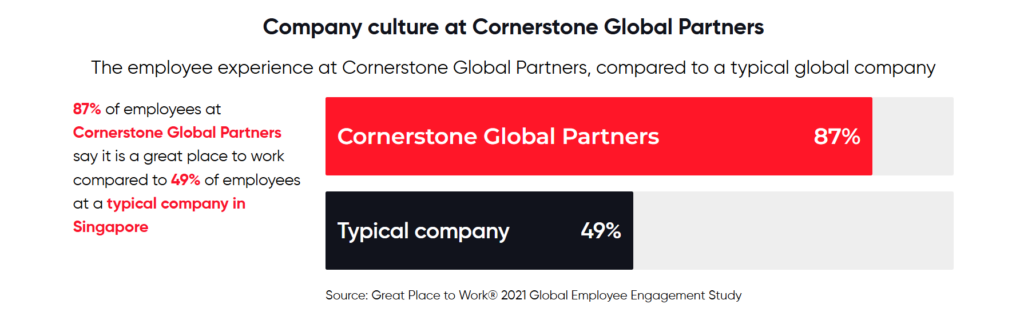
    Cornerstone Global Partners (CGP Group) is proud to be Certified™ by Great Place To Work® for 2024-2025 in Singapore. The prestigious award is based entirely on what current employees say about their experience working at Cornerstone Global Partners Singapore.

    Great Place To Work® is the global authority on workplace culture, employee experience, and the leadership behaviours proven to deliver market-leading revenue, employee retention and increased innovation.

    “The Great Place to Work Certification is a prestigious recognition based solely on real-time employee feedback about their workplace culture. Getting certified highlights our unwavering commitment to delivering exceptional employee experience and reflects the trust our team has in CGP. We celebrate this achievement with gratitude for our dedicated employees, whose efforts made this recognition possible. Together, we will continue to strive for even greater success and milestones!” – Sean Ng, Co-founder and MD, CGP Group APAC.

    “Great Place To Work Certification is a highly coveted achievement that requires consistent and intentional dedication to the overall employee experience,” says Sarah Lewis-Kulin, the Vice President of Global Recognition at Great Place To Work. She emphasizes that Certification is the sole official recognition earned by the real-time feedback of employees regarding their company culture. “By successfully earning this recognition, it is evident that our Singapore stands out as one of the top companies to work for, providing a great workplace environment for its employees.”

    According to Great Place To Work research, job seekers are 4.5 times more likely to find a great boss at a Certified great workplace. Additionally, employees at Certified workplaces are 93% more likely to look forward to coming to work, and are twice as likely to be paid fairly, earn a fair share of the company’s profits and have a fair chance at promotion.

    We’re Hiring

    Looking to grow your career at a company that puts its people first? Visit our careers page or LinkedIn!

    Keep up with the CGP Culture

    We’re all about having fun. If you want a taste of the CGP culture, meet us up on our Instagram account @cgp_apac

    About Cornerstone Global Partners

    Cornerstone Global Partners is an award-winning executive search, contingent recruitment, flexible staffing & HR outsourcing firm delivering talent services across SEA. We provide premium human resources and talent services from large multinational corporations to small and medium-sized businesses across mature and emerging markets in Asia. Our team of experts delivers customised talent solutions covering functions including sales, marketing, human resources, accounting & finance, legal & compliance, supply chain, manufacturing, information technology, operations, etc. Our holistic suite of talent services ensures you have the right talent, in the right roles, aligned with your business goals and culture.

    About Great Place to Work Certification™

    Great Place To Work® Certification™ is the most definitive “employer-of-choice” recognition that companies aspire to achieve. It is the only recognition based entirely on what employees report about their workplace experience – specifically, how consistently they experience a high-trust workplace. Great Place to Work Certification is recognized worldwide by employees and employers alike and is the global benchmark for identifying and recognizing outstanding employee experience. Every year, more than 10,000 companies across 60 countries apply to get Great Place To Work-Certified.

    About Great Place To Work®

    As the global authority on workplace culture, Great Place To Work® brings 30 years of groundbreaking research and data to help every place become a great place to work for all. Their proprietary platform and For All™ Model helps companies evaluate the experience of every employee, with exemplary workplaces becoming Great Place To Work Certified™ or receiving recognition on a coveted Best Workplaces™ List.

  • What Is The Difference Between Recruiter And Hiring Manager?

    What Is The Difference Between Recruiter And Hiring Manager?

    ​While navigating the job hunting and the interviewing process, one of the most challenging things – and, at the same time, the key to success – is to understand whom you are talking to. There are a lot of titles: Hiring Manager, Recruiter, Consultant, Talent Acquisition Specialist… But who are, in fact, all these people?

    Let’s break them down, and let’s give a good explanation for all of them!

    First, let’s start talking about the term “Recruiter”.

    Understanding Who Are Recruiters

    I would say that “recruiter” is an umbrella term that covers mainly two figures: the In-house Recruiter (or Talent Acquisition Specialist) and the Recruitment Consultant (recruiting agency).

    An In-house Recruiter is an employee of a specific company who takes care of the hiring process of that company. They use input from the manager, work directly with the organization, and work with all the company’s departments covering various positions. Through them, the company hires people directly.

    On the other hand, a Recruitment Consultant is someone like us at CGP who works for an external agency looking for the best market talent to introduce to our clients. As Recruitment Consultants, we have a portfolio of clients we work with, and, as such, we can introduce you to different kinds of opportunities in your industry. We manage the

    • sourcing and hiring for an external company,

    • developing our internal candidate database and

    • matching these candidates with all the available positions at the companies we are working with.

    At CGP Singapore, we cover multiple functions, such as Accounting & Finance, Financial Services, Human Resources, Legal, Sales, Marketing & Digital, and Technology as well as industries like Engineering, Energy, Government, GLC & Healthcare and Supply Chain & Procurement. Still, there are recruiting agencies that focus only on a specific industry.

    Learn More About Our Expertise

    As Consultants, we also help our clients and candidates understand the job market, advising them on how to proceed with the recruiting/interviewing process to be successful.

    In-house Recruiters and Recruitment Consultant may have similar duties:

    • Updating clients/hiring managers about the recruiting process,

    • Sourcing clients through different channels,

    • Conducting screening calls, and

    • Scheduling interviews

    How does the Hiring Manager fit into this?

    A Hiring Manager is responsible for hiring an employee to fill an opening position at an organization. Often, Hiring Managers will be the new hire’s future supervisor. Hiring Managers coordinate with the HR team, which supervises the interview and the hiring process.

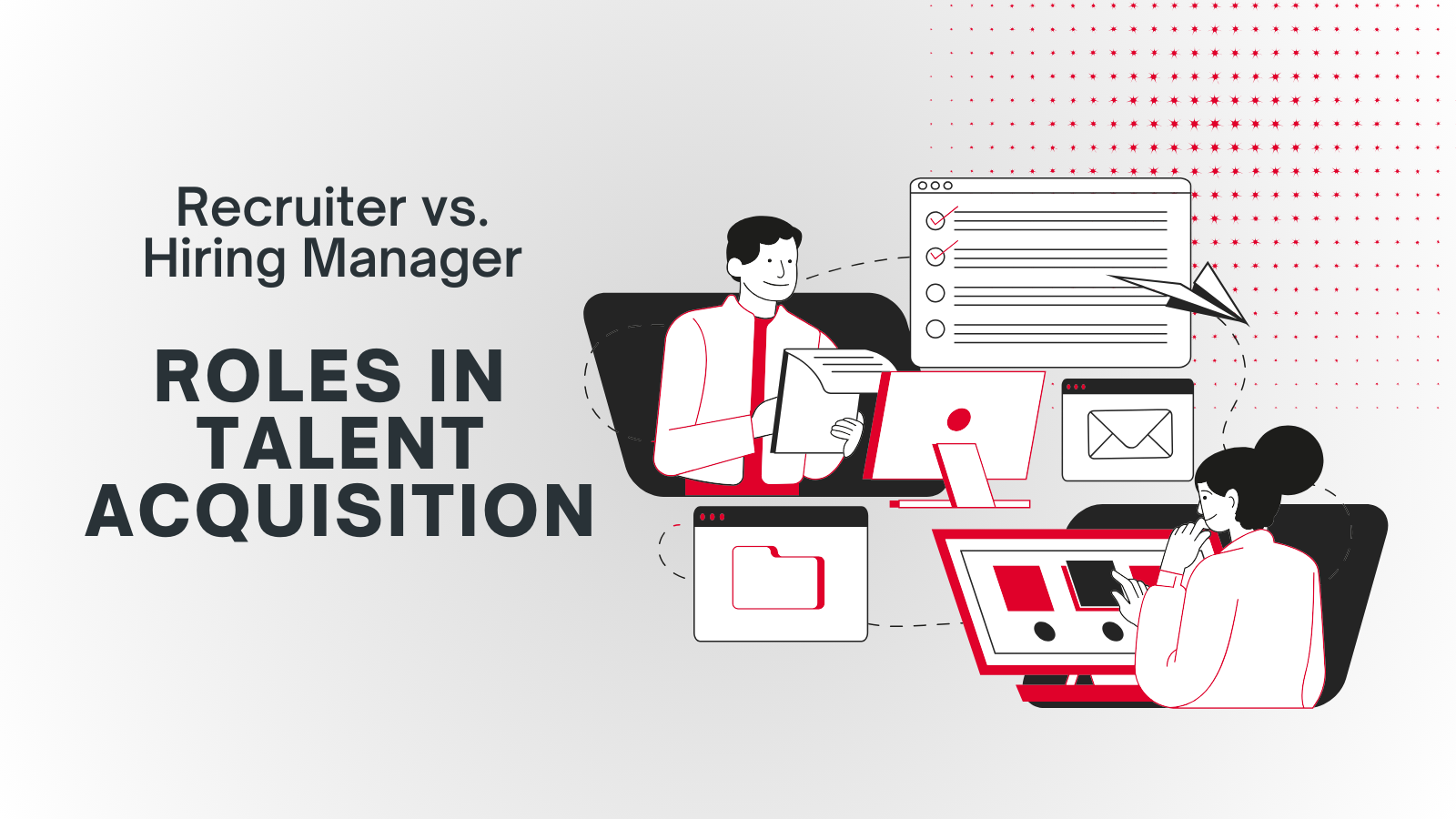
    People often need clarification on Hiring Managers and Recruiters. While both are involved in the hiring process, their tasks are complementary rather than overlapping.

    Recruiters are responsible for building a strong pool of qualified candidates for a given position.

    Hiring Managers are then responsible for identifying and hiring the most qualified applicant from that pool.

    To summarize, a recruiter’s job is to give a pool of suitable candidates to the Hiring Manager, who will interview them and then decide whom to hire. He is the final decision maker. Recruiters and hiring managers have distinct roles within the hiring process. and effective collaboration between these two roles is crucial for successful talent acquisition.

    So, next time when you are going for an interview, it is essential to know whom you are talking to, knowing that you can plan how you want to proceed; especially it will be necessary for you to ask the most relevant questions to your interviewer. So, whenever you go for an interview, feel free to ask who your interviewer will be!

    ​At Cornerstone Global Partners Singapore, all our consultants are specialized in their field of industry or function. We will always strive to build a trustful relationship, along with an ownership mentality. Your next promising hire or job could be just a click away.

    Get in Touch

    ALSO READ:

    ​This article is originally published by Claudia Fazzari from Cornerstone Recruitment Japan and is further repurposed by CGP Singapore.

  • How To Foster Innovative Thinking In Your Team?

    How To Foster Innovative Thinking In Your Team?

    As a leader, what are the most effective ways to activate your team’s creativity? Well! The answer that must top your list is developing a mindset of curiosity and innovative thinking. And, we are pretty sure you also consider our response apt.

    The business world is growing in a fast-paced environment fueled by new technologies and changing market trends. Businesses that can consistently come up with new and better ways of doing things are the ones that will thrive. Employers must identify opportunities to foster innovation in their teams to keep up-to-date with the dynamic world. However, the question is: how do you bring about innovative thinking among your people?

    To foster creativity and innovation within and across teams, you must create a culture for your workforce to empower them to share their ideas freely. Your role is to let mindsets thrive. To help, we offer insights on cultivating an innovative culture within your organisation.

    Must Read: How Can Employee Engagement Benefit the Company?

    Cultivating Innovative Culture

    #1 Create a supportive and open environment

    Create a safe workplace culture for your team that discourages judgment and encourages idea-sharing. If you build an environment that enables employees to share their ideas and suggestions, you ensure your organisation’s long-term success.

    #2 Keep things fun

    Life is too short to be anything but happy. Likewise, work life is too short to be lived under stress at all times. Therefore, ensure you have a relaxed atmosphere with lots of laughter, a stress-free work schedule, and one that supports creativity.

    #3 Keep toxic workers away

    No matter how healthy your work environment is, things won’t work as expected if you have a few toxic people. So on that note, it is always better to let go of that toxic set of people. As a result, the rest employees will feel psychologically safe.

    #4 Set boundaries

    Boundaries create innovative people. While you may assume freedom is a synonym for innovation, boundaries create innovation. So establish boundaries, let your team know that they exist, and train them to be innovative within those boundaries.

    #5 Embrace experimentation & risk-taking

    Strive to create a collaborative environment that encourages experimentation and risk-taking. Simply put, driving disruption requires a culture that allows employees to learn from failures at work that helps them capitalise on the disruptive potential.

    #6 Promote collaboration

    Unity is strength!

    The phrase applies to the business world, too. Bring together a bunch of smart workers for the generation of new ideas. This way, team building helps employees get introduced to new perspectives and improvise their thinking capacities.

    #7 Invest your confidence

    The most crucial step towards building an innovative workplace culture is investing trust & confidence in your team. Be a leader that cares about your people’s aspirations & feelings and shows complete confidence in their potential to think and work innovatively.

    ALSO READ: Learn how to promote leadership development in your organisation

    #8 Challenge your teams

    Run a drill where employees switch roles with each other for a day. The exercise might take time to bring results, but it helps deepens relationships and boosts team morale. The onus is on you to devise a balanced strategy before undertaking the exercise.

    #9 Recognise & acknowledge

    When an employee comes up with a new and innovative idea, make sure you recognise and acknowledge them. It’s essential for you to make your team members feel recognised for their contribution and receive feedback. This will encourage them to continue thinking outside the box.

    #10 Foster outside-the-box thinking

    Ask your team to come out of their shells and look at other industries to see how they solve problems. In other words, the world around your organisation has a lot to teach, but it is on your team to grasp it at the right time.

    Key Takeaway

    Fostering innovation is a process— it does not happen overnight. So help your organisation stay ahead of the curve by crafting a winning strategy. Certainly, and shortly, you will be on the road to building a workplace culture that will make your employees feel comfortable and think freely.

    About CGP Singapore

    We are a team of the most professional recruiters delivering Executive Search, Contracting, Recruitment Process Outsourcing (RPO), and Human Resources Outsourcing services to multi-national and domestic firms. With over 1000k pre-screened mid- to senior-level candidates in our database, we can assist you in finding the right fit for the vacant positions within your organisation.

    We have won multiple industry awards and recognitions demonstrating our capabilities, dedication, and efforts to deliver the best recruitment products and services to job seekers, clients and partners.

    • 2022 Best Executive Search Firm 2022 (HR Vendors of the Year, Singapore and HK),
    • 2022 Most Popular Recruitment Agency (Fast Jobs Employer Awards, Singapore),
    • 2020-2022 Best Recruitment Portal (HR Vendors of the Year, Singapore),
    • 2020-2022 “Bole” Award of Shanghai Human Resources Service,
    • And more.

    In 2020, the Ministry of Manpower’s HCP (EA) Programme recognised CGP for our efforts around investing in human capital, adopting fair and progressive workplace practices, and helping employers strengthen their Singaporean core. We are one of the first 5 agencies to receive the MARK Award from the Ministry of Manpower.

    If you are looking for talented professionals to help your organisation achieve its goals, contact the experts at Cornerstone Global Partners (CGP) Singapore and access cutting-edge talent.

    Be a one-of-a-kind leader for your company and build a forward-thinking team with us.

    FAQs

    1. How do you encourage innovative thinking in the workplace?

    To encourage innovative thinking in the workplace, leaders must become the most exemplary role models for their teams. Secondly, they must create a safe and healthy workplace culture to enable workers to share their ideas freely. Next, team collaboration must bring brilliant minds together that can work collectively to achieve organisational goals. Also, the organisation must recognise and acknowledge the contributors who share their impactful suggestions and ideas.

    2. What is the best way to foster innovation?

    While there are various ways to foster innovation, the best way is to build an environment that makes its people psychologically safe for idea-sharing. This helps encourage people to come forward and contribute with their ideas without fearing judgment.

  • AI In Recruitment: What Works and What Doesn’t

    AI In Recruitment: What Works and What Doesn’t

    The recruitment sector remained static for decades, with an outmoded hiring process. And the process involved identifying a vacancy, placing a job advert, screening applicants, conducting job interviews, and making the final offer. However, the scenario is no more the same as talent acquisition has undergone a transformation phase.

    The present-day reality is that recruitment is not a one-size-fits-all concept, and multiple driving forces exist behind it. Artificial Intelligence is taking the recruitment world by storm among all the forces for good reasons. However, on the flip side, AI also has a downside that comes to the forefront when recruiters adopt the wrong ways of using it.

    Our latest blog delves deep into the realm of AI in recruitment, separating fact from fiction. Join us as we explore real-world applications and the limitations that organizations must grapple with. Whether you’re an HR professional, a job seeker, or simply curious about the future of hiring, this blog is your essential guide to understanding what truly works and what falls short when AI meets recruitment.

    Benefits of AI for the Recruitment Sector

    According to Predictive Hire, nearly 55% of companies are investing in recruitment automation as they believe it will enhance efficiency and help them make data-driven judgments.

    Let’s take a look at the pros of Artificial Intelligence in recruitment.

    #1. Saves time on administrative tasks

    Admin tasks are an indispensable part of the recruitment industry. Though necessary to maintain an effective workflow, they are repetitive & time-consuming. Fortunately, AI is there to automate administrative tasks and allows more time for recruiters to spend on other activities. Simply put, they can focus on vital tasks of talent acquisition.

    #2. Reduces the chances of unconscious bias

    Unconscious bias spares no company; even the best organisations fall flat at the hurdle. In the hiring process, unconscious bias refers to forming opinions about candidates based on first impressions. AI eliminates these biases and ensures that candidates are evaluated purely on merit. In reality, truly automated recruiting is the only way to source and evaluate candidates without bias and access a wider variety of candidates.

    #3. Creates a positive candidate experience

    Candidates look for positive experiences. However, some companies reject applicants without even providing them with feedback. As a result, this set of candidates is twice as likely not to apply to the same organisation. Artificial Intelligence can automate simple tasks that impact candidate experience. First, chatbots are here to answer job candidates instantly. Secondly, application tracking software sends application updates to the candidates. Thirdly, automated rejection emails let candidates know why they were unsuccessful.

    #4. Demonstrates a higher level of accuracy

    The need to select candidates based on their skills and place them in a position that meets their abilities. AI demonstrates a higher level of accuracy as compared to recruiters. On top of that, it increases the business’s productivity and motivates candidates to improve their skills.

    RELATED READ: An Era of Smart Recruitment with Technology​

    The Downside of AI in Recruitment

    #1. Overlooks unconventional talent

    Undoubtedly, AI provides accurate results. However, this sometimes comes as a blow to the recruitment process. For instance, if a recruiter asks AI to scan applications having “one year of experience in web development”. In such a case, AI might miss candidates looking for new job opportunities but with two years of experience. As a consequence, it misses unconventional talents.

    #2. Keyword-dependent

    AI depends on keywords that recruiters provide to scan through the pool of candidates. This becomes an advantage for a few candidates familiar with how AI is programmed. They may include relevant keywords that can potentially lure AI and trick the system.

    #3. Possesses the potential to be biased

    Despite all the popular conceptions, AI still has the potential to be biased. Moreover, AI is only as intelligent as its programming. Therefore, users must be cautious about what criteria for scanning applications they feed to AI.

    In 2015, Amazon detected that its AI recruitment tool showed bias against women in the hiring process. As a result, the tool did not let the applications containing the word “women” proceed further.

    The instance justifies the need for users to set the proper selection criteria for AI.

    #4. Impersonal

    AI isn’t human and doesn’t connect to candidates and hiring managers & candidates as a human. In other words, it lacks human touch and forms the basis of ineffective communication. As a result, candidates and recruiters feel detached from the process.

    Responsible Use of AI

    What is the key to preventing AI from taking a gigantic form and disrupting the recruitment sector with its downside?

    Well! The answer is making responsible use of AI in the hiring process. As recruiters, you must understand that AI must only be used to identify candidates who have specific skill sets while ignoring aspects such as gender, education, and names.

    Related post: 10 Proven Ways for Rapid Recruitment

    Final Words

    The main benefits of using AI include saving recruiters’ time by automating high-volume tasks. Additionally, AI uses the quality of hire through standardised job matching. On the other hand, the significant challenges of using AI are the requirement of a lot of data, the need to learn human biases, and the skepticism of recruiters about the technology.

    While Artificial Intelligence is paramount for the recruitment sector, every recruiter must keep abreast with the technology.

    More importantly, it is necessary to understand that the AI trend in the recruitment sector is here to stay long. AI is a necessary evil; recruiters must adapt to the new conditions to embrace the changes.

    How do we embrace AI at CGP?

    Since its establishment in 2012, Cornerstone Global Partners (CGP Group) has delivered Executive Search, Staffing Solutions, Contracting, and other HR services to a wide range of industries and clients. 2018/2019 was the year of transformation for CGP when the self-developed revolutionary AI O2O recruitment platforms including https://www.cgpo2o.sg/ were launched. CGPO2O is a powerful cross-functional, cross-industry, and multi-geographic talent sourcing platform that has integrated with a professional offline team of industry recruiting experts to curate talent.

    How does the O2O Platform benefit our clients and candidates?

    What Makes Us Better for Clients?
    • Find talent that best fits your growing company: Save time with our AI matching technology, expert offline recruiters, and fully automated client dashboard.
    • Find talent at the speed you need: Take just 5 minutes to tell us what you’re looking for, and our platform will do the rest. With our curated pool of talent, let us do the work for you so save your time.
    • Hire the best talent in the market across multiple industries. Gain access to 1 Mn+ pre-screened and pre-qualified candidates.
    • Cost efficiency: Save up to 50% on recruitment costs when you utilize our platform

    We provide a market-leading 1-year guarantee for our retained full-service clients. Your next star employee is just a click away.

    Submit a Vacancy

    What Benefits We Offer to Candidates?

    With AI matching technology and expert offline recruiters with a fully automated candidate job dashboard, CGP offers our candidates one of the best O2O portals for mid to senior positions.

    • Apply only one time and get multiple offers with our AI matching technology, and fully automated candidate dashboard.

    • Receive 1-on-1 personal career counseling from our professional Talent Advisors throughout the hiring process.

    • Just upload your profile or connect your LinkedIn account and let us do the work for you.

    Ready to take your career to the next level? It’s time to let your dream job find you.

    View All Jobs

    FAQs

    1. What is the downside of AI in recruitment?

    Deficient or insufficient data may not be sufficient for a successful recruitment process. Moreover, lacking human touch might lead recruiters to miss deserving candidates. Also, AI ignores resumes that aren’t search engine optimised. It also doesn’t assess tone, personality, or soft skills. Also, AI screening doesn’t assess whether the candidate possesses decision-making skills.

    2. What is the problem with using artificial intelligence to do recruiting tasks?

    Undoubtedly, AI helps in automating recruiting tasks. However, incomplete or wrong information can lead to an overwhelming recruiting process. Moreover, the lack of human touch generates chances of missing out on deserving candidates.

  • Importance Of Accurate Job Description

    Importance Of Accurate Job Description


    Job descriptions have been around since the advent of jobs.

    They are essential for potential employees to understand what the open position expects from them and help employers hold employees accountable.

    With so much on the desks of talent acquisition professionals, job descriptions tend to take a backseat. However, its importance must not be overlooked because of its role in recruitment. So let us walk you through the importance of drafting an accurate job description.


    What Makes A Good Job Description?

    A well-written job description is crucial for attracting qualified candidates.

    It should clearly outline the role, responsibilities, and requirements, helping candidates decide if they’re a good fit. A clear and concise description, free of errors and jargon, sets a strong foundation for successful hiring.

    Related Reads: How To Persuade Star Candidates To Join Your Business In 2023?

    An accurate job description helps in:

    • Attracting the right candidates
    • Setting expectations
    • Saving time and resources
    • Supporting Fair Hiring Practices
    • Facilitating effective onboarding
    • Promoting employee engagement and retention

    Let’s delve deeper into the reasons why an accurate job description holds such significance and how it can shape the trajectory of your hiring endeavours.


    Importance of an Accurate Job Description

    When a recruiter is asked to look for new candidates, he must know the type of person to hire – This means the recruiter must clearly understand the candidates’ skills & knowledge, competencies, and previous experience.

    Inaccurate or outdated job descriptions can harm an organisation’s reputation and also lead recruiters to make bad hires. As a matter of fact, you must acknowledge the importance of the job descriptions that we have mentioned here.

    the hidden costs of bad hires why a recruitment agency is a cost effective solution

    Source: https://cgp-sg.recsumo.dev

    1. Attracts the Right Candidates

    Let’s understand it with an example:

    “John has a stomach disorder and needs to consult a doctor urgently. He visits a nearby clinic and finds a board outside the premises that mentions ‘Clinic.’ However, John enters the clinic only to discover it cures lung disease patients.”

    This is a clear example of how the absence of a clear description can attract the wrong person.

    Similarly, a vague job description can attract unsuitable candidates, making the hiring process more difficult. Hence, a clear job description outlines the role, responsibilities, and qualifications needed, attracting qualified candidates and improving the chances of finding the right fit.

    2. Facilitates Effective Onboarding

    A complete and accurate job description enables the management to determine the type of training a new employee requires. In addition, a thorough job description supports the employee onboarding and training processes.

    While it helps new common-onboarding-mistakes-companies-make hires understand their roles, responsibilities, and goals from the start, enabling them to align their efforts with the organization’s expectations and hit the ground running, at the same time, hiring managers can create personalised training plans to place candidates in actionable positions.​

    3. Assists Employee Engagement and Retention

    Drafting a good job description means facilitating employee retention and satisfaction. This helps candidates understand what will be expected of them if they are hired, preventing misunderstandings and setting a foundation for success. On the contrary, an inaccurate job description puts employees in a situation where they might feel deceived. Moreover, it will generate more chances of them quitting their jobs.

    A good job description lowers the chances of employees quitting positions. This is because the candidates are placed precisely in the job role dictated in the job posting during the initial stage.​

    4. Measures Performance Shortcomings

    After hiring an employee, job descriptions help in gauging performance. In addition, a job description acts as a standard against which you can measure an employee’s performance after the probation period ends or during the performance review process.

    Hiring managers and team managers have a documented tool to measure employee performance. By this, we mean managers can detect performance shortcomings or areas where employees perform beyond expectations.

    5. Mitigates Risk & Limits Legal Liability

    Well-crafted job descriptions potentially mitigate risks and limit liability.

    A clear and accurate job description helps ensure that the hiring process is fair and objective. It provides consistent criteria for evaluating candidates and minimizes the potential for bias or discrimination by focusing on the skills, qualifications, and requirements essential for the job.

    Employers must ensure the description is legally compliant and meets the requirements.


    Must-have Components of a Job Description

    • Job Overview: A concise summary of the position.
    • Key Responsibilities: Detailed tasks and duties associated with the role.
    • Job Purpose: The overall goal and contribution of the position to the organization.
    • Objectives: Specific, measurable targets the job holder is expected to achieve.
    • Scope of Work: The boundaries and limitations of the job’s responsibilities.
    • Work Arrangement: The preferred work environment (in-office, remote, or hybrid).
    • Required Competencies: The skills, knowledge, and abilities necessary for success.
    • Reporting Structure: The chain of command and reporting relationships.
    • Special Conditions: Any unique requirements or circumstances related to the job.

    Job descriptions are dynamic tools.

    Recruiters should regularly review and update them to ensure they accurately reflect the current needs of the role and attract the right talent.

    Related Reads: How to Hire for Job Fit Over Culture Fit?, Career Mobility: A Key To Attracting And Retaining Talent


    We Can Help You!

    An accurate job description is crucial for effective hiring.

    It clarifies expectations, attracts the right candidates, and improves employee satisfaction. By investing in well-crafted job descriptions, organizations can streamline hiring, boost productivity, and build a strong workforce.

    Enjoyed this read? Check out more articles here!

    Our FAQS

    If you have concerns about the accuracy of a job description, consider the following:

    • Research the company: Look for reviews and information about the company’s culture and work environment.
    • Ask specific questions: During the interview process, ask detailed questions about the role’s responsibilities, challenges, and expectations.
    • Network with current or former employees: Seek insights into the reality of the job.

    If a job description is vague, try to do additional research on the company and the specific role. You can also use online tools and resources to learn more about industry standards and typical job responsibilities. Additionally, preparing a list of thoughtful questions to ask during the interview can help you gain more clarity.


  • The Future Of Work: Preparing For The Changing Landscape Of Employment

    The Future Of Work: Preparing For The Changing Landscape Of Employment

    The world is changing, and so is the way we work. Trends like, artificial intelligence and automation are the stimuli that have spurred a transformation in the work landscape.

    When you think of the future of work, what do you see? Robots in place of human resources? Office setups are entirely different from today, or the absence of physical offices due to adopting remote work?

    While it is impossible to predict the future of work, it is visible that the employment landscape is changing rapidly. Therefore, there is a need for human resources to prepare themselves and adapt to the transition. Presently, the focus is placed on technology in the future of work discussions. However, other factors such as remote work, workplace diversity, and the gig economy also shape the future of work.

    Looking ahead and preparing for the changing world of work can help you maintain a work-life balance.

    So, let’s take a closer look at the tips to prepare you for it.

    #1. Create a professional development plan

    “Planning is bringing the future into the present so that you can do something about it now.”- Alexander Graham Bell.

    Outline your goals and map the route you must take to achieve them. This will allow you to clearly understand your expectations & desires, assess your skills, determine your success route, focus on essential activities, and strategise accordingly.

    smart goal

    Follow the SMART goals rule:

    S– Specific

    M– Measurable

    A– Achievable

    R– Relevant

    T– Time-based

    #2. Evaluate your skills

    Most importantly, for quick adaptation to the future of work, don’t wait. Take control of your profile and strengthen it by working on the weak areas. To make it happen, you must evaluate your skills and identify the areas you lack. As a result, you will be in a better position to work on yourself and add to the skills bucket. Pay careful attention to the skills you lack for your industry, as that will help you choose the right training or mentorship program.

    #3. Explore the redesigning of learning

    The definition of a skilled candidate has changed and is no longer restricted to just micro-learning. Simply put, you must lean into macro-learning to level up and prepare yourself technically and professionally.

    While micro-learning refers to learning small chunks of a larger topic, macro-learning is learning complex skills. Therefore, your professional development plan must include your macro-learning plans.

    #4. Capitalise on next-gen technology

    Changing times demand embracing new, disruptive technologies to prepare for the challenges. The candidates who will be counted among the top talent are the ones who are using technology to prepare for the future of work today. Stay updated on the latest technologies that are impacting the marketplace and leave no stone unturned in leveraging their potential.

    #5. Tap into your passion and become an expert

    Turn your passion into a profession, and work won’t feel like work. Present-day organisations are looking for candidates who are specialists, and the trend will stay forever. So explore your talent and areas of interest that you can take in the future workplace. In other words, plan to dig deep into your passions and take on a specialised role.

    team
    #6. Work on your emotional intelligence

    A majority of people seek answers to the question: How can I prepare myself for the future of work?

    Well! Apart from working on technical aspects, you must also work on skills that fall under emotional intelligence. And they are self-awareness, self-regulation, motivation, empathy, and social skills. Most importantly, you must strive to become a better human and a leader. The skills will get you closer to your team and help you collaborate with colleagues. Moreover, AI and automation can never outsmart the leadership skills a human possesses.

    RELATED READ: The Importance of Emotional Intelligence in Leadership

    Trends for the Future of Work

    The current year and the years ahead are set to see the changed work landscape. Here, we mention the most vital trends you must foresee to handle workplace diversity and changing work environments.

      • Quiet hiring

      • Flexibility for frontline workers

      • Focus on skills rather than candidates’ prior experience

      • Focus on employee well-being

      • Continuous boosting of DEI efforts

    RELATED READ: Diversity and Inclusion in HR: Current Trends and Future Directions

    Final Comments

    A competitive talent landscape and pressure to reduce costs pose challenges for organisations. Given that, companies must start putting the right people in the right place and turn the challenges into opportunities. In addition, enabling a workplace to foster innovation and be inclusive requires leaders to strategize how work gets done.

    You must take charge of your future and upskill yourself to better prepare for the upcoming changes. Whether you are an accounts executive or a data scientist, one thing remains constant: continuous learning & development, reskilling, and upskilling bring job security.

    FAQs

    1. What are the future trends in the workplace?

    The future trends in the workplace are:

      • Flexible hours/four-day working

      • Prioritisation of well-being

      • Focus on skills over jobs

      • The emphasis on soft skills

      • Increased diversity, equity, and inclusion (DEI) efforts

      • Use of AI and automation

      • Transformation of HR using tech and data

      • Focus on employee growth

    2. What are your suggestions for the future of work at the organization?

    The world of work is changing rapidly. Therefore, employers and employees need to be on their toes to adapt to the changing scenario. While employers must plan accordingly to manage the effects of the future of work, employees must focus on upskilling themselves to stay ahead of the curve.

    3. How will the future of work change?

    With the advent of AI and automation, the future of work is changing. However, various other trends will bring about a change in the future of work. For instance, hybrid flexibility will allow frontline workers flexibility, such as what they work, with whom they work, and how they work. Continuous support for DEI initiatives, sensitive offboarding, emphasis on continued employee growth, focus on skills over jobs, and prioritisation of employee well-being are among the other changes that will define the future of work.

  • Employee Retention Metrics You Should Be Tracking

    Employee Retention Metrics You Should Be Tracking

    Millennials: the job-hopping people, are less interested in staying in their current jobs. As per a Gallup report, 21% of millennials are reported to have changed their careers within the past year.

    With this shocking revelation in the market, employers continue focusing on employee retention. Nevertheless, just mapping the route to retain employees won’t suffice. In fact, as an employer, you must also know the employee retention metrics you should be tracking.

    Why You Should Measure Employee Retention?

    #1. Understanding your workforce dynamics

    Measuring employee retention allows you to understand which employee leaves & when, and who stays. With the information, organisations can determine whether the top performers are staying or leaving.

    #2. Identifying issues in time

    Organisations can identify issues early and take appropriate action in time to correct the situation.

    #3. Strategising

    Measuring employee retention enables organisations to create an effective employee retention strategy after analysing the conditions.

    #4. Saving money & resources

    Focusing on employee retention measurement empowers organisations to work on retaining employees. Universally, companies that succeed at retaining their employees save themselves from spending money on hiring and training new employees.

    Before we delve deeper into the details, understand what employee retention can do to your company:

      • Fosters improvement in the company’s culture.

      • Enables employees to develop strong workplace relationships.

      • Increases employee productivity.

      • Raises employee engagement levels.

      • Reduces costs.

      • Increases revenue.

      • Improves employee morale.

      • Creates better employee experience.

    Now, you are prepared to read ahead. In this article, we define the employee retention metrics you should be tracking, and the reasons for doing so are the benefits mentioned above.​

    Common Employee Retention Metrics

    1. Employee retention rate

    The metric that lays the foundation for tracking employee retention is the employee retention rate. The term refers to the indication of a company’s ability to retain employees over a period of time.

    A company could be successful if it welcomes new hires regularly. However, its success reduces to half if, on the other hand, it fails to retain its existing employees.

    The employee retention rate is calculated by subtracting the number of employees who left from the total number of employees and dividing the remainder by the total number of employees. For conversion into a percentage, the number is multiplied by 100.

    2. Voluntary turnover rate

    The voluntary turnover rate is defined as the rate at which employees leave an organisation willingly. As a matter of fact, a low voluntary rate depicts that employees are happy with their organisation and enjoy working there.

    To calculate the voluntary turnover rate, let’s say, ten members resigned from their jobs voluntarily out of 200 employees. You can divide ten by 200 and then multiply the number by 100, which would give you a voluntary turnover rate of 5%.

    3. Involuntary turnover rate

    The involuntary turnover rate is precisely the opposite of the second metric. Simplifying it, the term refers to the percentage of employees dismissed or laid off by the organisation. The higher the rate, the poor an organisation’s workforce planning and employees’ career development strategies.

    You can calculate the rate in the same manner as mentioned for the voluntary turnover rate. The only change is dividing the number of employees dismissed or laid off from their jobs by the total number of employees. You can obtain the rate by multiplying the number by 100.

    ALSO READ: Career Mobility: A Key To Attracting And Retaining Talent

    4. Employee satisfaction rate

    Employees who are well recognised and rewarded timely always stay satisfied and happy with their jobs. Not only this, an organisation that cares for employee development also nurtures satisfied employees.  As a result, they tend to stick to a particular organisation for a relatively longer duration.

    Employers can measure employee satisfaction by asking the employees to rate the organisation on a scale of 1-10. The employees have to rate based on how likely they are to recommend you as an employer.

    5. Average employee tenure

    The tenure for which an employee stays with an organisation indicates their satisfaction with the organisation. Employers calculate the average employee tenure by averaging the tenures of all employees with the total number of employees. A company having employees stick to it for a longer duration enjoys a high employee retention rate.

    The metric allows the HR departments to identify & address concerns that bother the employees. Thus, they leave.

    6. Cost of employee turnover

    Acquiring new talent is costlier than retaining the existing ones. Furthermore, a company with high talent acquisition and low retention rates can never succeed in the long run.

    The formula to calculate the cost of employee turnover is summing up costs such as

      • Monthly salary,

      • Advertisement cost,

      • Background checks,

      • Cost of time invested by managers in conducting interviews,

      • Onboarding cost of new hires, and

      • Training cost

    7. Engagement scores

    Employee engagement is a metric that indicates whether or not an employee will remain with the company. Generally, HR personnel uses pulse surveys or engagement surveys to collect the required data.

    A pulse survey consists of short questions to understand employees’ perceptions of the work environment. Additionally, employers can measure engagement by asking a series of questions. The surveys can be conducted quarterly or annually.

    8. Flight risk

    It’s not always possible to predict the future and tell which employee will leave the organisation shortly. Nonetheless, some aspects can be counted to identify the same, which are:

      • Underpaid employees

      • Employees who perceive they are not being paid adequately

      • Employees that have recently switched jobs

      • Employees that feel the lack of career development opportunities

    By identifying these red flags, you can estimate the flight risk.

    Conclusion

    Knowing the employee retention metrics will not only help you understand the state of employee retention. While this goes above and beyond and helps you assess the effectiveness of your employee retention efforts. So take suitable measures now and make them work for the employees’ career development.

    ​At CGP Singapore, we have a comprehensive line of HR solutions that meet the needs of companies with distributed teams, including talent search, executive search, and contracting. Learn more about how we can help you bring great talents together across Asia.

    KNOW MORE

    FAQs

    1. What is the metric for employee retention?

    Employee retention refers to organizations’ practices and strategies to retain talented employees. The main objective is to reduce turnover during a specific period of time. The most common employee retention metrics are employee retention rate, retention rate per category, voluntary & involuntary turnover, employee satisfaction rate, and cost of employee turnover, and the list is endless.

    2. What is an example of a retention process?

    While there are many ways an organisation can retain its talented employees. However, as per the present circumstances, offering flexible work is the biggest example of an employee retention process. The employees remain productive and loyal to the organisation even when working from home. The reason is they feel valued by their employer as they can spend more time with their family when given the freedom to work from home.

  • Recruitment Marketing vs. Recruitment Operations: Maximizing Talent Acquisition Success

    Recruitment Marketing vs. Recruitment Operations: Maximizing Talent Acquisition Success

    Recruitment seems easy: Post a vacancy, interview candidates, and hire the best. Isn’t it? But that’s not what it is. The world of recruitment has changed. Similar to how businesses attract clients, recruitment teams must market their employer brand to attract high-quality candidates and define work processes for effective talent acquisition. Thus, the two key components which can help you devise a successful recruitment strategy include recruitment marketing and recruitment operations.

    While recruitment marketing and recruitment operations are two distinct disciplines, they are closely related and work together to attract and hire the best talent.

    In this blog, we will discuss how recruitment marketing focuses on building an employer brand, attracting candidates, and creating engaging experiences, while recruitment operations streamline and optimize the logistical aspects of hiring, ensuring efficiency and accuracy.

    What is Recruitment Marketing?

    It is promoting your employer brand using marketing methodologies to attract, engage, and nurture relationships with employees. Recruitment marketing can involve activities such as:

    • Creating a strong employer brand,
    • Developing and executing marketing campaigns, and
    • Using social media to connect with potential candidates.

    While it sounds like another HR buzzword, it’s a full-fledged business function.

    What is Recruitment Operations?

    Recruitment operations are functions that define work processes, assist talent acquisition teams to work more effectively, and oversee hiring processes. This can involve:

    • Using applicant tracking systems (ATS),
    • Managing job boards, and
    • Coordinating with hiring managers.

    As a result, human resources teams can leverage the incorporation of recruitment operations into the process.

    Let us get into the details of what separates the two terms.

    Let’s Talk About Recruitment Marketing…

    Recruitment marketing uses a traditional marketing funnel to entice, engage, and nurture talent. The term embraces four stages under its umbrella.

    1. Awareness

    Spread your brand awareness and market your company to attract job seekers to work with your organisation. A majority of job seekers do not actively look for opportunities. Therefore, employers must reach them before they even actively start looking for jobs.

    2. Interest

    After attracting their attention, it is time to narrate your brand story. And do it so that they remember your brand for a long time. Then, devise a content marketing strategy to ensure constant communication with them.

    3. Decision

    Bring out your best offers just as a salesperson highlights a product’s USPs. Simply put, you need to share the benefits & perks you can offer. As per a LinkedIn study, 49% of candidates seek compensation-related information, 33% want to grow professionally, and 29% prefer work-life balance. So highlight what you offer and tell why they should choose to work with your organisation.

    4. Action

    The last stage is the call-to-action for candidates to apply. Furthermore, look out for loopholes in your hiring process and make improvements. This will attract top talent to apply and proceed to further steps.

    What does a Recruitment Marketing Manager do?

    Are you a large company and setting up a dedicated recruitment marketing team? or, a small company having HR professionals work on recruitment marketing activities?

    In both cases, the duties & responsibilities of a recruitment marketing manager will include the following:

      1. Identifying candidate persona, which consists of the profile and skill sets of ideal candidates.

      2. Improving or modifying company culture as per the current employees’ feedback and suggestions.

      3. Working on content and communicating with the outside world through blog posts, videos & social media.

      4. Organising events to promote employer brand.

    Understanding Recruitment Operations…

    There are three major components of recruitment operations.

    1. Processes

    Processes in recruitment operations refer to the sequence of activities that ensure a clear understanding of recruiting workflow among the members.

    2. Responsibilities

    The recruiting & hiring team members carry out various responsibilities to play their roles well and work for the organisation’s common goal. This sets expectations and provides clarity to every member.

    3. Technologies

    Recruiting operations are maintained using various technologies that differ from one organisation to another.

    What does a Recruitment Operations Manager do?

      1. Strategising to map out the possible solutions to prevent loopholes in the hiring process from hampering effectiveness.

      2. Streamlining recruitment to find the best talent, enhance employee experience, and successfully train employees.

      3. Collecting and learning from data to improve the hiring process, enhance employee experience, or improve the company culture.

      4. Identifying the workflows and evaluating whether the systems are working effectively.

      5. Finding the best digital solutions for recruitment, such as recruitment software, to improve efficiency and assist in developing sourcing strategies.

      6. Managing the recruitment budget.

      7. Making employees aware of the circumstances that call for a change. Additionally, helping them understand their changing roles and how to adapt.

      8. Ensuring the organisation complies with employment policies, rules & regulations.

      9. Managing the brand’s reputation and ensuring effective promotion.

    Conclusion

    Recruitment marketing and recruitment operations are the two inseparable aspects of any organisation. While the former is the process of promoting your company’s employer brand, the latter is responsible for the administration and management of the recruitment process. A modern-day employer cannot choose one over the other, owing to the importance of both processes.

    Are you ready to propel your career to the next level? Are you someone who is passionate about the recruitment industry and want to make a positive impact on someone’s life and career?

    We are currently seeking passionate and driven individuals to join our team at Cornerstone Global Partners Singapore!

    JOIN US

    FAQs

    1. What is the meaning of recruitment marketing?

    Recruitment marketing refers to the inbound strategies and tactics an organisation uses to find, attract and nurture talent before they apply for a job. Recruitment marketing builds awareness and visibility to help attract top talent. The most important benefits of recruitment marketing are as follows:

      • Reach more candidates

      • Strengthens brand’s value and trust

      • Conversion of candidates into applicants

    2. What are the two types of recruitment process?

    Two types of recruitment processes are:

      • Internal recruitment: This process occurs within an organisation. Three sources of internal recruitment are transfers, promotions, and re-employment.

      • External recruitment: External recruitment is external to an organisation. External recruitment sources are advertisements, employment exchanges, employment agencies, educational institutes, and recommendations.

  • The Importance Of Employer Branding In Attracting Top Talent

    The Importance Of Employer Branding In Attracting Top Talent

    ​In today’s competitive job market, attracting and retaining top talent has become a priority for organizations worldwide. As businesses strive to build high-performing teams, one crucial factor stands out—employer branding. In a world where job seekers have a myriad of choices, a strong employer brand sets an organization apart from the rest.

    An employer brand is far more than just what you sell. It represents a company’s unique identity, culture, and values, making it an attractive proposition for prospective employees.

    It is how you are viewed as an employer.

    It is how your former, current, and future employees place you in their minds.

    In this competitive era, an influential employer brand is imperative. In its absence, employee retention becomes difficult, besides challenges the HR departments face during talent acquisition.

    Despite the assemblage of trends pointing toward the importance of employer branding, many leaders still need to be made aware. While some believe developing an authentic employer brand is impossible, others assume it is meant only for an in-office environment. There is also another set of leaders who feel an employer brand is another name for an organisation’s generic mission statement.

    So what is employer branding and its importance? Here are an employer brand’s key components and roles in attracting top talent.

    What is Employer Branding?

    Employer branding is the process of creating and managing a company’s reputation as an employer. It is about communicating the company’s unique value proposition to potential employees and positioning it as a desirable workplace.

    A strong employer brand can give a company a significant advantage in the war for talent. It can help the company attract top candidates, improve employee engagement, and reduce turnover.

    ​RELATED READ: Career Mobility: A Key To Attracting And Retaining Talent

    Why does Employer Branding matter?

    It’s simple. A powerful employer brand draws talented individuals who are aligned with an organization’s mission and values. Candidates seek out companies that offer more than just a job—they want to be part of a purpose-driven organization that nurtures their growth, provides a supportive culture, and offers exciting opportunities for advancement.

    Strong employer branding attracts top talent and boosts employee engagement and retention.

    So, what are the key elements of a successful employer branding strategy, and how can organisations leverage them to attract, engage, and retain top talent? What businesses can build a strong employer brand?

    Why Develop your Employer Brand?

    #1. A fail-proof formula to attract the best crop of talent

    A majority of job candidates reject offers coming from companies with bad reputations. Alternatively, they gravitate toward a company with an excellent reputation and strong employer brand. In short, developing an employer brand is a formula to attract hard-to-get but most sought-after talent.

    #2. Earns you referrals

    Employees do not always remember the employment terms mentioned in the employment letter. However, they never forget their work experience. So, unarguably, your current and former employees will become your brand ambassadors and recommend your company to others.

    #3. Brings a reduction in recruiting and retention expenses

    Bad employer branding can cost your organisation its precious time and money. First, it will keep the best talent away from your organisation. In second place, attracting high-performing workers to join your operations would cost you money. It is also seen that companies with poor employer branding spend 10% extra on hiring candidates. The amount includes recruitment costs, testing fees, and other miscellaneous fees.

    Key Elements to Develop a Strong Employer Branding

    1. Reputation

    In the modern era, perception matters. Before applying for a job, candidates weigh an employer’s reputation and compare them to others. This action results from the fact that their employer’s public image would impact their reputation and how others perceive them. A company’s reputation consists of three parts:

      • Questions jobseekers ask themselves when learning about a company.

      • The work environment that suits a specific type of person.

      • Impact on the company and society.

    Not every candidate values a company’s reputation equally. Therefore, you can develop various candidate personas and build your brand in the market.

    2. Proposition

    Employer value proposition defines an employer-employee relationship. Furthermore, it establishes your expectations from the employees, financial compensation, professional development opportunities, or other aspects. Simply, proposition means ‘give to get,’ and the benefits you offer to the employees must sync with what you expect from them.

    If your expectations are greater than what you offer to the employees, you might see a downfall in employee retention. Employees often measure the worth of their efforts against the work they are expected to do. And if they find that the benefits they receive align with their goals, the company and the workforce grow together.

    3. Experience

    Employee experience is the most crucial part of employee branding. It builds your brand as an employer and attracts top talent. Nevertheless, if your employer brand is poor, nothing can prevent job seekers from drifting away from your organisation. On the other hand, when employees are rewarded for their performance, they develop a positive attitude toward their work and the organisation.

    Consider your employees like your customers and see how it strengthens your ability to attract top talent.

    RELATED READ: The Connection Between Employee Recognition and Retention

    Tips for building an Effective Employer Brand

      • Craft a unique value proposition.

      • Conduct research.

      • Improve the onboarding process.

      • Provide learning and development opportunities for employees.

      • Promote diversity and inclusion within your organisation.

    Must Read: 5 Ways to Cultivate Inclusion in Your Organization

    Closing Comments:

    A top employer brand rests upon the shoulders of its leaders and work environment. You can’t be cooking noodles inside while telling people you are baking a cake. Like aroma does its work, your in-office environment spreads quickly and reaches the outside world.

    “Your brand is what other people say about you when you’re not in the room.”- Jeff Bezos.

    Remember that you cannot hire a PR agency equivalent to a brand you have carefully defined and developed. Introduce your company to the people you’d love to join your team through employer branding.

    If you do not invest in building your employer brand, get ready to be alienated and see your resources disappear. After all, Fun Fridays or hosting lunches aren’t enough to attract the best talent. Instead, invest in something with a high-value proposition— invest in employer branding.

    Cornerstone Global Partners (CGP) Singapore can assist you in mapping the top talent and filling the vacant positions.

    What do we do?

      • Talent Search

      • Executive Search

      • Contracting

      • Recruitment Process Outsourcing (RPO)

    Learn more about our services and how we can help you.

    FAQs

    1. How does employer branding fortify businesses?

    Employer branding describes an employer’s reputation as a place to work and what makes them unique. It brings many benefits, including getting job applications, reducing hiring time, improving retention, and attracting top talent. It includes everything a company is doing, irrespective of its intentions. An employer brand promotes its unique identity as an employer among its former, current, and future employers.

    2. How does employer branding help attract top talent?

    An organisation can differentiate itself from its competitors by defining and developing its brand. As a result, more candidates will get attracted to an organisation that has carefully planned and implemented authentic employer branding. Moreover, modern-day employees prefer working with companies that promote themselves as brands and reflect their work culture through branding.

    3. What are some ways to build an effective employer brand?

    The most effective ways to build an effective employer brand are:

      • Understand your employer value proposition.

      • Refining your recruitment process.

      • Implement a smooth onboarding process.

      • Reward your employees timely.

      • Create an employee referral program.

      • Measure the results of employer branding.

      • Ethically offboard your employees.

  • The Top Legal Considerations For Employers In Singapore

    The Top Legal Considerations For Employers In Singapore

    ​As a global business nucleus, Singapore’s free-market economy owes its success to its open and corruption-free business environment. And not only this but well-framed monetary & fiscal policies and a transparent legal framework also synergise to make it highly developed. With the ease of company formation & suitable geographical location, Singapore becomes an ideal spot for establishing businesses.

    But, per contra, businesses encounter several legal compliance issues. This fact makes it pertinent for employers to understand employment and labour laws & regulations.

    The guide provides some of the key aspects of employment law in Singapore as well as explains the top legal considerations for employers across the region.

    ALSO READ: 2023 Southeast Asia Market Insights & Salary Trends Report

    The Employment Act

    The Employment Act is the primary legislation that governs employer-employee relations in Singapore. It sets out minimum legal considerations for employers that employers need to address while hiring workers covered by the law.

    The Employment Act of Singapore (Chapter 91) (“EA”) is the primary statute regulating the employment relationship. This provides for the basic terms and conditions at work for employees (both locals and foreign) covered by the EA. The act also protects part-time employees. Employers must comply with their obligations and provide no less favourable terms than those mentioned in EA. For instance, an employment contract clause will be considered null and void if it is less favourable to the employee than specified by the EA.

    Do you know? The 2022 Edition of The Global Talent Competitiveness Index* by Insead, Human Capital Leadership Institute, and Portulans Institute has listed Singapore as the second-most talent-competitive country in the world. The report measures how countries and cities grow, attract and retain talent against the background of many changes that could deeply affect the global talent scene.

    What are the key Employment Law Provisions?

    For those covered under the Employment Act, their employers are required to abide by the following considerations of the Act as listed below.

    #1. Employment Contract and KETs

    An employment contract or contract of service defines the employer-employee relationship, including the terms and conditions of employment. The contract must include key employment terms (KETs) and essential clauses, such as hours of work and job scope.

    KET generally includes:

    • Full name of employer and employee

    • Job title, main duties, and responsibilities

    • Start date and duration of employment

    • Working time and day

    • Salary, allowances, and deductions

    • Employee benefits

    • Probation and notice period

    Refer to the following template for in-depth understanding of KETs.​

    #2. Age

    The legal age to work in Singapore is 17 years. Even so, an employer can employ young children aged 13 to 16 years but take note of restrictions on the type of work that children and young persons may perform. However, there are some legal compliance issues in employing them in certain types of work. In other words, there are certain restrictions on what kind of job children and young persons can perform. The retirement age is 62 years. However, only Singapore citizens and permanent residents are eligible for re-employment after age 62.​

    #3. Minimum wage 

    There is no set minimum wage for employees, and salaries are decided according to mutual consent between the employer and the employee. Salary must be paid:

    • Within 7 days after the end of the salary period
    • For overtime work, within 14 days after the end of the salary period

    All employers must also issue itemised pay slips to employees covered by the Employment Act.​

    #4. Hours of work

    The daily working time must not exceed 9 hours per day or 44 hours a week in case of a 5-day work week. However, if employees work more than five days a week, their working time may be up to 8 hours a day or 44 hours a week.  Under circumstances where employees work more than specified hours, the employer must pay 1.5 times the basic pay.

    Break times are not included in the calculation of the hours of work.​

    #5. Annual leaves

    An employee is entitled to annual leave if he has worked with the same employer for at least three months. Following is the scheme laid out by the law for annual leave.

    • Employees in the first year of employment are entitled to 7 annual leaves.

    • Employees in the second year of employment are entitled to 8 annual leaves.

    • Employees in the third year of employment are entitled to 9 annual leaves

    • Employees in the fourth year of employment are entitled to 10 annual leaves.

    • Employees in the fifth year of employment are entitled to 11 annual leaves.

    • Employees in the sixth year of employment are entitled to 12 annual leaves.

    • Employees in the seventh year of employment are entitled to 13 annual leaves.

    • Employees in the eighth year of employment or who have served more than eight years are entitled to 14 annual leaves.

    #6. Sick Leaves 

    An employee who has worked for at least three months is entitled to paid outpatient sick leave and hospitalisation leave. The Employment Act requires employee to inform your employer within 48 hours. The employer may ask for a certificate from a medical practitioner registered under the Medical Registration Act or Dental Registration Act.

    Between 3 and 6 months of service, your entitlement is pro-rated as follows:

    Number of months of service completed

    Paid outpatient sick leave

    (days)

    Paid hospitalisation leave

    (days)

    3

    5

    15

    4

    8

    30

    5

    11

    45

    6 and thereafter

    14

    60

    ​

    #7. Public Holidays

    As per the Employment Act, every employee has the right to 11 paid gazetted public holidays annually. The employer should pay an extra day’s salary or offer an off on a different day if they wish the employee to work on a public holiday.

    In accordance with the Employment Act, if a public holiday falls on a non-working day, you are entitled to another day off or one extra day’s salary in lieu of the public holiday at the gross rate of pay.​

    #8. Termination

    Both the employer and employee can terminate the contract of employment in Singapore.  This can happen if the:

    • employer resigns,

    • contract duration expires or

    • employer dismisses the employee

    In case of dismissal or resignation, either the employer or employee must give advance notice in writing. Both parties must follow the terms and conditions for termination as stated in the contract of service.

    Here are the basic EA requirements for a termination:

    • Employees must give your employer advance notice in writing. Employees can also use their annual leave to offset the notice period.

    • If an employee decide to terminate without notice, employee will have to pay compensation in lieu of notice.

    • If termination is due to misconduct, the employer must hold an inquiry before taking any disciplinary action.

    • If an employee believes that he or she has been wrongfully dismissed, they can file a wrongful dismissal claim at Tripartite Alliance for Dispute Management (TADM).

    Summing Up

    Employment laws aimed to protect workers from mistreatment by employers. Over time, the role of the regulations has expanded. Simply put, they also ensure flexibility for organisations throughout the journey and employment activities.

    We hope to have brought you the aspects that will assist you in running your venture while complying with the laws. However challenging, employers must keep abreast of legal compliance issues and the legislative environment. The only way to protect your organisation’s commercial interests is by complying with legal obligations under employment law.

    How can we help with your plans in Singapore?

    These are just a few of the provisions to be aware of Employment Act in Singapore. Make sure you research the laws in your area to be sure that you are following all applicable regulations.

    If you have any questions about how to proceed, contact us for advice and best practices for hiring your next employee. We are here to take the stress out of growing your business. Get in touch with us today to learn more about our staffing solutions or get assistance with work pass applications when hiring foreign talent.

    FAQs

    1. How can employers ensure compliance with legal considerations?

    As a business grows, the relevant laws and regulations become complex. Moreover, they govern the employer-employee relationship. Therefore, businesses must take some measures to comply with legal considerations, which are mentioned as follows:

    • Familiarising themselves with state and federal labor laws to prevent violation of employees’ rights.

    • Conducting the recruitment process lawfully.

    • Verifying the employment status of all the potential candidates.

    • Training managers on how to handle situations involving harassment and discrimination.

    2. What are some standard legal compliance issues that employers face?

    The most common legal compliance issues that employers face are:

    • Workplace harassment

    • Diversity and inclusion

    • State and local laws

    • Recruiting

    • Workforce planning and technology

    • Data security

    • Employee leave policies

    • Employee wellness

    • Employee benefits