
Tag: leadership

  • How To Foster Innovative Thinking In Your Team?

    How To Foster Innovative Thinking In Your Team?

    As a leader, what are the most effective ways to activate your team’s creativity? Well! The answer that must top your list is developing a mindset of curiosity and innovative thinking. And, we are pretty sure you also consider our response apt.

    The business world is growing in a fast-paced environment fueled by new technologies and changing market trends. Businesses that can consistently come up with new and better ways of doing things are the ones that will thrive. Employers must identify opportunities to foster innovation in their teams to keep up-to-date with the dynamic world. However, the question is: how do you bring about innovative thinking among your people?

    To foster creativity and innovation within and across teams, you must create a culture for your workforce to empower them to share their ideas freely. Your role is to let mindsets thrive. To help, we offer insights on cultivating an innovative culture within your organisation.

    Must Read: How Can Employee Engagement Benefit the Company?

    Cultivating Innovative Culture

    #1 Create a supportive and open environment

    Create a safe workplace culture for your team that discourages judgment and encourages idea-sharing. If you build an environment that enables employees to share their ideas and suggestions, you ensure your organisation’s long-term success.

    #2 Keep things fun

    Life is too short to be anything but happy. Likewise, work life is too short to be lived under stress at all times. Therefore, ensure you have a relaxed atmosphere with lots of laughter, a stress-free work schedule, and one that supports creativity.

    #3 Keep toxic workers away

    No matter how healthy your work environment is, things won’t work as expected if you have a few toxic people. So on that note, it is always better to let go of that toxic set of people. As a result, the rest employees will feel psychologically safe.

    #4 Set boundaries

    Boundaries create innovative people. While you may assume freedom is a synonym for innovation, boundaries create innovation. So establish boundaries, let your team know that they exist, and train them to be innovative within those boundaries.

    #5 Embrace experimentation & risk-taking

    Strive to create a collaborative environment that encourages experimentation and risk-taking. Simply put, driving disruption requires a culture that allows employees to learn from failures at work that helps them capitalise on the disruptive potential.

    #6 Promote collaboration

    Unity is strength!

    The phrase applies to the business world, too. Bring together a bunch of smart workers for the generation of new ideas. This way, team building helps employees get introduced to new perspectives and improvise their thinking capacities.

    #7 Invest your confidence

    The most crucial step towards building an innovative workplace culture is investing trust & confidence in your team. Be a leader that cares about your people’s aspirations & feelings and shows complete confidence in their potential to think and work innovatively.

    ALSO READ: Learn how to promote leadership development in your organisation

    #8 Challenge your teams

    Run a drill where employees switch roles with each other for a day. The exercise might take time to bring results, but it helps deepens relationships and boosts team morale. The onus is on you to devise a balanced strategy before undertaking the exercise.

    #9 Recognise & acknowledge

    When an employee comes up with a new and innovative idea, make sure you recognise and acknowledge them. It’s essential for you to make your team members feel recognised for their contribution and receive feedback. This will encourage them to continue thinking outside the box.

    #10 Foster outside-the-box thinking

    Ask your team to come out of their shells and look at other industries to see how they solve problems. In other words, the world around your organisation has a lot to teach, but it is on your team to grasp it at the right time.

    Key Takeaway

    Fostering innovation is a process— it does not happen overnight. So help your organisation stay ahead of the curve by crafting a winning strategy. Certainly, and shortly, you will be on the road to building a workplace culture that will make your employees feel comfortable and think freely.

    About CGP Singapore

    We are a team of the most professional recruiters delivering Executive Search, Contracting, Recruitment Process Outsourcing (RPO), and Human Resources Outsourcing services to multi-national and domestic firms. With over 1000k pre-screened mid- to senior-level candidates in our database, we can assist you in finding the right fit for the vacant positions within your organisation.

    We have won multiple industry awards and recognitions demonstrating our capabilities, dedication, and efforts to deliver the best recruitment products and services to job seekers, clients and partners.

    • 2022 Best Executive Search Firm 2022 (HR Vendors of the Year, Singapore and HK),
    • 2022 Most Popular Recruitment Agency (Fast Jobs Employer Awards, Singapore),
    • 2020-2022 Best Recruitment Portal (HR Vendors of the Year, Singapore),
    • 2020-2022 “Bole” Award of Shanghai Human Resources Service,
    • And more.

    In 2020, the Ministry of Manpower’s HCP (EA) Programme recognised CGP for our efforts around investing in human capital, adopting fair and progressive workplace practices, and helping employers strengthen their Singaporean core. We are one of the first 5 agencies to receive the MARK Award from the Ministry of Manpower.

    If you are looking for talented professionals to help your organisation achieve its goals, contact the experts at Cornerstone Global Partners (CGP) Singapore and access cutting-edge talent.

    Be a one-of-a-kind leader for your company and build a forward-thinking team with us.

    FAQs

    1. How do you encourage innovative thinking in the workplace?

    To encourage innovative thinking in the workplace, leaders must become the most exemplary role models for their teams. Secondly, they must create a safe and healthy workplace culture to enable workers to share their ideas freely. Next, team collaboration must bring brilliant minds together that can work collectively to achieve organisational goals. Also, the organisation must recognise and acknowledge the contributors who share their impactful suggestions and ideas.

    2. What is the best way to foster innovation?

    While there are various ways to foster innovation, the best way is to build an environment that makes its people psychologically safe for idea-sharing. This helps encourage people to come forward and contribute with their ideas without fearing judgment.

  • The Hidden Costs Of Bad Hires: Why A Recruitment Agency Is A Cost-Effective Solution

    The Hidden Costs Of Bad Hires: Why A Recruitment Agency Is A Cost-Effective Solution

    Nothing but Jeff Bezos’ words are a perfect start for the blog that entails the hidden cost of bad hires.

    “I’d rather interview 50 people and not hire anyone than hire the wrong person.”

    Bad hires can be costly, both financially and in terms of lost productivity. The hidden costs of a bad hire can include recruitment costs, training costs, decreased productivity, and damage to the company culture. A recruitment agency can help you avoid these hidden costs by providing you with access to a pool of qualified candidates, conducting thorough screening and reference checks, and providing you with expert advice on the hiring process.

    Globally, several organisations are falling foul of bad hires. In most cases, the true cost of a bad hire is roughly 3.5 times the employee’s annual salary. While a bad hire can have a significant financial impact, at the same time, it can also damage the culture, impact productivity as well as result in overall dissatisfaction between employees and employers.

    In this blog, we will discuss how bad hires can impact your organisation’s reputation & profitability and the best option to fix the situation.

    Counting the Costs: The Impact of Bad Hires

    Hiring a new employee is costly. But the recruitment process can become costlier if you make a bad hire. If an employee is not the right fit, the employer loses the money spent on recruiting and training. Moreover, starting the process over again consumes employers’ time and resources. Things get even worse when the employee is hired to complete a project with tight deadlines.

    1. Loss of productivity

    Your business won’t function at its best productivity level if you have a bad hire. Often, an employee who isn’t a good fit for the role will deliver output that won’t meet the standards. Therefore, you will lose money against the value you expected. As a result, other team members would face additional work pressure to complete the work left incomplete by the bad hire.

    2. Reduced employee morale & workplace culture

    One bad apple ruins the bunch. Hiring those who are not a good fit for the organisation can make the workplace stressful. Ultimately, it affects existing employees’ attitudes toward their jobs, colleagues, and the workplace. At times, the employees would feel demotivated to manage extra work without additional compensation.

    Do you know? Bad hires bring along a host of issues:

      • 37% higher absenteeism rates

      • 18% less productivity than good hires

      • 15% less profit than good hires

    3. Unhappy clients

    A bad hire may lead to you losing valuable customers. Your clients have certain expectations from your business, but a bad hire would fail to meet them. In other words, they won’t leave their comfort zone to satisfy the client.

    4. The ding to the company’s reputation

    Your employees are the brand ambassadors of your organisation. An employee who doesn’t represent your company well can send a negative message to clients and prospective employees. This tarnishes your brand’s reputation and keeps new clients, partners, vendors, and prospective job applicants away.​

    Why is a Recruitment Agency a Cost-Effective Solution?

    These days, finding an ideal candidate is hard. Granting all this, even if you manage to hire a candidate, things can get upside down if you make a bad hire. In such circumstances, nothing can be wiser than hiring a recruitment agency because it’s cost a cost-effective solution.

    1. Faster hiring

    Availing of the services of a specialist recruiter shortens the time to hire. You won’t have to spend time sourcing and placing the right candidates. A reliable recruitment agency can find candidates faster because of the availability of a candidate pool. Employers can tap into its talent pool that comprises already vetted candidates.

    2. Industry expertise 

    A good recruitment agency houses specialist recruiters that possess industry expertise. These recruiters understand industries, market trends, salary levels, and skills candidates require to be successful.

    RELATED READ: Agency Recruitment vs In-House Hiring: Which Is Right For Your Business?

    3. Network

    Recruiters develop a candidate pool using the network they have developed over time. This means employers can choose from a wide candidate database and select the ones that suit the role aptly. Also, if a company doesn’t hire a suitable candidate for some reason, they can still stay in touch with them through the recruitment agency.

    4. Flexibility

    A reputable recruitment agency also maintains a pool of temporary or contract candidates that can be placed temporarily. The flexible options give employers the opportunity to onboard someone for a short period or on a contract basis.

    To Conclude

    The hidden cost of bad hires: It’s more than what you observe.

    It’s painful when you make the wrong hire. So, learn to correct the wrong steps you took previously while hiring. Be selective with whom you hire and ensure you see red flags to spot bad hires. The ultimate formula to prevent bad hires is to focus on your requirements and look for a recruitment partner that can assist you in hiring candidates you deserve and desire.

    Why choose us?

    Cornerstone Global Partners (CGP) Singapore has a track record of helping employers find the best employees. We are a group of recruiters that help businesses stay focused on what matters. Our team has continually adapted to meet the dynamic needs of organisations and the variety of roles they wish to fill.

    Our passion for connecting the right employers with the right employees has remained unwavering all these years. That’s one thing we will never change. Contact us if you are looking for star candidates to work for your organisation, and we would be more than happy to connect.

    OUR SERVICES

    VIEW JOBS

    FAQs

    1. Which source of recruitment is cost-effective?

    Hiring a recruitment agency is the most cost-effective source of recruitment. They maintain a candidate pool that consists of already vetted candidates, making it easier for employers to find employees. Moreover, they possess industry expertise that helps them understand employers’ requirements. Another benefit is that recruitment agencies offer flexible options for temporary or contractual employees.

    2. How does cost affect recruitment?

    Various factors affect recruitment. However, the most dominant factor is cost. Hiring an employee is a costly affair as it consists of the following expenses:

      • Advertising the open positions

      • Screening the candidates

      • Interviewing candidates

      • Conducting background checks

      • Training the new employee

     All these factors affect recruitment and determine how employers find suitable candidates.

  • Finding, Connecting & Building Success For People & Businesses

    Finding, Connecting & Building Success For People & Businesses

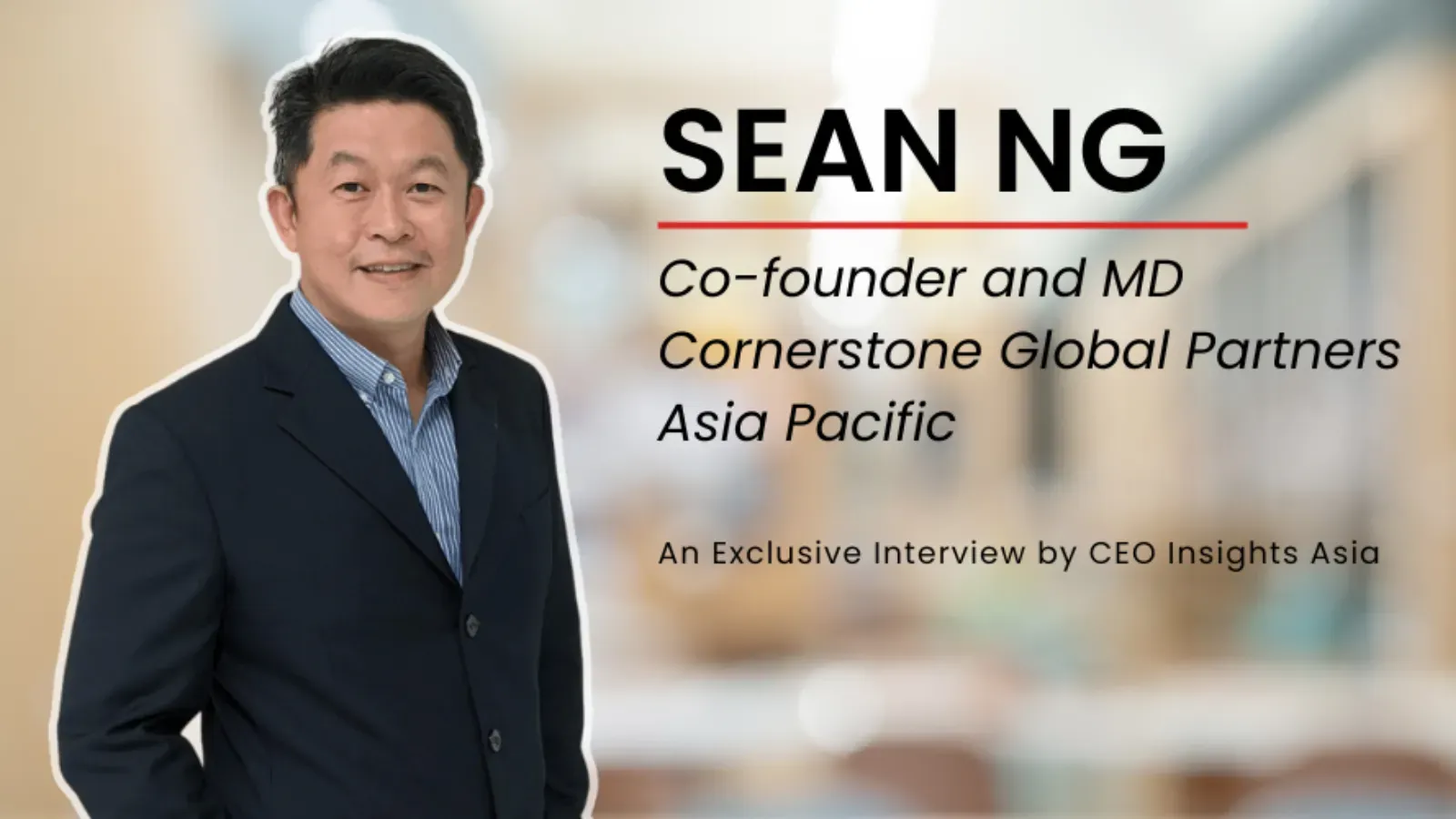
    Interview with Sean Ng, Co-founder and MD, Cornerstone Global Partners Asia Pacific

    As an alumnus of NTU Singapore, Sean is leveraging his exception in-depth knowledge of recruiting industry and leadership skills to lead his venture – CGP Group, one of Asia’s largest recruitment solutions and HR Technology platforms delivering exceptional Executive Search, Contracting, Recruitment Process Outsourcing (RPO), and Human Resources Outsourcing services worldwide.

    A visionary, sincere, and extraordinarily skilled business leader, Sean Ng is the Co-founder & Managing Director for the Asia Pacific region for Cornerstone Global Partners (CGP) – one of the Asia’s largest recruitment solution providers and HR Technology platforms with 20 offices globally. With his strong understanding of the recruitment industry and over 20 years of experience within the executive search space, he is delivering Executive Search, Contracting, Recruitment Process Outsourcing, and Human Resources Outsourcing services to global and domestic firms.

    Prior to establishing CGP, Sean was with Hays China as General Manager in Shanghai. Before that, he also acquired a significant experience in recruitment activities in Singapore, Hong Kong, and Shen Zhen. His unrivaled experiences and training from these organizations have made him an expert in recruitment methodology and have helped him to formalize the best strategy to run CGP. He is also an active member of the SME Challenge organization where he advises SMEs in SE Asia on transformation projects.

    At CGP, Sean is spearheading a team of exceptional individuals and empowering them to operate with an ownership mindset where they successfully build solutions for the industry while bringing together great people with great companies.

    Let’s hear it from Sean as he speaks about his venture and more.

    #1. Tell us about the unique experiences you had at Nanyang Technological University (NTU) Singapore. What did you learn from the campus beyond academics?

    NTU gave me the opportunity to master new skills, take up new sports and embrace new challenges – I had the freedom to learn about myself and what I enjoy. In the first three years of my journey with NTU, I was more focused on non-academic activities. I was the President of the NTU Diving Club and worked towards making diving activities very popular among students within the campus. I was also the Chairman of the Miss University Pageant and the Student Union Ball. I have been a significant part of sports as well as non-sports social events, managing their sponsorship, program planning, and financials.

    NTU has given me extraordinary platforms to build my leadership capability which has been extremely valuable to me throughout my career.

    Apart from all my academic and non-academic successes at NTU, I also met the love of my life during my NTU days, and we are now blessed with 4 children aged between 9 and 20 years old. Looking beyond my corporate life, I deeply appreciate the value of family time and cherish every moment spent with my loved ones. Despite the demands of running a successful corporation, it’s important to recognise that there is more to life than just work, and I strive to find a balance between my professional and personal responsibilities.

    Sean with APAC Leadership Team​
    #2. Tell us about your leadership approach.

    I believe I have a very sincere approach to leadership, and I am known for being straightforward, warm & kind, and very approachable to my team members. At CGP, I create a comfortable zone for my employees as I believe they should find me easily approachable if they have issues and work here with no barrier to escalate. I feel that establishing a family culture within the company is essential to creating a positive work environment where our employees feel supported and valued.

    We operate with a ‘serving others’ mentality where we equally serve all our employees ranging from junior to managerial positions; and with that mentality, employees become comfortable with us and approach us to learn. By fostering a sense of community and togetherness, everyone gets more engaged, productive, and committed to the company’s success. We want to impart our success and teach the younger generation how to be successful in the world of recruitment and create a significant impact in the Human Resources industry. Our leadership approach has been one of the most important factors that have enabled us to retain 700+ employees globally including in the APAC region.

    ​​#3. What makes Cornerstone Global Partners different from other competitors in the region?

    We are one of the fastest-growing mid-size recruitment firms across APAC. What makes us unique is our built-in expertise across various industries; we go very deep into every industry understanding our clients, competitors, and appropriate candidates, and with our strong research & database we are able to help business owners build their businesses faster.

    Sean Celebrating Successes with SG Executive Search and SG Personnel Teams

    We take a very close approach with our clients to understand their needs and help them do their market mapping of their competitors and then find them the best people in the industry. Our primary aim is to make sure our clients are able to get the best people for their business because only if they have the right people, they will be able to succeed.

    “We want to impart our success & teach the younger generation how to be successful in the world of recruitment and make a difference in the Human Resources sector by fostering a positive and productive workplace culture that values and uplifts each team member.

    #4. What is the future destination you are heading towards?

    We aspire to build a stronger global presence by launching our office in at least one or two countries every year. We launched ourselves in Thailand and Vietnam last year, which reinforces our presence in Asia where we already have operations in China, Hong Kong, Singapore, Japan, Malaysia, etc. We recently opened an office in Dubai and gearing up for our operations in New Zealand and Indonesia. Moreover, we are also investigating the U.S. market to expand our operations there and also looking forward to growing in European countries.

    #5. What would be your advice for upcoming industry leaders?

    Everyone needs to know their ‘why’ – the purpose of their mission statement in life and why they are starting up a business. With the correct ’why’ and purpose’, I believe industry leaders can get to their goals successfully. And along the way, they must always walk beside positive and successful people and stay away from the pessimistic ones.

    What are effective leadership qualities and what does it take to excel as a recruiter? Listen to Matt Nicholls and Alex Zoboli, Managing Directors of Cornerstone Recruitment Japan K.K. talking with Sean Ng, Managing Director and Co-founder of CGP APAC sharing his thoughts.

    Who Are We

    At Cornerstone Global Partners, we are experienced in delivering Executive Search, Contracting, Recruitment Process Outsourcing (RPO), and Human Resources Outsourcing services to multi-national and domestic firms. We are a team of specialists committed to helping our clients and candidates find the job and talent for mid to senior positions across several sectors. Whether our clients are newly entering the market, expanding their existing operations, or going outbound from Asia, we have the ability to support their demands.

    Founded in 2012, CGP Group is one of Asia’s largest recruitment solutions and HR Technology platforms, with 20 offices worldwide including mainland China, Hong Kong, Singapore, Thailand, Malaysia, Vietnam, Japan, the Middle East and United States.

    Get in Touch

    View our Expertise

    ​ALSO READ:

    ​This article was originally uploaded by CEO Insights Asia.

  • The Top Myths About Recruitment Agencies (And Why They’re Not True)

    The Top Myths About Recruitment Agencies (And Why They’re Not True)

    “What are the benefits of using a headhunter/recruiter to fill our company’s positions?” – This is one of the common questions we come across all the time.

    It is important to understand that recruitment is not just about ‘filling a position’. The whole process starts off with recruitment planning that involves analyzing and describing job specifications, qualifications, experience, and skills required to fill the open positions.

    However, there remain some common myths about recruitment or staffing agencies, preventing employers and job seekers from engaging them. There is one thing they all have in common: they are all incorrect and misinterpreted. It’s time to debunk these myths, so let’s begin…

    • For Job Seekers
    • For Employers

    Busting Myths for Job Seekers

    Let us first walk through the myths that job seekers or candidates have in their minds and eliminate them forever.

    Myth 1: Job seekers need to pay placement fee

    This myth originated from sheer misunderstanding and resulted in a common misconception among candidates. The reality is candidates do not pay recruitment agencies, and services are completely free for them. The recruitment fee is paid by the employer for the recruitment agencies’ services and only after finding the right person for the job and once they’ve started in the role.

    The payment is made toward seeking firm’s assistance, such as sourcing, background checks, and interviews.

    At CGP Singapore, we thoroughly guide each candidate throughout the whole hiring process delivering the right experience at every stage (free of cost!). We firmly follow a candidate-centric approach and help them assess their skills, qualifications, and their fit for the roles. “Elevate your career with us! Discover our latest job opportunities and be part of a thriving organization.

    Discover Currently Open Roles

    Myth 2: It’s just about forwarding CVs to employers

    Employers and employees might think that the role of a recruitment agency is to be a mediator and send CVs – It is much more than that. Recruitment agencies like CGP Singapore break stereotypes and stretch themselves. Instead of simply forwarding resumes, the part embraces understanding the role and the required abilities, screening them through interviews, and adding them to the candidate pool.

    We work closely with employers and candidates to understand their needs thus offering the right experience to both the parties pre- and post-placement, during onboarding as well as proactively addressing any concerns or issues that may arise.​

    Myth 3: Prime focus is only high-level executives

    This is another common misconception that recruitment agencies only work with senior level positions. Usually staffing agencies work with a broad range of job roles across multiple industries – from junior to mid-management and senior-level contracting as well as permanent positions. Recruitment agencies cater to a range of employment types, offering flexibility to candidates seeking different job arrangements.

    At CGP, Singapore, we value building relationships with candidates and providing personalised experiences. We thrive to understand each candidates’ career goals, aspirations, and preferences to match them with suitable opportunities.

    Looking for a job that aligns with your passion and expertise? Talk to an Expert Today​

    Myth 4: Stuffing resumes with keywords is the key to get shortlisted

    The reality is just the opposite of what you read here. Many individuals believe that agencies shortlist candidates solely based on automated keyword-matching systems. It should be noted, however, that reputable agencies employ a comprehensive approach to hiring, taking into account factors beyond resume keywords, such as skills, experience, qualifications, and cultural fit, in addition to resume keywords.

    Candidates are evaluated holistically through interviews and assessments.​

    Myth 5: Only ‘Active Candidates’ are Considered

    Many job seekers live in a bubble where they think that recruitment agencies only assist those actively looking for a job. Active and passive are distinct categories of candidates. For active candidates the top factor is better work and career opportunities, while passive job seekers are passionate about their work, engaged in improving their skills, and reasonably satisfied with their current jobs , but they will consider any vacancies that are brought to their attention.

    Whether you are an active or passive candidate, at CGP Singapore our highest priority is to match the right people with the right opportunity.

    We proactively reach out to potential candidates and provide them with access to job opportunities they may not have otherwise encountered. We also offer a reward program where we welcome candidates to actively refer their friends or family for job opportunities thus helping us unleash greater talent.

    ​Busting Myths for Employers

    Myth 1: Recruitment agencies are expensive

    Businesses often complain about recruitment agencies being highly expensive. The reason is employers do not see the perspective from the other end— the cost of sourcing, screening, and interviewing the candidates and most importantly not to forget hidden costs of bad hires or employee turnover.

    According to a report by the SHRM, the average cost of a bad hire can range from 50% to 150% of the employee’s annual salary. This cost includes not only the direct expenses of recruitment and training but also the indirect costs of lost productivity, damaged morale, and the impact on customer satisfaction.

    Outsourcing the hiring process to recruitment services incurs costs, but the benefits they offer often exceed the expenses. By entrusting the recruitment process to experts, organizations can save valuable time and resources. Additionally, the potential to attract top-quality candidates through recruitment agencies can result in long-term cost savings for the organization. Once you consider a recruiter’s expertise and services, the cost would start seeming justified.

    KNOW MORE: 3 Advantages of Working with a HR Specialist Recruiter​

    Myth 2: The sole focus is on filling roles quickly

    Timely hiring always saves employers’ resources and is the essence of any business. Still, it is not necessary that every recruiter will only focus on filling vacant positions quickly. Modern-day recruiters understand the awareness levels of employers and know a task done in haste will reap no benefits to both. Moreover, if the agency finds a candidate who doesn’t fit in the role or leaves within three months of joining, their image gets jeopardised.

    Engaging a recruitment agency is about getting access to a broader talent pool, expert candidate evaluation, time and resource savings, market knowledge and insights, confidentiality, negotiation support, and the potential for long-term partnership.

    Get assistance with your hiring needs now! Our expert recruiters offer specialist market knowledge and have an extensive network to provide you with the best recruitment solutions to achieve your objectives across multiple industries and functions.

    View Our Expertise

    Myth 3: Posting on multiple job boards can help you find the candidate

    Are you under the impression that you can post an opening on multiple job boards and find the candidates yourself? Well! If that is the case, you prevent yourself from reaching the untapped candidates. Recruiters do more than just post job ads and surf the internet. In simple words, you need to see them as a source that has relationships with thousands of candidates.

    Going further, the top talent can grace your organisation and fulfill your objectives.​

    Myth 4: Recruitment agencies find candidates from the same talent pool

    It is another misconception that recruiters keep recycling the same talent pipeline and put minimum to null effort into seeking new candidates. Businesses are evolving and so is the way we work. Both employers and candidates have a certain level of expectation from each other.

    To keep up with a client’s evolving requirements, recruiters source, continuously find fresh talent options, and assess candidates on both objective and subjective criteria.

    At CGP, we refrain from following a one size fits all approach. Rather our specialist recruiters work closely with employers to understand their specific needs and create accurate job descriptions, thus finding highly skilled and talented professionals who are best suitable for the roles.​

    Myth 5: Recruitment agencies don’t understand businesses

    Undeniably, it is not easy for recruiters to understand every organisation like a pro. But, on the flip side, assuming that a recruitment agency won’t understand your industry and its requirements isn’t right.  Professional recruiters invest time in understanding their clients’ organizations, including culture, values, and specific hiring needs.

    Recruitment agencies never cease to network with talented professionals and often attend & host events relating to different industries. As a result, they start learning the intricacies of every industry to better serve their clients needs.

    Overcome Challenges by Partnering with the Right Recruitment Agency

    And there you have it— myths about recruitment agencies gone in a flash. Still unsure of seeking expert assistance from a reliable recruitment agency?

    There are several benefits of partnering with staffing agencies, and working with them helps you develop an effective hiring strategy as well as find the best candidates for your organisation. The key is to find the right agency that fits with your business needs.

    Fulfilling Careers, Empowering Companies: Our Holistic Approach Goes Beyond Filling Positions

    At CGP Singapore, we are a team of experienced consultants dedicated to helping our clients and candidates in finding the perfect match, we believe our role is to positively impact and change their journey for the better. We’re more than just recruiters; we’re partners in your journey to success. Our passion lies in bringing together great people with great companies, creating a future of thriving workplaces and fulfilling careers.

    Get in Touch

    FAQs

    1. What is the importance of employee recruitment?

    A company’s success cannot only be measured by its financial figures. In other words, the organisation’s people determine whether the business is booming. To hire top talent, companies must have a solid recruitment process, which is highly important. An effective recruitment process starts from acquiring new talent to retaining them. Employee recruitment prevents disruption of business activities, increases the success rate of hiring, and improves the organisation’s credibility.

    2. What are the benefits of a recruitment plan?

    An effective recruitment plan makes the hiring process smoother and ensures that the organisation hires the right people. Moreover, it reduces costs, enhances the company’s reputation, and engages employees. Having a recruitment plan helps organisations streamline their processes.

  • The Importance Of Emotional Intelligence In Leadership

    The Importance Of Emotional Intelligence In Leadership

    Daniel Goleman, in his book ‘Emotional Intelligence,’ pens that people’s emotional intelligence was more important than their IQ.  People who were well-adjusted emotionally were more likely to have better leadership skills, mental health, and job performance. According to the author, superior EI (Emotional Intelligence) was twice as necessary as the skills and IQ required for completing a job.

    Emotional intelligence is a hot topic that has gained traction in recent years. Furthermore, it accounts for nearly 90 percent of what sets great performers apart from competitors. As a result, many leaders turn to emotional intelligence to analyse the performance of their employees.

    How is that?

    Emotional intelligence in leadership is extremely important as it works toward self-awareness, increases accountability, improves communication, and builds relationships. This blog examines how emotional intelligence can have a substantial impact on leadership. We will also discuss tips on how to improve your emotional intelligence.

    Emotional Intelligence & Leadership: The Importance of Their Synergy

    Emotional intelligence is the ability to comprehend, control, and develop your own feelings while understanding others’ feelings. Due to the growing complexity of society, the need for leaders to create happier and more productive workers has increased.

    Since it does not come naturally to everyone, emotional intelligence can be learned and developed. The good news is that high EI makes you an effective leader and enables you to help others improve their EI. Let us walk you through the results of emotional intelligence in leadership.

    #1. Builds Trustful Relationships

    No one but a leader with high emotional intelligence can understand the importance of building confiding relationships. Unarguably, trust forms the basis for developing any connection. Therefore, it becomes imperative for leaders to create an environment of mutual respect and understanding.

    A leader with high emotional intelligence and interpersonal skills strives to set the tone right and ensures its flow down the hierarchy.

    #2. Enables Leaders to Manage their Own Emotions Better

    Self-awareness is the first step in the direction of controlling emotions. Emotionally intelligent leaders efficiently manage their emotions and get through difficult conversations.

    People who make impulsive decisions or lose control over emotions lose their team’s respect and trust. But on the other hand, effective leader sails through turbulent waters while handling people around them.

    #3. Enables Leaders to Understand Others

    People with high emotional intelligence gauge the emotions of others more accurately. The reason is they have a good understanding of their own mental state. The increased empathy leads to more thoughtful decisions while motivating team members.

    This very characteristic allows the leaders to relate to the organisation and build a rapport with its people. And it results in developing a better understanding among human resources.

    #4. Leads to Collaborative Communication

    Emotional intelligence in leadership develops leaders who understand their coworkers. On that account, emotionally intelligent leaders instantly match the tone and mitigate communications that create tension.

    The world has seen enough leaders who speak with honesty & sincerity, and the credit goes to their emotional quotient.

    #5. Enhances Leadership Decision-making Skills

    Decision-making skills aren’t something you can develop overnight. However, an emotionally intelligent leader determines and analyses all his options before deciding. Simply put, they don’t jump to unplanned conclusions but make informed decisions with both the head and the heart.

    Effective leadership involves leaders incorporating logical reasoning and weighing the impact of their choices on the organisation.

    ALSO READ: How to Promote Leadership Development in Your Organisation?

    Tips to Improve Your Emotional Intelligence

    Let’s examine the aspects you must include to improve your emotional intelligence as a leader.

    • Self-awareness – Become self-aware of your emotions before you begin understanding the emotions of people around you. A better understanding of your emotions will enable you to manage them more efficiently.

    • Manage your reactions – How you react to things is your choice. Pause to think before you take action. This will give you an opportunity to respond in a constructive way that is helpful for others, too.

    • Effective communication – Communicating effectively is the key to becoming an emotionally intelligent leader. Also, try to listen to what others say and respect their opinions. When you understand others’ perspectives, you get to know the other side of the topic in discussion.

    • Practice stress management – Stress is a factor that can impact your decision-making power. Therefore, it is necessary to keep a check on your stress levels. If you feel your stress is worsening, look for ways to rejuvenate yourself or try relaxation techniques to boost your physical and mental power.

    In Summary

    Whatever workplace model your organisation follows, emotional intelligence never fails to nurture efficient leaders. Therefore, relationships thrive when leaders step up to understand their employees and work toward emotional management. The world is living in times of a pragmatic approach toward emotional intelligence to understand what it includes and doesn’t.

    The scientific viewpoint states that emotional intelligence is perceiving emotions— yours and others, and managing them. After all, you would want your employees to feel valued and respected as you create an environment they won’t want to leave.

    Our profession demands professionalism, trust, and reliable service regarding clients and candidates. If you are looking for talented professionals to help your organisation achieve its goals, contact the experts at Cornerstone Global Partners (CGP) Singapore and access cutting-edge talent.

    Be a one-of-a-kind leader for your company and build a forward-thinking team with us.

    RELATED READ:

    FAQs

    1. What is emotional intelligence in leadership?

    Emotional intelligence is the ability to understand and manage one’s emotions and recognise others’ emotions. It comprises empathy, social skills, self-awareness, self-regulation, and motivation. Developing emotional intelligence makes one a better leader and ensures one gets the most out of their team.

    2. What is the importance of emotional intelligence?

    Emotional intelligence is the ability to recognise and manage your emotions and understand other people’s emotions and perspectives. Emotional intelligence is essential because it allows a person to manage his emotions better and make informed decisions in his personal and professional life.

    3. How can emotional intelligence make leaders more effective?

    An emotionally intelligent person can make informed decisions as he thinks before taking any step. Moreover, developing emotional intelligence lets a person control his emotions without making decisions in haste. As a result, the person becomes a better and an effective leader who can guide the organisation in the right direction. In other words, an emotionally intelligent person is:

    • Self-aware

    • Better decision maker

    • Empathetic

    • Good listener

    • Careful of his reactions

  • The Future Of HR: Predictions And Analysis

    The Future Of HR: Predictions And Analysis

    Workplaces are undergoing rapid transformations driven by technology, globalization, and changing societal dynamics. This is true for the roles of Human Resources (HR) as well. With the advent of artificial intelligence, automation, remote work, and shifting employee expectations, the future of HR holds both opportunities and challenges that organizations must navigate to thrive in the modern workplace.

    The role of HR is becoming quite critical in supporting businesses. On top of that, the rightly suited HR leaders will make organisations future-ready. Simply put, the role of HR includes constant team conditioning and reskilling and helping employees adapt to organisational culture.

    ALSO READ: 2023 Southeast Asia Market Insights & Salary Trends Report

    As we look ahead to the future, the Human Resources (HR) field is expected to undergo significant changes. And, by understanding these transformative changes, HR professionals, business leaders, and employees alike can proactively prepare for the future, adapt to the evolving landscape, and harness the potential benefits.

    What is there to look forward to in the future of HR? And what are the future HR trends that will redefine HR? Let us dive into the world of predictions and analysis, and discover the transformative journey that awaits the HR profession in the years to come.

    Focus Areas Defining the Future of HR 

    #1. Diversity & Inclusion

    Most companies are predicted to provide progress reports on diversity and inclusion efforts. In 2023, the organisational ecosystem will not merely reflect the societal ecosystem but emphasise empathy and enablement. Sensitisation and workforce empowerment will be crucial steps toward ensuring employee well-being. HR leaders and managers will foster a positive culture supporting an inclusive work environment.

    Know the five ways to cultivate inclusion in your organisation.​

    #2. Automation

    Technology will continue to revolutionise HR processes and practices. Automation has seen a quick adoption in all walks of life. Visibly, the year is about building optimal operating models with automated processes handling specific jobs.

    Moreover, the trend of adopting cloud software to automate and manage workflows is expected to keep growing. While many companies already use software for certain functions, the future of HR is becoming more digitised with the acceleration of the hiring process.​

    #3. Employee Experience

    Employee experience will take center stage in the future of HR. Many HR leaders believe their organisations need the right resources to boost employee growth. Unfortunately, the current options do not satisfy employee needs as they evaluate their jobs.

    Enhancing employee experience includes setting a trajectory, communicating role benefits, and focusing on career mobility within the organisation. The strategy helps HR leaders to create the best job experiences for the employees.

    #4. Organisational Design & Change Management

    Too much change and uncertainty lead to an organisations’ people becoming fatigued. However, digital transformations remain a top priority for organisations and HR leaders.

    With employees growing more resistant to change, the HR leaders of 2023 are focusing on leading the change and mitigating the impact of change on employee productivity and performance.​

    #5. In-office & Remote Policies

    Managing a remote workforce has become an inseparable part of numerous organisations worldwide. Lately, employees love working flexibly and remotely as it allows them to spend time with their families.

    Nevertheless, despite what employees like, the HR department must find a solution that meets in-house and remote work schedule requirements.

    RELATED READ: Remote Workforce Essentials: Perks and Benefits That Promote Work-Life Balance​

    #6. Leadership Effectiveness

    Over time, the roles of leaders have changed and turned into complex functions. Present-day work environments require leaders to be more authentic and adaptive. As a result, today’s HR leaders are becoming more capable of addressing the barriers impacting the effectiveness of leaders and managers. Developing human leadership has become a pertinent part of HR roles and responsibilities.​

    #7. Agile Talent Management

    Organizations will need to adapt to the changing nature of work and the workforce, which will require a more agile approach to talent management.

    Traditional notions of employment, such as permanent, full-time roles, will continue to evolve, and organizations will need to be more flexible in attracting, retaining, and developing talent. HR will need to adopt innovative talent management practices, such as gig work, freelance arrangements, and talent marketplaces, and develop strategies to reskill and upskill employees to meet the changing demands of the workforce.

    Find Out More: Career Mobility – A Key To Attracting And Retaining Talent

    While we conclude the part about the focus areas of HR of future HR trends, now is the time to march toward an analysis.

    The Future of HR: Analysis

    What forms their future course of action as HR leaders face unprecedented disruption? Well! They can learn about the technologies, trends, and operational changes that shape the future of business.

    From managing hiring challenges to tackling “quiet quitting,” organisations demand more from HR leaders. Simply put, new demands and expectations on the HR division of an organisation require them to develop new skills and an agile work approach.

    With no single path to driving value through HR, every company’s route will be unique to its journey. In some cases, companies might walk a less traveled path to fulfill the needs of today’s disruptive world.

    Yet with challenge comes opportunity; HR has the opportunity to drive change. The crux of the analysis is HR leaders must embrace new traits and behaviours to enable survival for organisations in the digital age.

    Winding Up

    One word that can define the future of HR is reinvention. A slight change daily makes a considerable difference in adapting to the changing times.

    Human Resources has come a long way from when the department was confined to paperwork. Today, HR functions have expanded beyond policies and procedures. The role of HR is continuously evolving, and professionals must learn about the technologies and future HR trends.

    How CGP Singapore Can Help?

    We are a specialist recruitment agency that connects companies to high-level talent. We are more than your average recruiter. Our team strives to build meaningful relations with clients and talent. Known for staying one step ahead, we match the right business with the right person.

    Contact us in case you are looking for candidates that can fulfill your organisational goals.

    Get in Touch

    FAQs

    1. What is the future of HR analytics?

    AI will change how you approach the HR analytics process. This puts greater emphasis on creativity and collaboration. Utilising HR analytics by tapping into the organisation’s existing people’s data makes teams more productive and connected. The future of HR analytics will witness employers using data science to find the right people at the right time.

    2. What will HR focus on in 2023?

    HR leaders have the responsibility to manage human resources and improve retention rates. With every passing year, the role of the HR department is transforming. The current year will see HR focusing on leader & manager effectiveness, organisational design & change management, employee experience, recruiting, and the future of work.

  • Why Employee Upskilling Is Essential During Economic Uncertainty?

    Why Employee Upskilling Is Essential During Economic Uncertainty?

    The year 2023 started with economic uncertainty looming worldwide and is gradually becoming a real problem for organisations. Consequently, businesses may consider cost-cutting and slashing their workforce. There’s a lot of uncertainty, but organisations can pull down storm shutters to combat the unpredictable times ahead.

    Now, the question is how?

    LinkedIn Global Talent Trends, October 2022, reveals the importance of opportunities for upskilling and career development and how people place them on their top priorities.

    Additionally,  the World Economic Forum’s Future of Jobs Reports states that because of the growing uptake of technology and automation, half of the workforce will need reskilling by 2025.

    In this blog, we will help you understand how employee upskilling focusing on relevant knowledge and skillsets to reduce the skill gap can help you improve work efficiency and innovation rate, thus nullifying the effects of current market uncertainty.

    Reasons to Upskill Employees

    #1. Boosts Motivation & Morale

    Imagine having two different teams. While team A comprises continuous learners, team B has people who don’t learn much and perform only what’s required.

    Which team would be motivated and committed to producing the best output? Without any doubt, it would be team A.

    Unarguably, if your employees come across a lack of learning opportunities, their work will start becoming burdensome. But, on the flip side, employee upskilling always brings job satisfaction among employees. Sending your team for upskilling courses shows your commitment to their professional development, increasing motivation at work, increasing productivity, reducing attrition rates, and improving job satisfaction. As a result, there arises no point in disagreeing on the benefits of having an invested and engaged team to fight economic instability.​

    #2. Saves on Recruitment Costs

    Organisations that train existing employees are said to have better talent retention rates and save the cost of replacement hiring. Of course, every time an employee leaves, it brings a financial burden, and things worsen during economically uncertain times. Nonetheless, upskilling your existing employees is a much more cost-effective way to hire and train replacements, especially when the economy is unsettled.

    Employee upskilling makes the organisation more agile and responsive to changing times without disrupting the organisation’s social capital.​

    #3. Prepares a Well-prepared Team for the Future 

    Employee upskilling helps team members develop varied skills and abilities. On top of that, it makes them prepared for the changes that lie ahead in the market. Once you identify the benefits of skill programs, there will be no looking back. Your employees will get proof that their career development matters to you.

    When the economy suffers turbulence, your organisation can fill in the gaps without new hires. In other words, upskilling your team will help you have your existing team drive toward goals by playing more than one organisational role. Thus, saving the company from the odds of economic uncertainty.​

    #4. Helps Workers See the Bigger Picture

    In the wake of economic uncertainty, millions of organisations like yours have understood the importance of upskilling. Straight from the shoulder, employee upskilling not only focuses on a promotion or a salary increase but also embraces other crucial factors. While an efficient upskilling program can boost employees’ confidence at work, it also improves their quality of life.

    Career advancement leads to better work-life balance and instills a sense of purpose while making work more interesting. Moreover, modern-day organisations also could nurture better employee experience and create a healthy workplace. Therefore, you can always maintain the best levels of talent retention even during uncertain times by making them reflect on what they might gain.​

    #5. Perseveres Relationships and Teamwork

    Upskilling your employees help improve collaboration and productivity. And when we mention improved teamwork and productivity, we indicate its benefits for your organisation during economically uncertain times. The fact that only some new hires can fit into the role as per your expectations, employee upskilling will keep you afloat without fail. Additionally, you can maintain the best composition of your company’s social capital.

    At this point, you have learned the benefits of employee upskilling, but we haven’t concluded. It would be considered incomplete if we didn’t discuss how to level up the benefits of upskilling. So let’s have a look.

    Get an up-to-date view of ever-changing employment landscape in Southeast Asia to optimise your recruitment strategies to retain top talent.

    Download 2023 Salary Trends Report​

    Getting Through the Uncertainty Ahead

    Leaders must adopt a transparent approach

    Leaders must see uncertainty in the economy as an opportunity to recap and make the necessary adjustments. An adaptive approach by leaders will provide more clarity to employees about the short-term goals and priorities of the organisation.

    Encourage Team Collaboration

    Nurture a work environment that promotes collaboration and knowledge sharing among employees. Nothing can overpower a strong connection of an employee with their colleagues and further strengthens company culture. You just need to know the ways to develop a high-performance team.

    Understand the skills gap

    Identify the difference between the skills your people have and the skills your company needs in the future. It will give you a better idea of designing and developing your skills program to fill the gap.​

    Leveling up: Where to Begin With Employee Upskilling?

    Upskilling could be in any form. From business courses to webinars, build learning paths with your employees customised to the skills they wish to acquire, and get insights into their progress to ensure they’re on the right track. Here we have collated some of the resources

    • SkillsFuture Series – which provides training courses across emerging skills in the four economic growth pillars – Digital, Green, Care, and Industry 4.0.

    • Udemy Business is another useful online learning platform that offers courses on technical and soft skills alike

    • At LinkedIn Learning with Lynda, where you can access business, technology, and creative courses taught by industry experts from various sectors and get course recommendations based on your employees’ unique skill sets.

    • Edx.org is another useful resource offering expert-led to build career-critical skills – ranging from executive education to professional certifications to build today’s in-demand skills.

    Final Words

    Upskilling provides benefits to both employees and organisations. Times have changed, and money is not the only factor that motivates the workforce. Currently, job seekers are looking for meaningful jobs aligned with their professional goals. In that case, organisations can offer upskilling opportunities to their people and make their job roles more purposeful.

    Our exceptional recruitment consultants at CGP Singapore’s team can help you spot suitable candidates and fill the vacant positions within your organisation.

    We pride ourselves on our personalized approach to matching top talent with the perfect job opportunity. Our team of experienced positive recruiters uses the latest technology and modern techniques to ensure a seamless and successful hiring process.

    Get in Touch

    FAQs

    How can employee upskilling help during economic uncertainty?

    Upskilling helps employees prepare for the future of work and boosts their competitiveness. Employers offering skills programs to their employees will help future-proof their organisation and sail through uncertain times due to economic reasons. Moreover, employers that invest in their people always gain their employees’ trust and loyalty.

    How can employee upskilling help with career development?

    Skill development happens over time and is a natural process. However, people who choose to upskill themselves in a planned way can get more benefits, such as

    • Fosters continuous self-improvement

    • Increases competitiveness in the market

    • Helps secure better jobs

    • Qualifies an employee for promotion

    • Assists in progressing toward goals

  • How To Persuade Star Candidates To Join Your Business In 2023?

    How To Persuade Star Candidates To Join Your Business In 2023?

    “The key for us, number one, has always been hiring very smart people.” – Quoted Bill Gates, co-founder of Microsoft Corporation. “If we weren’t still hiring great people and pushing ahead at full speed, it would be easy to fall behind and become some mediocre company.”

    Over the years, the business world has learned that having good people doesn’t require employers or hiring managers to infantilise them. But a question arises: How can you thoughtfully persuade skilled professionals to join your business this year? Time and again, recruiters come across a shortage of quality candidates and count finding top talent as the biggest challenge.

    Given the presence of your competitors in the market (especially in attracting talent) and candidates’ expectations, the right recruitment strategy which aligns with your organisation’s goals is a must.

    Here are some tips if you are looking for suitable strategies to approach top talent and convince them to join your business.

    #1. Provide Flexible Work Options

    Take a minute and ask yourself if your people are happy at work. Is your organisation change-ready? Do you face challenges efficiently? The answer to these questions revolves around the level of flexibility you offer.

    Provide flexibility of work to allow employees to adjust to circumstances and conditions. As a result, you can expect them to show more creativity, engagement, and productivity.

    John Wooden rightly said, “Flexibility is the key to stability.” And this is the crux of offering flexible work options to your employees and highlighting it when interviewing candidates.

    Not only it attracts star candidates to accept your employment offer, but flexible working also benefits recruiters & hiring managers.

    RELATED READ: 5 Pitfalls of Hybrid Working & How to Resolve Them​

    #2. Create an Employee-centric Work Culture

    An organisation with employee-centric work culture features open communication, encourages feedback, and inspires innovative minds to come forward. There could be no better thing for your organisation than to make your people feel you act in their best interest. Ultimately, it will enhance employee experience and turn them into a happy workforce.

    Make room for them to be creative & innovative and witness them making up a successful company.​

    #3. Utilise Social Media

    According to the Job Description Library:

    • 91% of all employers are currently using social media as part of their hiring process

    • 79% of job seekers have used social media in their job search in the last year

    Capitalise on the potential of social media by turning to ‘social hiring.’ Simply put, you can showcase the benefits of working with your organisation and engage with potential candidates. Besides being a cost-effective option, social media allows you to reach candidates who haven’t initially applied for the role. Additionally, you can use creative visuals and get your employees to help spread the word.​

    #4. Be Tech-savvy

    With the advent of Artificial Intelligence, you can leverage the power of technology to attract top talent to your organisation. Task automation allows HR specialists to focus on what matters. Benefits abound, HR personnel can also automate the recruitment process and sift through multiple CVs in a few seconds.

    Holistically, being a tech-savvy organisation will leave you enough time to work on key strategies and processes to attract skilled candidates.​

    #5. Network, Rope in & Repeat

    Master the art of connecting with the right people at the right time. Generally, organisations network to seek growth in terms of client base and revenue. Nevertheless, meeting new people also attracts talent. So tap into communities through events and meetups. After all, finding and employing the right people requires a systematic approach to outreach and relationship building.

    Beyond your personal network, make yourself visible in the industry to connect with people and lead them to apply to fill white spaces in your organisation.​

    #6. Implement Referral Programs

    Considering top talent might be right under your nose, look around and see your current employees. Then, look further and envision the number of first-degree LinkedIn connections and Facebook friends they might have and ideate strategies.

    Undoubtedly, keep your team informed and give them the required information to share with their network. Next, encourage them to share the job openings by setting up an employee referral program. The last of things is to get ready to see highly competent human resources coming your way.​

    #7. Seek specialists’ assistance

    Recruiters operate in parallel with your organisation to help match candidates’ profiles with the job openings. When hired, they conduct the process to hire the best-suited candidates for you. On top of that, hiring a professional team of recruiters and talent acquisition specialists is an extension of your in-house HR team.

    If you seek expert assistance, you will make hiring hassle-free, and the organisation will be empowered to save time, money, and effort.​

    Looking ahead to the year – Align Yourself with Trends

    Several emerging trends in recruitment are likely to shape the industry’s future and thus require you to revamp your talent attraction and retention strategies. Here are a few of them:

    • Increased use of Artificial Intelligence: AI-powered recruitment tools are becoming more common, helping to automate the screening and selection process and making it more efficient and effective.

    • Greater emphasis on diversity and inclusion: As companies increasingly recognize the benefits of diversity, equity, and inclusion (DEI), they are placing a greater emphasis on these factors in their recruitment efforts. This includes using data-driven approaches to identify and address recruitment bias.

    • Greater focus on candidate experience: Candidates demand a more personalized, transparent, and seamless experience throughout recruitment. Companies must prioritize candidate experience, using technology and data to optimize recruitment processes.

    • Rise of remote work: The COVID-19 pandemic has accelerated the trend toward remote work, which will likely continue. As a result, companies will need to adapt their recruitment processes to attract and retain talent in a remote work environment.

    • Growing importance of employer branding: As the competition for top talent intensifies, companies are investing more in their employer brand – showcasing culture, values, and mission – to differentiate themselves from their competitors.

    These trends suggest that talent acquisition will become more data-driven, technology-enabled, and candidate-centric.

    Devise a thoughtful plan and have a strategic recruiting partner in place to turn hiring complexities into opportunities to grow and develop your organisation profitably.

    When you start bringing potential candidates into your organisation, you can see progressing times ahead. Put the effort in and begin attracting star candidates.

    At Cornerstone Global Partners Singapore, all our consultants are specialized in their field of industry or function. We will always strive to build a trustful relationship, along with an ownership mentality. Your next promising hire could be just a click away.

    Get in Touch with Us

    FAQs

    1. How to attract candidates from competitors?

    To attract candidates from competitors, you must:

    • Create a candidate persona

    • Highlight the positives of your company and market your organisation

    • Develop employee value proposition

    • Build an employee-focused culture

    • Involve current employees in recruiting

    2. What are the four global talent strategies?

    The most pivotal global talent strategies are:

    • Build worker support and retention into your overall plan

    • Evaluate your benefit and compensation packages to come up with options to attract top talent

    • Consider different hiring options

    • Train hiring managers and leaders to implement a global talent management strategy

    3. What are the future trends in recruitment?

    • Remote interviewing and work

    • Diversity and inclusion

    • Employee well-being and mental health checks

    • Increase in workforce analytics

    • Reinventing employer experience

    • Employer branding

    • Ethical leadership

    • Recruitment marketing

    • Artificial intelligence

    • Virtual and augmented reality

    • Robotic process automation

    • User-intuitive interface

    • Payroll flexibility

    • Flexible schedules

    4. How to attract top talents in 2023?

    Six proven methods to attract top talents in 2023 are:

    • Provide flexible work options

    • Utilise social media

    • Build an employer brand

    • Network in specific events

    • Implement referral programs

    • Reaching out to recruitment agencies to seek expert services

  • How To Promote Leadership Development In Your Organisation?

    How To Promote Leadership Development In Your Organisation?

    It’s a competitive era, and you risk blotting your organization if you still place followers, not leaders, in your organisation. Companies recognise they need to promote leadership development to survive in today’s volatile, complex & ambiguous environment.

    As John C. Maxwell quotes, “The single biggest way to impact an organisation is to focus on leadership development.”

    While it is undoubtedly complex and challenging to promote leadership development, there are numerous ways companies can invest in the leadership development of their employees. For example, the corporate world sees the provision of learning opportunities or having personnel from higher management coach the employees as highly beneficial. And these have proved to help retain the best of the best leaders over the long term.

    Are you seeking ways to promote leadership development in your organisation?

    Navigate your way toward achieving your goals with the below-mentioned deep-rooted methods.

    #1 Ensure Clarity & Visibility of Goals

    “Just as your car runs more smoothly and requires less energy to go faster and farther when the wheels are in perfect alignment, you perform better when your thoughts, feelings, emotions, goals, and values are in balance.”- Brian Tracy

    Encourage your leaders, managers, and executives to underpin the pursuit of promoting leadership in your organisation. The first aspect is to have clarity & visibility of goals— goals that must be SMART.

    • S-Specific

    • M-Measurable

    • A-Achievable

    • R-Relevant

    • T-Time-bound

    Correspondingly, the goals must be communicated well to ensure complete visibility and improve leadership effectiveness. Everyone in the team must know the organisational goals and their role in achieving them.​

    #2 Identify Potential Leaders

    “Leadership is about making others better as a result of your presence and making sure that impact lasts in your absence.”- Sheryl Sandberg.

    As quoted by Sheryl Sandberg, companies that can spot the quality in their employees are carving a promising future for themselves. In the present-day dynamic work environment, it has become inevitable to establish a sturdy leadership pipeline for the future. Most importantly, organisations need to identify and select the best potential leaders with unconscious bias.

    Sometimes, the leader may not “look the part” due to experience, position, appearance, or communication style. But the correct identification is crucial, owing to the need to find leaders at all organisational levels.​

    #3 Preach Accountability & Responsibility

    “Creating a culture of integrity and accountability not only improves effectiveness, it also generates a respectful, enjoyable, and life-giving setting in which to work.”- Tom Hanson.

    Create an environment that supports and promotes accountability and responsibility among the leaders. The idea is to bring around improvement and effectiveness in their leadership.

    Provide them with leadership training & build a work culture that is entirely participating, both with responsibility and accountability.​

    #4 Practice Inclusivity

    “When we listen and celebrate what is both common and different, we become a wiser, more inclusive, and better organisation.”- Pat Wadors.

    Make sure your leaders know you want them to continue growing with the company and that their growth matters. Allow them to bring up new ideas and provide feedback on improving the process. Eventually, the organisation will witness a paradigm shift in how leadership goals are viewed and promoted.

    Related Read: What is Diversity & Inclusion in the Workplace, and Why is it Important?​

    #5 Tread a Path

    “Leaders are the ones who have the courage to go first, to put themselves at personal risk to open a path for others to follow.”- Simon Sinek.

    Since only a leader can identify another leader, it becomes important that the top management plays a role here. This means the top-level management must show a clear path to their employees-turned-leaders to advance and achieve goals.

    Furthermore, it will also enlighten them regarding the necessary steps to achieve leadership team development goals.​

    #6 Foster a Coaching Culture

    “Coaching is unlocking a person’s potential to maximise their own performance. It is helping them to learn rather than teaching them.”- Timothy Gallwey.

    Various organisations develop formal leadership development programs for leadership training. However, the need is to have coaches at all levels that are inspiring & knowledgeable. For leadership development to proliferate, individuals must be allowed to coach or be coached.

    The method fosters a work environment where knowledge sharing is prioritised, and feedback impacts performance.​

    #7 Focus on Continuous Performance Management   

    “The only real difference between one organisation and another is the performance of its people.”- Peter F. Drucker.

    It would take a closer look to understand that leadership is not only about influencing people. Veritably, it is about leaders leading the organisation to attain goals. The fact here is that leadership is not just a title but a responsibility. Leadership development can be mapped out as leading the self, leading others, and leading the organisation as a whole.

    Continuous performance management becomes crucial here to monitor the performance holistically. Further, results can be measured against the expectations and the efforts that go into promoting leadership.​

    #8 Promote a “Learn by Doing” Attitude

    “For there to be a true maturity, people must be given room to grow, which includes room to fail.”- Charles R. Swindoll.

    Unarguably, you cannot support leadership team development merely by advocating it. Instead, as a leader developing other leaders, you ought to give them room to achieve goals or learn the ways.

    One thing worth mentioning here is your leaders may sometimes misfire. But nevertheless, they will never hit right unless they have the opportunity to shoot.​

    Final Words

    The corporate world has a long way to go before it gets hold of future-proof methods to promote leadership development. However, by the time it becomes a welcoming process, seeking the best talent & identifying foundational components within your organisation is a strong starting point.

    Stay awake instead of waiting for leadership development to happen.

    Stay open to ideas and let your organisation adapt to suitable ways to achieve leadership goals.

    Cornerstone Global Partners (CGP) Singapore, an award-winning recruitment firm in Singapore, believes people are the cornerstone of every great company. And our mission statement clearly states it:

    As every building requires a cornerstone, we believe people are the cornerstone of every great company.​ Our recruitment experts are passionate about bringing together great people with great companies.

    We have a comprehensive line of HR solutions to help you spot your organisation’s future leaders. Get in touch with us to learn more about CGP and its services.

    LEARN MORE

    FAQs

    1. What are the three ways to improve leadership in the workplace?

    The most powerful ways to improve leadership in the workplace are:

    • Promote clarity of goals across the organisation so that every employee knows them and understands their role in achieving them.

    • Focus on personal learning where the chosen leaders can learn and lead through uncertainty.

    • Enable feedback so the leaders can bring up new ideas and share feedback on the current processes.

    2. Why is it essential to promote leadership?

    The present world is very volatile and complex. Additionally, it isn’t easy for a single person to manage and run an organisation smoothly. Therefore, employers have recognised the power of having leaders at all levels who can take the responsibility to bring the desired results by achieving goals. This has given rise to the need for promoting leadership.

  • 5 Simple Steps To Choosing The Right Recruitment Agency

    5 Simple Steps To Choosing The Right Recruitment Agency

    ​Hiring the right candidate is very essential and important in today’s competitive market. Thus, partnering with a reliable and professional recruitment agency is the best way to find employees.

    As the job market continues to boom, recruitment companies are seeing an increase in business. Whilst this might be considered a good thing, it begs the question which agency to choose?

    Here are some easy ways to help navigate the minefield of finding the right recruitment company:​

    #1. Specialism

    You wouldn’t go to the Doctor for a haircut and similarly whoever you choose to partner with for your recruitment needs should be an expert in their field. Having access to the best talent in your chosen space is one thing but also consultants who can offer advice and counsel for your market is invaluable.​

    #2. Staff retention

    There once was a time when clients and candidates only cared about the brand of recruitment agency they would use. Now that there are an increased number of businesses out there, the people who work for that brand matter more than ever. Most good recruiters have worked for their employer for a few years at minimum which doesn’t just build up their skills base but their network which adds a great deal of value.​

    #3. Regional Presence

    Due to the talent crunch, it is increasingly hard to find local talent. Conversely, a number of Singaporeans are choosing to get regional or global experience. With offices in Thailand, Japan, Dubai, across China and Malaysia, we at Cornerstone Global Partners (CGP) have seen an increase in demands from our Clients and Candidates for a more mobile solution to their staffing needs.​

    #4. Flexible Recruitment Solutions

    Whether you are looking for volume hiring or a very senior C suite mandate, clients just like candidates, prefer options. These days you need to be able to look at cost-cutting exercises such as RPO or staffing solutions for lower-level hires or Search for the more hard-to-fill niche positions.​

    #5. Experience

    The ability to listen to the needs of your clients and candidates before offering advice/solutions requires experience and knowledge. We have 10 disciplines at Cornerstone Global Partners Singapore and every Leader has been in the industry for a minimum of 8 years and the majority have worked at Cornerstone Global Partners for an average of 4 years. That brings a depth of knowledge that flows down throughout the business.

    Whether you are an MNC with a number of outstanding hiring needs or a job seeker looking for their next challenge, you need to feel comfortable with your recruitment partner. Ultimately the process of sourcing for or finding a role is a significant one!

    ​View the latest job openings »

    Why choose CGP Singapore?

    In today’s candidate-driven job market, particularly post-pandemic, finding and hiring the ideal job candidate can be an enormous task. More and more highly qualified candidates seeking new roles than ever before, and many companies turn to recruitment agencies to help them find the right people.

    At CGP Singapore, we are experienced in delivering Executive Search, Contracting, Recruitment Process Outsourcing (RPO), and Human Resources Outsourcing services to multi-national and domestic firms. Not only do we specialise in a variety of sectors, but we also have a great reputation.

    In recent years, we have provided companies with more than 5,000 successful mid-to-high-end talent worldwide. Our recruitment consultants in Singapore are highly experienced and experts in their field in providing the best recruitment solutions to achieve your objectives.

    Save your time finding the best talent matching your needs from our diverse candidate pool in 10 specialised sectors. Contact us today.